Infrastructure & Facilities
State-of-the-art laboratories, training environments, and support facilities designed to integrate academics, research, and high-performance sport.
Anatomy and Physiology Laboratory
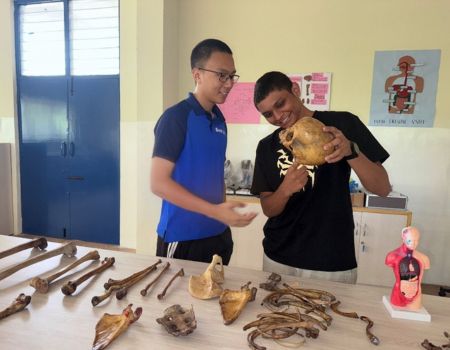
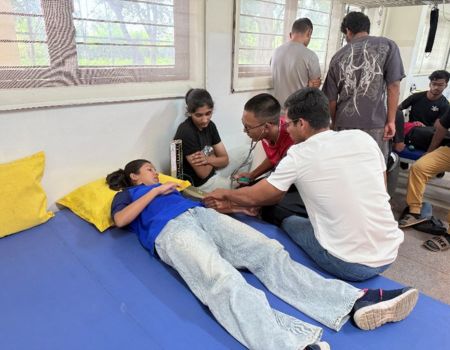
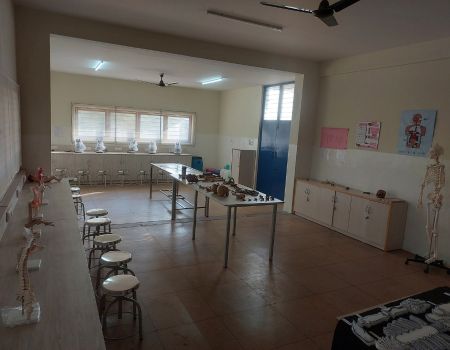
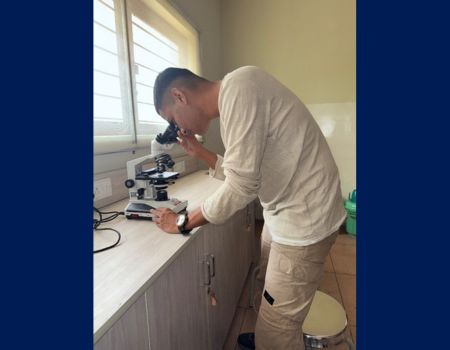
The Anatomy and Physiology Laboratory is a foundational facility supporting teaching and practical training in human structure and function. Designed to meet academic and professional standards, the lab enables students to gain hands-on understanding of anatomical systems and physiological processes relevant to physical education, sports science, health, and rehabilitation. The laboratory supports experiential learning through demonstrations, experiments, and practical assessments, linking theoretical knowledge with real-world applications in sports performance and human health.
Materials and Equipment's available
- Human skeleton models (full and sectional)
- Anatomical charts and digital anatomy software
- Anatomical models (heart, brain, lungs, kidney, eye, ear)
- Compound and binocular microscopes
- Hemoglobinometer
- Sphygmomanometer (manual and digital)
- Stethoscope
- Spirometer / peak flow meter
- Hand grip dynamometer
- Goniometer
- Weighing scale and stadiometer
- Body composition analyzer
- Reflex hammer and tuning forks
- Stopwatches
- First-aid and safety kits
- Laboratory glassware and consumables (slides, cover slips, reagents)
Injury Prevention and Management Laboratory
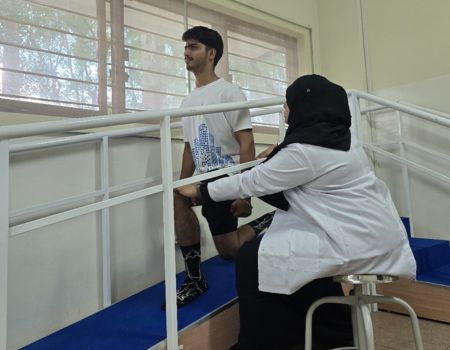
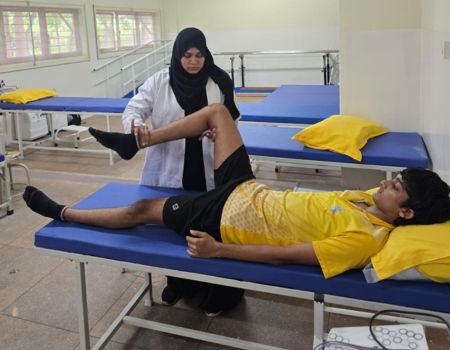
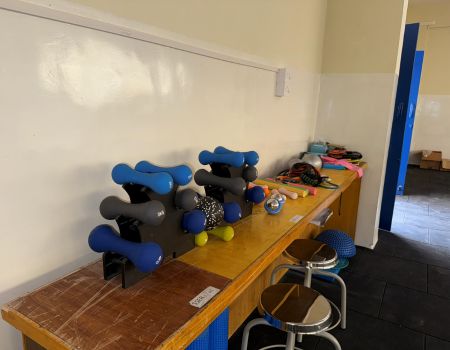
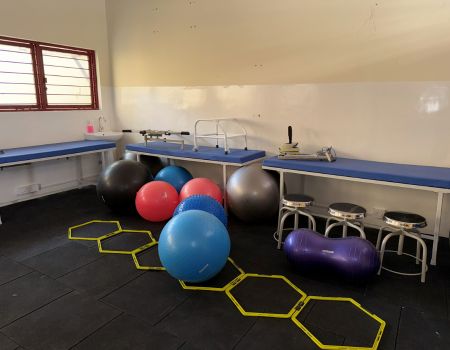
The Injury Prevention and Management Laboratory is designed to provide students with practical knowledge and skills related to sports injury care, prevention strategies, and basic rehabilitation. The lab supports experiential learning in taping, strapping, first aid, injury assessment, and recovery techniques, enabling students to effectively manage common sports injuries and promote athlete safety and well-being.
Materials and Equipment's available
- Treatment tables / physiotherapy plinths
- Exercise mats
- Dumbbells (variable weights)
- Weight cuffs (ankle & wrist)
- Resistance bands and tubing
- Medicine balls
- Swiss balls / stability balls
- Balance boards, wobble boards, BOSU balls
- Parallel bars
- Wall bars / stall bars
- Pulley and shoulder wheel
- Finger ladder
- Therabands
- Foam rollers and massage rollers
- Hand grip exercisers
- Pedal exerciser / stationary cycle
- Treadmill
- Stepper / aerobic steps
- Posture assessment charts
- Goniometer and measuring tapes
- Ultrasound therapy unit
- Interferential Therapy (IFT) unit
- Transcutaneous Electrical Nerve Stimulation (TENS) unit
- Short Wave Diathermy (SWD) unit
- Infrared (IR) lamp
- Moist heat packs and hydrocollator
- Cryotherapy unit / ice packs
- Electrical muscle stimulator (EMS)
- Laser therapy unit (optional / advanced)
- Electrodes, lead wires, and sponges
- Treatment couches / plinths
- Timer and safety switches
- First aid and emergency kit
Advanced Sports Science Laboratory
The Advanced Sports Science Laboratory is a high-performance facility designed to support teaching, research, and athlete support services in the areas of human performance, training optimization, and sports analytics. The lab integrates physiology, biomechanics, strength and conditioning, and performance monitoring technologies to enable evidence-based assessment and enhancement of athletic performance. It provides students with hands-on exposure to modern testing protocols, data-driven decision-making, and applied research aligned with elite sport and academic standards.
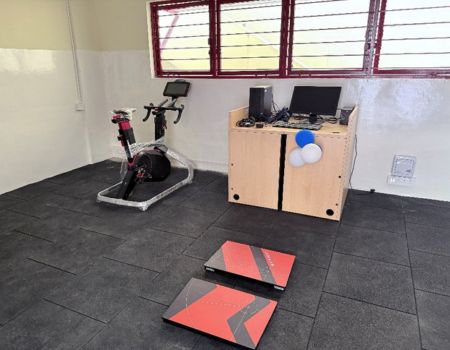
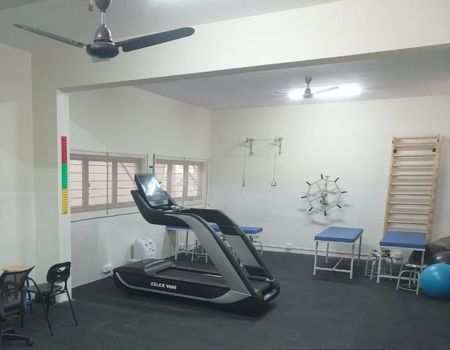
Materials and Equipment's available
- Motorized treadmill (with speed and incline control)
- Cycle ergometer
- Metabolic analyzer (VO₂ max testing system)
- Lactate analyzer
- Heart rate monitors and chest straps
- Wearable performance tracking devices
- Force plates
- Timing gates / sprint timing system
- Isokinetic dynamometer
- Hand grip and back–leg dynamometers
- Jump mat / contact mat
- Body composition analyzer (BIA / DXA – optional)
- Portable spirometer
- EMG (Electromyography) system
- Motion analysis system / high-speed cameras
- Performance analysis software
- Reaction time analyzer
- Blood pressure monitor and pulse oximeter
- Anthropometric tools (skinfold calipers, measuring tapes, stadiometer)
- Data processing and analysis computers
High Performance Gym
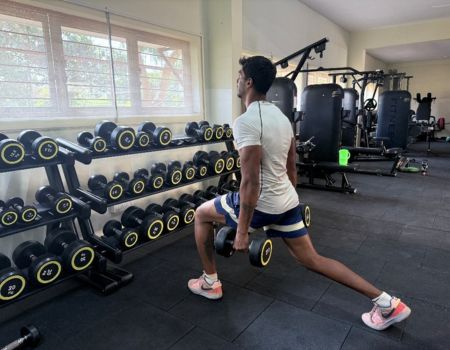
The High Performance Gym is a specialized training facility designed to develop strength, power, speed, endurance, and movement efficiency for elite and aspiring athletes. Built on scientific training principles, the gym supports sport-specific conditioning, injury prevention, and long-term athlete development. It serves as a practical learning space for students of physical education, sports science, and strength & conditioning, enabling the application of evidence-based training methods in a high-performance environment.
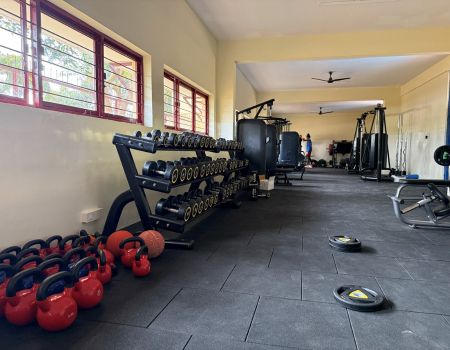
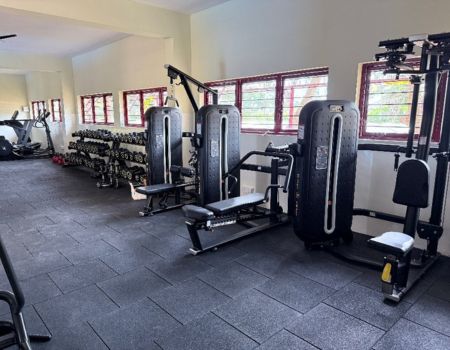
Materials and Equipment's available
Strength & Power Training
- Olympic weightlifting platforms
- Olympic barbells and bumper plates
- Power racks / squat racks
- Smith machine
- Deadlift bars and safety bars
- Adjustable benches (flat, incline, decline)
- Dumbbells (full range)
- Kettlebells
- Resistance bands and chains
Functional & Athletic Training
- Plyometric boxes (soft and hard)
- Battle ropes
- Sled push / pull systems
- Agility ladders and hurdles
- Medicine balls (varied weights)
- TRX / suspension training systems
- Sandbags and functional training tools
Speed, Conditioning & Endurance
- Motorized treadmill
- Air bikes / spin bikes
- Rowing ergometer
- Ski ergometer
- Curve (non-motorized) treadmill
Recovery & Mobility
- Foam rollers and massage tools
- Stretching stations
- Percussion massage devices
- Ice bath / contrast bath facility
Monitoring & Safety
- Heart rate monitoring systems
- Mirrors for technique feedback
- Timing clocks and interval timers
- Flooring with shock absorption
- First aid and emergency response kits
Computer Science Laboratory
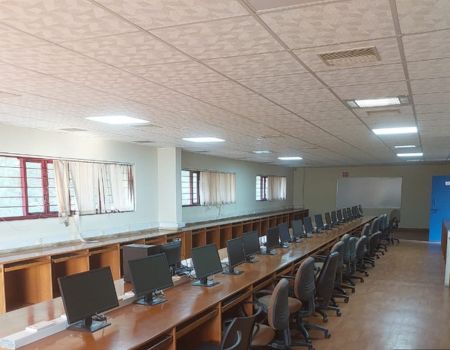
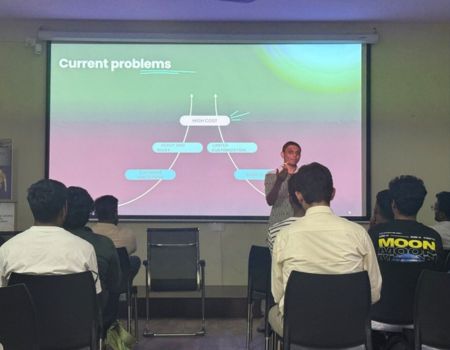
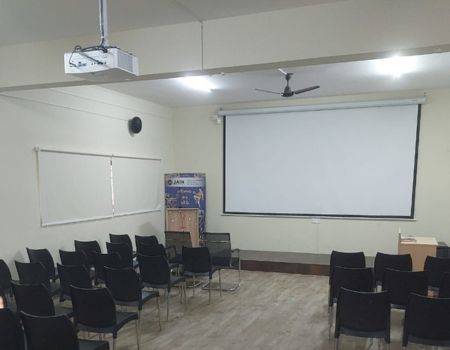
The Computer Science Laboratory is a technology-enabled learning space designed to support teaching, data analysis, research, and digital skill development for students of physical education and sports science. The lab facilitates applications in sports analytics, performance analysis, research methodology, data management, and digital communication, enabling students to integrate technology with sport and health sciences.
Materials and Equipment's available
- Desktop computers with high-speed processors
- Servers / centralized storage systems
- High-resolution monitors
- Laptops (for faculty and student projects)
- Printers and scanners
- High-speed internet and networking equipment
- Uninterrupted Power Supply (UPS)
- Multimedia projector / smart display
- Operating systems (Windows / Linux)
- Statistical analysis software (SPSS, R, Python)
- Sports analytics and performance analysis software
- Database management systems
- Programming and development tools
- MS Office / open-source office suites
- Data visualization tools
- Learning management system (LMS) access
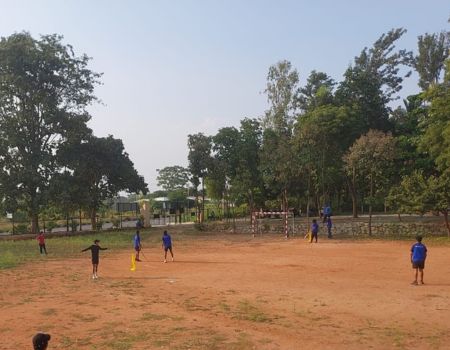
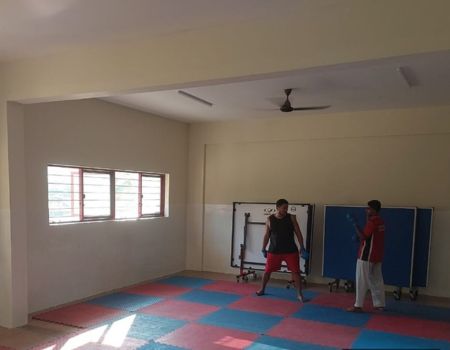
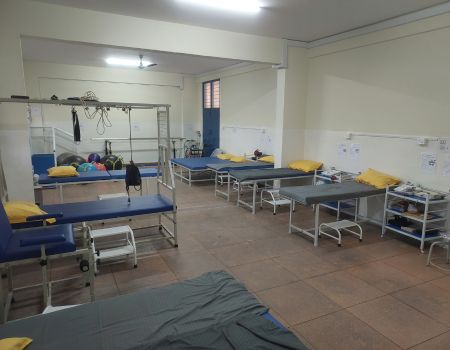
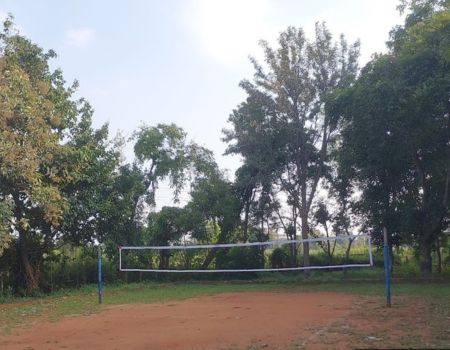
Medical, Courts & Support Facilities
Dedicated support infrastructure ensuring athlete health, safety, training quality, and competitive readiness.
- Medical & first-aid room
- Volleyball & multipurpose courts
- Karate, yoga & training halls
Performance Analysis Laboratory
The School of Sports Education and Research (SSER) is committed to integrating sports science, biomechanics, and performance analysis into athlete development and sports education. Recently, SSER initiated sports-specific performance analysis services for combat sports, racket sports, swimming, and ball sports to bridge the gap between scientific assessment and practical athletic performance.
Our Performance Analysis Lab - VERGE focuses on evidence-based athlete monitoring, biomechanical analysis, strength and conditioning assessment, movement screening, and sports performance optimization using modern sports science technologies.
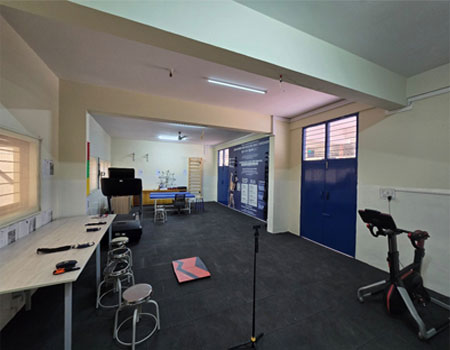
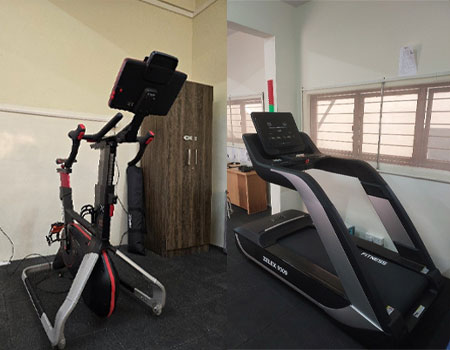
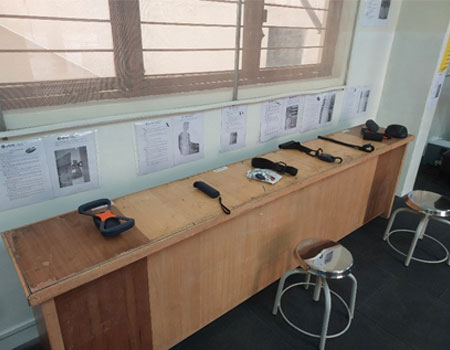
The lab highlights various areas of sports science including biomechanics and motion analysis, strength & conditioning assessment, movement screening, athlete monitoring, fatigue analysis, and sports-specific performance evaluation. It demonstrates how scientific methodologies are used to assess athletic performance, improve movement efficiency, reduce injury risk, and support evidence-based training practices.
A major focus of the SSER’s recent initiative of conducting sports-specific performance analysis for combat sports, racket sports, swimming, and ball sports. The first project was conducted for tennis athletes, where movement analysis, agility testing, sprint assessment, and lower-limb performance evaluation were carried out using scientific testing protocols. The website also showcases the active involvement of Bachelor of Sports Science (BSS) students, who participated in athlete testing and data collection under faculty supervision, helping them gain valuable hands-on practical exposure in sports science applications.
This reflects the institution’s commitment toward athlete development, innovation in sports science education, practical skill enhancement, and bridging the gap between scientific research and real-world sports performance.
Anatomy and Physiology Laboratory
The Anatomy and Physiology Laboratory is a foundational facility supporting teaching and practical training in human structure and function. Designed to meet academic and professional standards, the lab enables students to gain hands-on understanding of anatomical systems and physiological processes relevant to physical education, sports science, health, and rehabilitation. The laboratory supports experiential learning through demonstrations, experiments, and practical assessments, linking theoretical knowledge with real-world applications in sports performance and human health.
Materials and Equipment's available
- Human skeleton models (full and sectional)
- Anatomical charts and digital anatomy software
- Anatomical models (heart, brain, lungs, kidney, eye, ear)
- Compound and binocular microscopes
- Hemoglobinometer
- Sphygmomanometer (manual and digital)
- Stethoscope
- Spirometer / peak flow meter
- Hand grip dynamometer
- Goniometer
- Weighing scale and stadiometer
- Body composition analyzer
- Reflex hammer and tuning forks
- Stopwatches
- First-aid and safety kits
- Laboratory glassware and consumables (slides, cover slips, reagents)
Injury Prevention and Management Laboratory
The Injury Prevention and Management Laboratory is designed to provide students with practical knowledge and skills related to sports injury care, prevention strategies, and basic rehabilitation. The lab supports experiential learning in taping, strapping, first aid, injury assessment, and recovery techniques, enabling students to effectively manage common sports injuries and promote athlete safety and well-being.
Materials and Equipment's available
- Treatment tables / physiotherapy plinths
- Exercise mats
- Dumbbells (variable weights)
- Weight cuffs (ankle & wrist)
- Resistance bands and tubing
- Medicine balls
- Swiss balls / stability balls
- Balance boards, wobble boards, BOSU balls
- Parallel bars
- Wall bars / stall bars
- Pulley and shoulder wheel
- Finger ladder
- Therabands
- Foam rollers and massage rollers
- Hand grip exercisers
- Pedal exerciser / stationary cycle
- Treadmill
- Stepper / aerobic steps
- Posture assessment charts
- Goniometer and measuring tapes
- Ultrasound therapy unit
- Interferential Therapy (IFT) unit
- Transcutaneous Electrical Nerve Stimulation (TENS) unit
- Short Wave Diathermy (SWD) unit
- Infrared (IR) lamp
- Moist heat packs and hydrocollator
- Cryotherapy unit / ice packs
- Electrical muscle stimulator (EMS)
- Laser therapy unit (optional / advanced)
- Electrodes, lead wires, and sponges
- Treatment couches / plinths
- Timer and safety switches
- First aid and emergency kit
Advanced Sports Science Laboratory
The Advanced Sports Science Laboratory is a high-performance facility designed to support teaching, research, and athlete support services in the areas of human performance, training optimization, and sports analytics. The lab integrates physiology, biomechanics, strength and conditioning, and performance monitoring technologies to enable evidence-based assessment and enhancement of athletic performance. It provides students with hands-on exposure to modern testing protocols, data-driven decision-making, and applied research aligned with elite sport and academic standards.
Materials and Equipment's available
- Motorized treadmill (with speed and incline control)
- Cycle ergometer
- Metabolic analyzer (VO₂ max testing system)
- Lactate analyzer
- Heart rate monitors and chest straps
- Wearable performance tracking devices
- Force plates
- Timing gates / sprint timing system
- Isokinetic dynamometer
- Hand grip and back–leg dynamometers
- Jump mat / contact mat
- Body composition analyzer (BIA / DXA – optional)
- Portable spirometer
- EMG (Electromyography) system
- Motion analysis system / high-speed cameras
- Performance analysis software
- Reaction time analyzer
- Blood pressure monitor and pulse oximeter
- Anthropometric tools (skinfold calipers, measuring tapes, stadiometer)
- Data processing and analysis computers
High Performance Gym
The High Performance Gym is a specialized training facility designed to develop strength, power, speed, endurance, and movement efficiency for elite and aspiring athletes. Built on scientific training principles, the gym supports sport-specific conditioning, injury prevention, and long-term athlete development. It serves as a practical learning space for students of physical education, sports science, and strength & conditioning, enabling the application of evidence-based training methods in a high-performance environment.
Materials and Equipment's available
Strength & Power Training
- Olympic weightlifting platforms
- Olympic barbells and bumper plates
- Power racks / squat racks
- Smith machine
- Deadlift bars and safety bars
- Adjustable benches (flat, incline, decline)
- Dumbbells (full range)
- Kettlebells
- Resistance bands and chains
Functional & Athletic Training
- Plyometric boxes (soft and hard)
- Battle ropes
- Sled push / pull systems
- Agility ladders and hurdles
- Medicine balls (varied weights)
- TRX / suspension training systems
- Sandbags and functional training tools
Speed, Conditioning & Endurance
- Motorized treadmill
- Air bikes / spin bikes
- Rowing ergometer
- Ski ergometer
- Curve (non-motorized) treadmill
Recovery & Mobility
- Foam rollers and massage tools
- Stretching stations
- Percussion massage devices
- Ice bath / contrast bath facility
Monitoring & Safety
- Heart rate monitoring systems
- Mirrors for technique feedback
- Timing clocks and interval timers
- Flooring with shock absorption
- First aid and emergency response kits
Computer Science Laboratory
The Computer Science Laboratory is a technology-enabled learning space designed to support teaching, data analysis, research, and digital skill development for students of physical education and sports science. The lab facilitates applications in sports analytics, performance analysis, research methodology, data management, and digital communication, enabling students to integrate technology with sport and health sciences.
Materials and Equipment's available
- Desktop computers with high-speed processors
- Servers / centralized storage systems
- High-resolution monitors
- Laptops (for faculty and student projects)
- Printers and scanners
- High-speed internet and networking equipment
- Uninterrupted Power Supply (UPS)
- Multimedia projector / smart display
- Operating systems (Windows / Linux)
- Statistical analysis software (SPSS, R, Python)
- Sports analytics and performance analysis software
- Database management systems
- Programming and development tools
- MS Office / open-source office suites
- Data visualization tools
- Learning management system (LMS) access
Medical, Courts & Support Facilities
Dedicated support infrastructure ensuring athlete health, safety, training quality, and competitive readiness.
- Medical & first-aid room
- Volleyball & multipurpose courts
- Karate, yoga & training halls
Performance Analysis Lab
The School of Sports Education and Research (SSER) is committed to integrating sports science, biomechanics, and performance analysis into athlete development and sports education. Recently, SSER initiated sports-specific performance analysis services for combat sports, racket sports, swimming, and ball sports to bridge the gap between scientific assessment and practical athletic performance.
Our Performance Analysis Lab - VERGE focuses on evidence-based athlete monitoring, biomechanical analysis, strength and conditioning assessment, movement screening, and sports performance optimization using modern sports science technologies.
The lab highlights various areas of sports science including biomechanics and motion analysis, strength & conditioning assessment, movement screening, athlete monitoring, fatigue analysis, and sports-specific performance evaluation. It demonstrates how scientific methodologies are used to assess athletic performance, improve movement efficiency, reduce injury risk, and support evidence-based training practices.
A major focus of the SSER’s recent initiative of conducting sports-specific performance analysis for combat sports, racket sports, swimming, and ball sports. The first project was conducted for tennis athletes, where movement analysis, agility testing, sprint assessment, and lower-limb performance evaluation were carried out using scientific testing protocols. The website also showcases the active involvement of Bachelor of Sports Science (BSS) students, who participated in athlete testing and data collection under faculty supervision, helping them gain valuable hands-on practical exposure in sports science applications.
This reflects the institution’s commitment toward athlete development, innovation in sports science education, practical skill enhancement, and bridging the gap between scientific research and real-world sports performance.