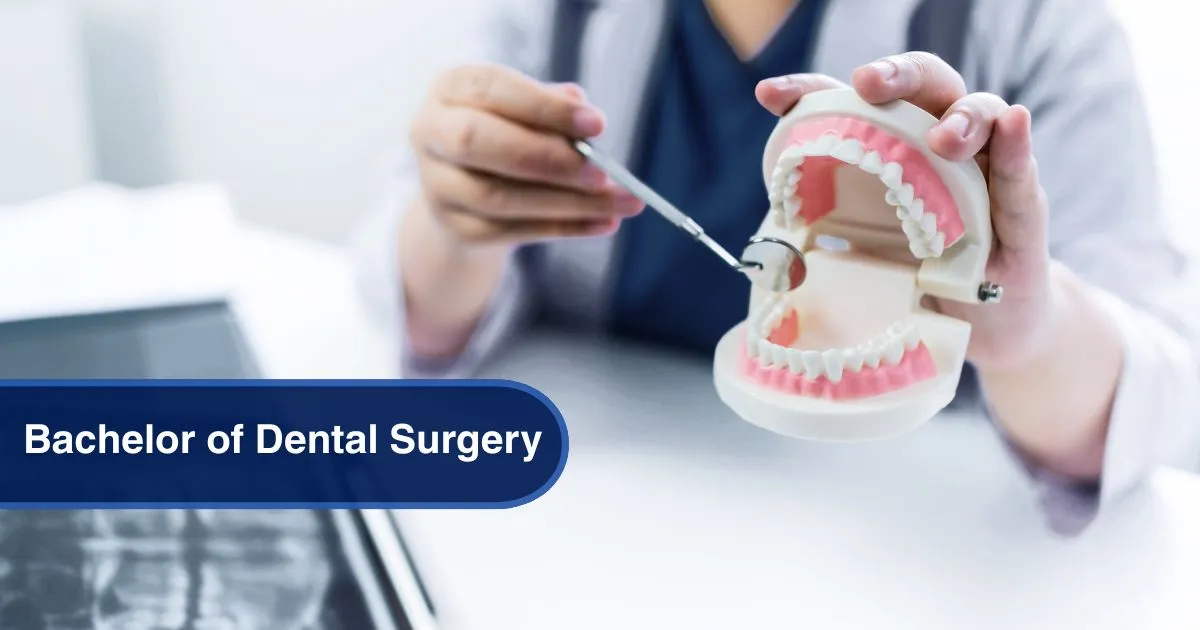
While medical education in India is frequently linked to MBBS, dentistry offers a specialized and equally vital path in healthcare. Focusing on oral health and advanced clinical treatment, it remains a preferred choice for many aspiring medical professionals.
The BDS full form in medical is Bachelor of Dental Surgery. This undergraduate program balances classroom study with intensive practical training to prepare students for the complexities of dental science.
From the course structure and eligibility to career prospects, understanding the core components of this degree is the first step toward becoming a dental professional.
BDS Course Details
Choosing a career in dentistry requires a clear understanding of the academic and professional commitment involved. The following table provides a breakdown of the essential BDS course details:
| Particulars of the BDS Degree in India |
Details |
| Full Form |
Bachelor of Dental Surgery |
| Level |
Undergraduate (UG) Degree |
| Governing Body |
Dental Council of India (DCI) |
| Minimum Age |
17 years as of December 31st of the admission year |
| Mandatory Exam |
National Eligibility cum Entrance Test (NEET-UG) |
BDS Course Duration
The total duration of the program is five years, consisting of four years of academic study followed by a one-year compulsory rotatory internship. This internship is essential for obtaining a license to practice, as it provides hands-on clinical experience across specialized departments like oral surgery and orthodontics.
BDS Eligibility
Understanding the BDS eligibility is the first step for any candidate wishing to enter this field. To qualify for the program, candidates must meet specific academic criteria, primarily a 10+2 qualification from a recognised board with Physics, Chemistry, and Biology.
In line with Medical Council of India (MCI) standards, applicants typically need a minimum of 50% marks in these science subjects, though relaxed cut-offs apply for reserved categories. English is also required as a qualifying subject. Performance in the entrance exam remains the final deciding factor for BDS admission.
Entrance Exam for BDS
Admission to most dental colleges across the country is primarily based on the National Eligibility cum Entrance Test (NEET-UG).
Conducted by the National Testing Agency (NTA), this exam serves as the uniform entry requirement for government, private, and deemed dental institutions.
The test consists of multiple-choice questions based on the 10+2 syllabus for Physics, Chemistry, and Biology.
BDS Syllabus and Subjects
The BDS syllabus spans four academic years, covering foundational science and advanced dental procedures. This structure ensures that the subjects in BDS are introduced at the right stage, moving from pre-clinical lab work to direct patient care.
The table below outlines the year-wise distribution of core subjects in BDS:
| Professional Year |
Core Subjects & Areas of Study |
| First Year |
• General Human Anatomy including Embryology & Histology
• General Human Physiology & Biochemistry
• Dental Anatomy, Embryology & Oral Histology |
| Second Year |
• General Pathology & Microbiology
• General & Dental Pharmacology
• Dental Materials
• Pre-clinical Prosthodontics & Conservative Dentistry |
| Third Year |
• General Medicine
• General Surgery
• Oral Pathology & Oral Microbiology |
| Fourth Year |
• Oral Medicine & Radiology
• Oral & Maxillofacial Surgery
• Orthodontics & Dentofacial Orthopaedics
• Periodontology
• Prosthodontics and Crown & Bridge
• Conservative Dentistry & Endodontics
• Paediatric & Preventive Dentistry
• Public Health Dentistry |
Note: Completing a one-year rotatory internship after the 4th year is compulsory to get a license for clinical practice.
Career After BDS
A career after BDS offers diverse opportunities across clinical practice, research, and advanced studies. Graduates can choose a direction based on their specialization and professional goals.
The primary paths for a career after BDS include:
- Clinical Practice: Working as a dental surgeon in private clinics, multi-speciality hospitals, or established dental networks.
- Private Practice: Establishing and managing an independent dental clinic to provide direct patient services.
- Higher Studies (MDS): Opting for a Master of Dental Surgery to specialise in areas like Endodontics, Orthodontics, or Oral Surgery.
- Public Health & Research: Joining government health schemes or engaging in clinical research and academic roles.
Also read: Dental Courses After 12th
BDS Scope in India
The BDS scope in India is expanding as oral healthcare becomes a core part of the overall medical system. With a growing focus on preventive care and cosmetic dentistry, the demand for trained professionals is increasing across various sectors.
| Area |
BDS Scope in India |
| Public Health |
Increased recruitment in government health schemes and community programs focused on early prevention. |
| Research |
Growing opportunities in clinical trials and studies related to advanced dental materials and treatment methods. |
| Education |
High demand for academic professionals to train the next generation of students in dental institutions. |
| Healthcare Systems |
Widespread integration of dental departments into multi-specialty hospitals and corporate healthcare chains. |
BDS Salary in India
The BDS salary in India is influenced by the employment sector, geographic location, and level of experience. While entry-level pay varies, earnings typically scale upward as professionals gain clinical expertise or move into specialized corporate and government roles.
| Employment Sector |
Experience Level |
Estimated Monthly Salary |
| Private Clinics |
Fresh Graduate (Entry-level) |
₹20,000 – ₹40,000 |
| Government Hospitals |
Junior Medical Officer/Resident |
₹50,000 – ₹75,000 |
| Army Dental Corps |
Captain (Entry-level) |
₹61,300 – ₹1,20,000+ |
| Corporate Hospitals |
Mid-level Professional |
₹60,000 – ₹90,000 |
| Specialized Practice |
Experienced Specialist |
₹1,50,000 and above |
Conclusion
Earning a BDS degree in India provides the necessary foundation for managing both routine dental treatments and long-term oral health. This qualification ensures that practitioners are well-versed in clinical procedures and the decision-making required in modern healthcare settings.
The BDS scope in India continues to expand as dental services become more integrated into multi-specialty medical systems. To support this professional journey, JAIN (Deemed-to-be University) offers an academic environment that bridges the gap between classroom theory and clinical application. Visit the University’s official website to explore available programs and related details.
FAQs
Q1: What is the full form of BDS?
A1: The BDS full form in medical is Bachelor of Dental Surgery. It is the primary professional undergraduate degree for students aiming to enter the field of dental science in India.
Q2: Is BDS a doctor?
A2: Yes. Graduates are certified dental surgeons and are entitled to use the "Dr." prefix upon registration with the State Dental Council.
Q3: Does BDS require NEET?
A3: Yes, the National Eligibility cum Entrance Test (NEET-UG) is the mandatory entrance exam for BDS in India.
Q4: How many years to become a dentist?
A4: To become a qualified dentist, the total BDS course duration is five years. This includes four years of academic study and clinical training, followed by a one-year compulsory internship.
Q5: What is the BDS salary?
A5: The BDS salary in India for freshers is typically between ₹20,000 and ₹40,000 per month in private clinics. However, in government sectors or for experienced specialists, the monthly income can range from ₹50,000 to over ₹1,50,000.