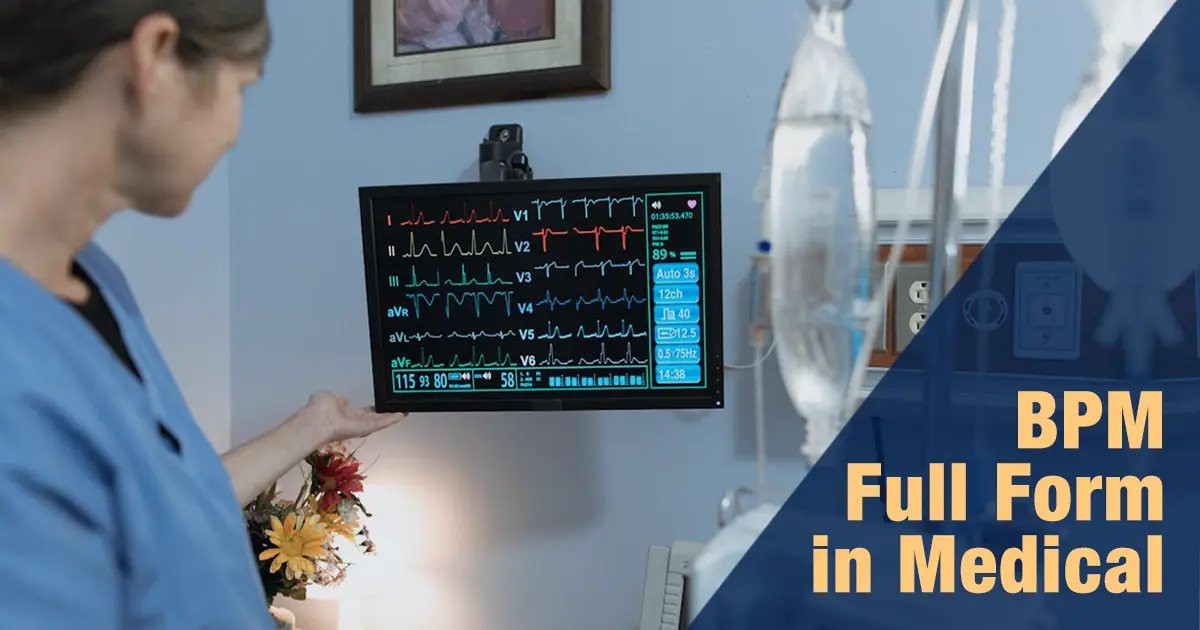
The moment you step into a clinic or hospital, one of the first things a healthcare professional does is check your vitals. Among these readings, your heart rate stands out as a key indicator of overall health. The BPM full form in medical refers to Beats Per Minute, a crucial measure that gives direct insight into how your heart is functioning.
Understanding the BPM meaning is essential for anyone focused on maintaining a healthy lifestyle. It simply refers to the number of times your heart beats in sixty seconds. While it may seem like a basic figure, it provides valuable information about your fitness level and overall cardiovascular health.
What is the Full Form of BPM?
While the term BPM is used across various industries such as music and logistics, in a medical context it refers to heart rate. If you are wondering what is the full form of BPM in a health context, it stands for Beats Per Minute. It indicates how many times the heart beats in one minute and reflects heart rate, not the strength or force of the heartbeat.
The human heart is a remarkable organ that functions best when it maintains a steady rhythm—not too fast and not too slow. When a physician checks your BPM, they are assessing whether your heart rate falls within a healthy range appropriate for your age and condition.
The Scientific Significance of BPM
The importance of BPM lies in its role as a key indicator of how efficiently the heart is working to supply oxygen and nutrients throughout the body. Rather than remaining constant, heart rate naturally varies based on activity, stress, sleep, and overall health. Monitoring BPM helps healthcare professionals identify irregularities early, supporting the prevention of potential cardiovascular conditions.
In general, resting heart rate is measured when a person is calm and at rest, typically seated or lying down. For most adults, a normal resting heart rate ranges between 60 and 100 BPM. Athletes may have lower resting rates, sometimes below 60 BPM, due to greater cardiac efficiency. A consistently elevated rate above 100 BPM (tachycardia) or a resting rate below 60 BPM when not physically conditioned (bradycardia) may indicate an underlying issue. Warning signs such as dizziness, chest discomfort, shortness of breath, or frequent palpitations should not be ignored, and medical advice should be sought if these symptoms persist.
How to Measure Your Heart Rate
Measuring the BPM full form in medical terms (beats per minute), can be done at home without specialized equipment, although digital monitors have made the process more convenient and accurate. To check it manually, the pulse can be located in two common areas:
- Radial pulse: Place two fingers on the inner side of the wrist, just below the thumb.
- Carotid pulse: Gently place two fingers on the side of the neck, just below the jawline.
Once the pulse is located, the number of beats should be counted for 30 seconds and then multiplied by two to calculate the heart rate in BPM. This method provides an estimate of heart rate at rest.
Tracking BPM regularly helps establish a baseline resting heart rate and makes it easier to notice deviations from normal patterns, which may indicate changes in physical condition, stress levels, or underlying health concerns.
Factors That Influence Your BPM
It is important to remember that your heart rate is not a static number. It fluctuates throughout the day based on several internal and external factors.
- Physical Activity: During exercise, your muscles require more oxygen, which forces the heart to speed up.
- Stress and Emotion: Anxiety or sudden fear triggers the "fight or flight" response, releasing adrenaline that increases your heart rate.
- Temperature: When humidity and temperatures are high, the heart may beat slightly faster to help cool the body.
- Medication: Certain drugs, such as beta-blockers, are designed to slow the heart rate, while others may increase it.
- Dehydration: When the body lacks fluids, blood volume decreases, requiring the heart to work harder to maintain blood pressure.
Why Monitoring Matters for Longevity
Consistently high resting heart rates, a condition known as tachycardia, can put excessive strain on the heart over time. Conversely, a heart rate that is too slow, known as bradycardia, might mean the brain and other organs are not getting enough oxygen. By understanding the BPM full form, patients can communicate more effectively with their doctors and take proactive steps toward maintaining heart health.
Nowadays, modern wearables make it easier to track these statistics. The smartwatch or fitness tracker displays live information, enabling you to monitor how your heart reacts to different stimuli, such as sleep, coffee, and stress at work. Although these gadgets cannot replace professional diagnostic equipment, they are great for personal use.
Conclusion
Monitoring heart rate is one of the simplest yet most effective ways to stay informed about physical well-being. Whether for athletic recovery or general cardiovascular awareness, understanding the BPM full form in medical terms helps in interpreting the signals the body sends. A healthy diet, regular physical activity, and effective stress management all contribute to maintaining an optimal heart rhythm over time.
For those interested in pursuing a career in healthcare or exploring medical sciences, various academic programs provide a strong foundation for future opportunities in the field.
Start building your foundation in medical science. Take the first step toward a future in medicine with the right education.
Frequently Asked Questions (FAQs)
Q1. What does BPM stand for?
A1. BPM stands for Beats Per Minute and is used to measure heart rate.
Q2. How is BPM calculated?
A2. You can calculate it by counting the number of heartbeats felt at a pulse point (like the wrist or neck) for 60 seconds. Alternatively, count for 15 seconds and multiply by four.
Q3. Why is BPM important in music?
A3. In music, BPM indicates the tempo or speed of a song. It helps musicians maintain a consistent pace and ensures that different instruments stay synchronized during a performance.
Q4. What is BPM full form in post office?
A4. In the context of the Indian postal system, BPM stands for Branch Postmaster. This is the official designation for the person in charge of a Branch Post Office.
Q5. IT BPM full form?
A5. In the business and technology sector, the IT BPM full form is Information Technology Business Process Management. It refers to the management of business processes using IT services.
Q6. What is PR BPM full form?
A6. The PR BPM full form usually refers to Pulse Rate Beats Per Minute. It is often seen on pulse oximeters and indicates the number of times the heart beats per minute, as detected through the finger.
Q7. What is BPM full form in computer?
A7. In computing and corporate management, BPM stands for Business Process Management. It involves using various methods to discover, model, analyze, and optimize business processes.