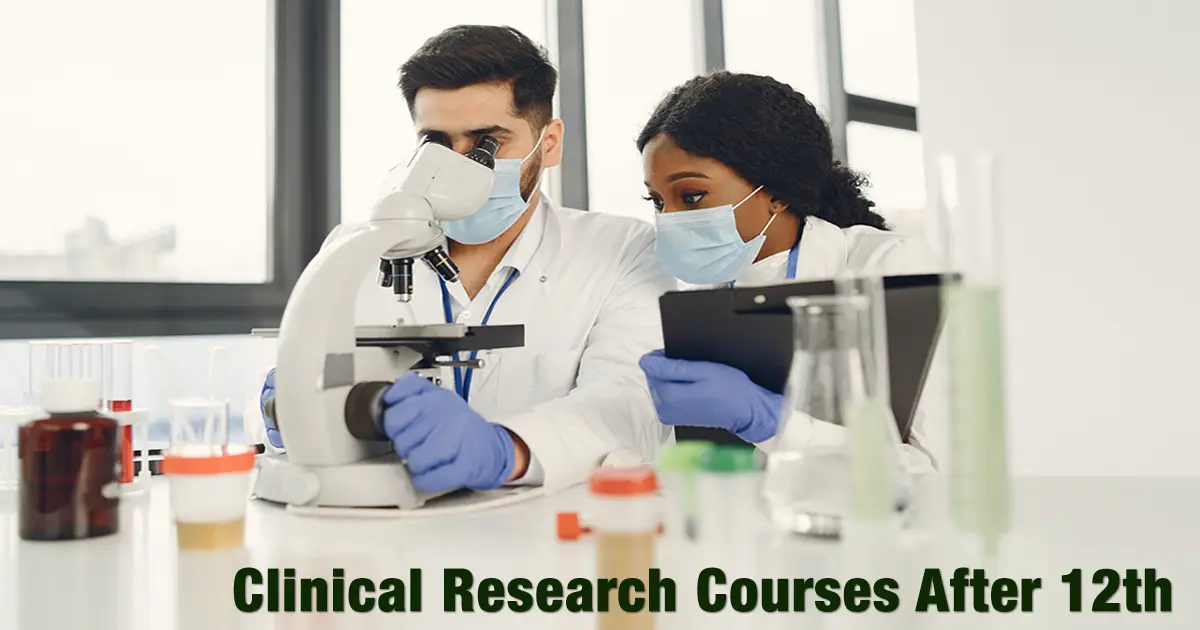
The healthcare and pharmaceutical sectors in India depend heavily on scientific validation to launch new medicines, vaccines, and medical devices. Before any medical advancement reaches patients, it must undergo rigorous testing for safety and effectiveness through clinical research. For science students, entering this field offers a meaningful way to directly impact patient care and contribute to global health innovations.
Understanding available academic pathways, career progression, and financial prospects helps students make an informed decision about their future. This guide covers everything you need to know about clinical research courses after 12th, including course types, eligibility criteria, employment scope, and potential earnings.
Understanding Clinical Research
Before exploring educational pathways, students must grasp what this field actually entails. So, what is clinical research course design intended to teach? At its core, clinical research is the systematic study of health and illness in human subjects. It focuses directly on developing advanced, safer methods to prevent, diagnose, and treat medical conditions.
The entire system operates under strict regulatory oversight to protect human volunteers and ensure absolute data integrity. Students entering this domain learn how to structure trial protocols, manage patient cohorts, monitor safety parameters, and handle documentation required for regulatory approvals. The curriculum blends essential concepts from pharmacology, toxicology, medical ethics, and complex data management.
Types of Clinical Research Courses in India
Students can select from distinct learning formats depending on their long-term career aims and the time they want to commit. The types of clinical research courses in India generally fall into three categories: dedicated undergraduate degrees, postgraduate or advanced diplomas, and focused skill certifications.
| Course Type |
Average Duration |
Ideal For |
Key Focus Areas |
| Bachelor's Degree (B.Sc. / B.Pharm) |
3 to 4 Years |
Class 12 science graduates seeking a comprehensive academic foundation and long-term career growth. |
Clinical trial design, pharmacology, regulatory affairs, biostatistics. |
| Post-Graduate / Advanced Diploma |
6 to 12 Months |
Life science or pharmacy graduates looking for structured, job-oriented transition training. |
Good Clinical Practice (GCP) guidelines, trial monitoring, site management. |
| Professional Certificates |
3 to 6 Months |
Graduates or working professionals wanting to upskill in specialized software or specific sub-domains. |
Pharmacovigilance, medical writing, clinical data management systems (CDMS). |
Eligibility Criteria for Clinical Research Programs
Colleges set clear academic baselines to ensure entering students can handle a rigorous scientific curriculum. Fulfilling the basic clinical research courses eligibility requirements is the first step toward securing admission.
| Eligibility Parameter |
Requirements for Students |
| Academic Stream |
Successful completion of Class 12 from a recognized higher secondary education board, specializing in the Science stream. |
| Core Subjects |
Physics and Chemistry are mandatory, paired with either Biology, Mathematics, or Biotechnology depending on the specific institute's guidelines. |
| Minimum Marks |
A minimum aggregate score of 50% in Class 12 board examinations (with relaxation provided for reserved categories as per individual university regulations). |
| Age Limit |
Generally requires candidates to be at least 17 years old by the time of admission, though this varies by institution and specific program format. |
Course Duration and Timeline
The time spent earning a qualification depends heavily on the specific academic path students choose. Beyond classroom hours, the overall clinical research course duration dictates how structured hands-on training will be.
While curriculum designs vary, several multi-year undergraduate programs dedicate their final semester to practical field exposure, such as corporate internships or industry projects. However, because structured hospital postings or dedicated field placements are not universally guaranteed, students should verify individual college partnerships to ensure the curriculum includes hands-on training prior to graduation.
Key Skills Required for Clinical Research
Succeeding in this scientific domain requires a balanced mix of academic knowledge and sharp professional competencies. While a qualification opens the door, specific technical and soft skills determine long-term career progression.
| Core Skill |
Importance in Clinical Trials |
| Attention to Detail |
Crucial because even a minor error in recording patient data or tracking adverse events can compromise the entire research project. |
| Regulatory & Compliance Knowledge |
Necessary to understand and strictly implement global and local ethical guidelines, such as ICH-GCP (Good Clinical Practice) and CDSCO regulations. |
| Data Analytics & Management |
Required for interpreting complex data patterns, maintaining absolute data integrity across electronic case report forms, and utilizing biostatistics software. |
| Medical Documentation |
Essential for maintaining accurate, audit-ready Trial Master Files (TMF) and writing clear, standardized clinical study reports. |
| Advanced Communication |
Vital for translating complex scientific jargon when consenting trial participants, and for providing clear updates to medical investigators and pharmaceutical sponsors. |
| Critical Thinking & Problem-Solving |
Necessary for identifying protocol deviations early, addressing logistical bottlenecks at trial sites, and managing unexpected patient safety variables. |
| Project Management |
Key to ensuring trials stay on track by effectively managing timelines, coordinating multi-center studies, and tracking investigational product supplies. |
Transitioning into Advanced Clinical and M.Phil. Research Programs
Selecting the right institution significantly impacts an academic's career trajectory. When evaluating options, researchers must evaluate specific benchmarks to learn how to choose the best clinical research course in India.
First, verify the institution's official university affiliations and regulatory approvals. The curriculum must align with current scientific standards and feature hands-on training with modern electronic data analytics tools. Second, evaluate the quality of campus infrastructure, specifically dedicated research laboratories and up-to-date digital databases.
Finally, consider the faculty profile. Institutions featuring instructors with active, published experience running clinical trials provide greater practical value than those relying strictly on theoretical instruction. For scholars looking to build an advanced research career without pursuing a traditional medical degree, entering specialized clinical research courses after 12th or pursuing an M.Phil. pathway establishes a highly structured entry point into the pharmaceutical and academic drug development sectors.
How to Become a Clinical Researcher
One of the most common questions asked by students who are considering this field is how to become a clinical researcher. The following table outlines a step-by-step action plan to help students build a lasting career path here.
| Step |
Action Plan |
Key Objectives for Students |
| Step 1 |
Complete Higher Secondary Education |
Focus on building a strong foundation in core sciences like Biology, Chemistry, or Biotechnology. |
| Step 2 |
Acquire Specific Academic Qualifications |
Enroll in dedicated undergraduate courses in clinical research (such as a B.Sc. in Clinical Research) or pursue a related life sciences, pharmacy, or medical degree. |
| Step 3 |
Leverage Professional Certifications |
Pursue optional, short-term specialized certifications in Good Clinical Practice (GCP) or Pharmacovigilance to significantly enhance employability. |
| Step 4 |
Secure a Practical Internship |
Complete hands-on training at registered Contract Research Organizations (CROs), pharmaceutical firms, or institutional research hospitals. |
| Step 5 |
Evaluate Specialized Studies or Workforce Entry |
Apply for entry-level roles like Clinical Trial Coordinators to gain operational experience, or pursue advanced postgraduate specializations (M.Sc. or M.Phil.) to enter high-level scientific roles. |
Career Opportunities Post Clinical Research Education
The actual job market for trained individuals contains several options. Ongoing growth in medical infrastructure ensures that diverse career opportunities after clinical research courses in India span across major industrial sectors.
| Job Sector |
Common Employment Venues |
Target Job Roles |
| Contract Research Organizations |
Specialized clinical trial management agencies |
Clinical Research Associate, Trial Assistant |
| Pharmaceutical Firms |
In-house research and drug development departments |
Pharmacovigilance Associate, Drug Safety Officer |
| Hospitals & Medical Centers |
Large super-specialty hospitals and trial sites |
Clinical Research Coordinator, Site Manager |
Healthcare IT & Analytics
(Typically requires additional technical skills like SQL, R, SAS, or Python) |
Companies developing medical software systems |
Clinical Data Management Executive, Data Analyst |
| Regulatory & Scientific Operations |
Corporate compliance branches and government liaison offices |
Regulatory Affairs Associate, Medical Writer, Scientific Reviewer |
| Quality Compliance & Auditing |
Independent quality inspection departments and oversight teams |
Clinical Trials Auditor, Quality Assurance (QA) Specialist |
Salary After Clinical Research Courses in India
Take-home pay packages fluctuate based on institutional degrees, specific job assignments, city locations, and the size of the hiring firm. The salary after clinical research courses in India typically starts at a moderate level but climbs rapidly once professionals lock in practical field hours.
| Experience Level |
Typical Job Roles |
Average Salary Range (Per Annum) |
Key Operational Influences & Variations |
| Entry-Level (0 to 2 Years) |
Clinical Trial Coordinator, Data Management Trainee, Pharmacovigilance Associate |
₹2.5 Lakhs to ₹4.5 Lakhs |
Entry packages vary significantly depending on whether a candidate holds a basic B.Sc. or a specialized B.Pharm / M.Sc. degree. |
| Mid-Level (3 to 5 Years) |
Clinical Research Associate (CRA II), Senior Data Analyst, Regulatory Affairs Associate |
₹5.0 Lakhs to ₹8.0 Lakhs |
Professionals with strong multi-site monitoring capabilities or database programming skills command higher mid-tier brackets. |
| Senior Level (8+ Years) |
Clinical Project Manager, Head of Clinical Operations, Senior Principal Scientist |
₹10.0 Lakhs to ₹15.0+ Lakhs |
General figures can underrepresent top-tier packages; senior managers at global MNCs or major biotechnology firms often cross this ceiling. |
Another thing to keep in mind is the geographic factor. Location heavily dictates early and mid-career earnings. Tier 1 healthcare and pharmaceutical hubs like Bengaluru, Mumbai, Hyderabad, and Delhi-NCR consistently offer 15% to 30% higher base salaries compared to Tier 2 cities due to the concentration of global Contract Research Organizations (CROs) and multinational corporate headquarters.
Conclusion
Entering the clinical research domain offers a structured and intellectually demanding career path for science graduates. By mastering core regulatory frameworks, selecting an appropriate academic path, and developing critical technical skills, students can establish a foundational role within this scientific sector. Continuous self-education and strict adherence to evolving global medical guidelines remain the essential drivers for long-term professional progression.
For students evaluating specialized educational routes, analyzing individual course structures provides valuable clarity. Prospective scholars can explore detailed course frameworks and related scientific programs at JAIN University to identify pathways that align with their long-term academic and career goals.
FAQs
Q1. What are the skills required for Clinical Research?
A1. The primary skills include deep attention to detail, a strong understanding of regulatory guidelines like ICH-GCP, data management capabilities, and effective communication skills. Analytical thinking and the ability to work collaboratively with medical professionals are also essential.
Q2. What is the eligibility for clinical research courses in India?
A2. To meet the necessary academic criteria, students must complete their Class 12 examinations in the Science stream (with Physics, Chemistry, and Biology or Mathematics) from a recognized education board, securing a minimum aggregate score of 50%.
Q3. What is the duration of clinical research courses?
A3. The total timeline depends on the program type. Undergraduate degrees take 3 to 4 years, diploma programs last between 1 and 2 years, while short-term certificate courses conclude within 3 to 6 months.
Q4. Are there clinical research courses with 100% placement?
A4. No institution can legally guarantee absolute 100% placement, as final hiring depends entirely on an individual student’s performance, knowledge, and interview skills. However, many reputed institutes offer strong placement assistance, industry tie-ups, and campus interviews with leading Contract Research Organizations and pharmaceutical companies.
Q5. What jobs can I get after a clinical research course?
A5. Graduating from these programs opens up various professional avenues. You can secure roles as a Clinical Research Associate (CRA), Clinical Research Coordinator (CRC), Clinical Data Management executive, Pharmacovigilance associate, Medical Writer, Regulatory Affairs Associate, or Quality Assurance/Quality Control Analyst.
Q6. What is the salary after clinical research courses in India?
A6. The entry-level earnings generally range from ₹2.5 Lakhs to ₹4.5 Lakhs per annum. With mid-level experience of 3 to 5 years, earnings can grow to ₹5 Lakhs to ₹8 Lakhs per annum, while senior managers can earn over ₹10 Lakhs to ₹15 Lakhs per annum.
Q7. How do I find clinical research jobs?
A7. Qualified professionals can secure positions by converting university internships into full-time roles, participating in campus placement drives, and joining professional industry groups like the Indian Society for Clinical Research (ISCR). Regularly monitoring pharmaceutical corporate career pages and networking on LinkedIn are also highly effective methods.