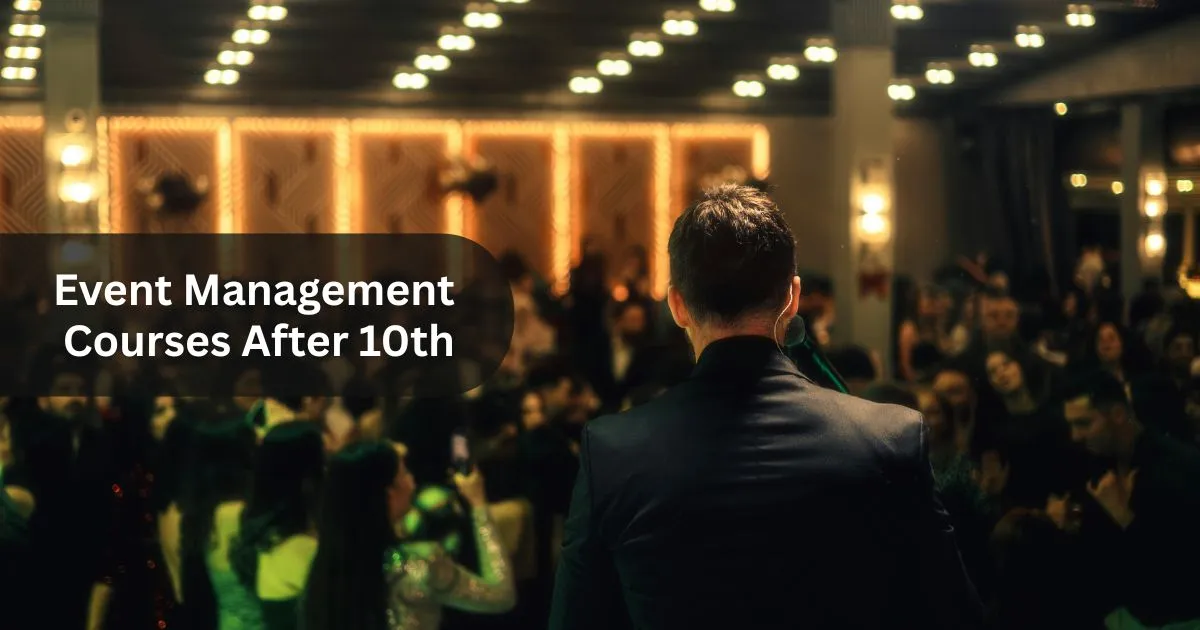
India is a nation where celebrations and social gatherings are an essential part of our lives.
A recent report estimated that approximately 48 lakh weddings were conducted in the last decade in India. This created a huge demand for services in relation to event planners, wedding coordinators and decorators.
The event industry is rapidly expanding in the country, which has led to the rising need for professional Event Managers in these sectors.
Event Management is a great career choice after 10th if you love to plan, be creative, communicative and organize memorable events.
The Event Management industry provides a variety of career paths for creative and organized people, ranging from destination weddings to corporate seminars, fashion shows to music festivals.
This blog explores the best Event Management courses after 10th, eligibility criteria, skills, career opportunities, and salary prospects in this field.
What is Event Management?
Event Management is the process of planning, organizing, and managing different types of public and private events for social or business purposes.
These events can be small or large in scale and may include business conferences, seminars, trade shows, ceremonies, parties, concerts, festivals, and press conferences.
Event Managers are responsible for handling the events as per the client’s requirements, budget, and schedule. They also coordinate with different vendors and service providers to ensure the smooth execution of the event.
List of Best Courses in Event Management After 10th
Event Management courses after 10th focus on important areas such as event planning, event management fundamentals, and event production logistics.
Some of the best Event Management courses after 10th qualification include diploma and certificate level courses, which are listed below:
| Course Name |
Description |
Duration |
| Diploma in Event Management |
Teaches budgeting, venue management, event marketing, client handling, and operational aspects of organising different types of events. |
10 months to 1 year |
| Diploma in Wedding Planning and Management |
Covers wedding styling, theme decoration, vendor handling, guest management, budgeting, and wedding operations. |
1 year |
| Diploma in Event Planning and Production |
Focuses on stage production, logistics, technical setup, operations management, and large-scale show production. |
1 year |
| Diploma in Corporate Event Management |
Provides knowledge of organising corporate meetings, conferences, seminars, product launches, and professional business gatherings. |
1 year |
| Diploma in Hotel and Event Management |
Combines hospitality management concepts with guest services, customer relations, venue operations, and hospitality-based events. |
1 year |
| Certificate in Event Management |
Introduces students to scheduling, budgeting, operations management, and the fundamentals of organising events. |
3 to 6 months |
| Certificate in Wedding Planning |
Teaches the basics of wedding coordination, décor planning, vendor communication, and event organization. |
6 months |
| Certificate in Corporate Event Management |
Focuses on planning and managing business events, corporate meetings, conferences, and networking events. |
3 to 6 months |
| Certificate in Event Planning and Design |
Covers creative event concepts, event themes, decoration planning, event styling, and design techniques. |
3 to 6 months |
| Event Management for Beginners |
Introduces beginners to the fundamentals of organising, scheduling, and managing small-scale events. |
2 hours |
Event Management Courses After 10th Eligibility Criteria
The eligibility criteria to apply to Event Management courses after 10th are to pass Class 10 in any stream from a recognized board with at least 45-50% marks.
However, the actual requirements may vary depending on the institute. Therefore, it is advised to check the official website of the college for more information.
How to do Event Management Courses?
Admission to Event Management courses after 10th is generally based on merit. You must follow the steps given below to complete the admission process successfully:
- Fill out the application form available on the institute’s official website and submit it online.
- For offline applications, download the application form from the website, fill it carefully, and send it to the institute along with the required documents.
Important documents usually required during admission include:
- SSC mark sheet and certificate
- Aadhaar Card copy
- Caste certificate (if applicable)
- Passport-size photograph
- After submitting the application form, pay the course fee through NEFT, cheque, demand draft, or online payment methods.
Syllabus for Event Management Courses After 10th
The actual subject list for Event Management courses after Class 10 may vary, depending on the college you are applying to. However, a general overview of the topics covered in these courses is as follows:
| Syllabus Topics |
| Introduction to Event Management |
Event Risk Management |
| Business Communication |
Marketing Management |
| Event Advertising |
Cross Cultural Management |
| Financial Accounting |
IT Support for Event Management |
| Event Planning and Team Management |
Event Production and Catering |
| Event Safety and Security |
Budget Management |
| Public Relations and Media Management |
Hospitality and Guest Management |
| Venue and Logistics Management |
Creative Event Designing |
| Social Media and Digital Marketing for Events |
Sponsorship Management |
| Event Production Management |
Legal Aspects of Event Management |
Please note: Some diploma courses may also require you to complete mandatory project work.
Career in Event Management Courses After 10th
The industry-focused curriculum of the diploma and certificate courses in Event Management will help you pursue opportunities in event planning, client coordination, and venue management.
Some of the promising entry-level job roles in this field are as follows:
| Job Role |
Job Description |
Average Salary (Lakhs Per Annum) |
| Event Planner |
Plans, organizes, and manages events such as conferences, parties, exhibitions, and corporate functions. |
INR 2.7 to 3.5 LPA |
| Marketing Executive |
Promotes events and brands through marketing campaigns, advertisements, and audience engagement activities. |
INR 2.5 to 3.4 LPA |
| Fundraising Event Coordinator |
Organizes fundraising events and campaigns to collect donations and support social or business causes. |
INR 2.9 to 3.4 LPA |
| Wedding Planner |
Manages wedding arrangements, décor, vendors, budgeting, and event coordination for clients. |
INR 3.1 to 3.3 LPA |
| Venue Coordinator |
Handles venue bookings, event setup, guest arrangements, and coordination of venue-related activities. |
INR 2.6 to 3.3 LPA |
Please note: These salary ranges are indicative and may vary, depending on the job location, employer, experience and skill-set.
Required Skills for Event Management Courses After 10th
Event Management is a challenging job since you need to perform many tasks under pressure and still be calm and organized. Prominent skills required to become a successful professional in this field are as follows:
| Skill |
Description |
| Planning Skills |
Proper planning of budgets, schedules, venues, and activities for successful event execution. |
| Organizational Skills |
Management of event details, timelines, coordination, and backup arrangements for smooth operations. |
| Communication Skills |
Clear interaction with clients, vendors, and teams through calls, emails, and meetings. |
| Interpersonal Skills |
Ability to work with different personalities, maintain relationships, and handle conflicts effectively. |
| Multitasking Skills |
Handling multiple responsibilities simultaneously such as lighting, seating, stage setup, and guest relations. |
| Creative and Problem-Solving Skills |
Quick resolution of unexpected challenges through creative thinking and decision-making. |
| Negotiation Skills |
Effective bargaining with vendors and service providers to maintain quality within budget. |
| Technological Skills |
Use of event management software and digital tools for scheduling, registrations, budgeting, and audience engagement. |
Key Takeaways
An Event Management course after 10th will help you develop practical skills in planning, communication, coordination and budgeting for events from an early stage.
This career gives you creative freedom, growth, and multiple job opportunities, whether you want to become an Event Planner, Wedding Planner or a Corporate Event Coordinator.
If you are planning a career in this field, JAIN (Deemed-to-be University) offers short-term courses that will help you become a competitive candidate in the growing economy.
Explore the relevant courses in event management on our website. Apply now!
FAQs
Q1. What is the scope of Event Management?
A1: Event Management has a wide career scope in industries such as entertainment, hospitality, advertising, media, tourism, and corporate sectors. Skilled professionals can work as Event Planners, Wedding Planners, Venue Coordinators, and Marketing Executives.
Q2. After 10th can we do Hotel Management?
A2: Yes. You can pursue diploma and certificate courses in Hotel Management after completing Class 10 from a recognized board. These courses help students develop hospitality, customer service, and management skills.
Q3. How many years course is Event Management?
A3: Event Management courses vary in duration depending on the type of program. Certificate courses usually last 3 to 6 months, while diploma courses generally take 1 year to complete.
Q4. How to get admission in Event Management?
A4: Admission to Event Management courses after 10th is mostly based on merit scores. You must fill out the application form, submit the required documents, and complete the fee payment process to enrol on the program.