Environmental studies refer to the study of the interactions between humans and the natural environment. It aims to understand, analyse, and solve environmental problems using scientific methods and principles. The subject fosters environmental awareness and literacy among students and citizens, promoting sustainable living. This blog is a guide to the EVS subject full form, its importance, topics covered, and its significance in India.
EVS Full Form
The EVS full form is Environmental Studies, often interchangeably called Environmental Science in higher contexts, focusses on interactions between humans and the natural world. EVS at the school level encompasses subjects like Biology, Geography, and Sociology to address issues like pollution and conservation. Schools emphasise the study of environmental studies to build awareness and concern for the environment at an early age.
What is EVS Subject?
EVS is a foundational subject in primary education that integrates Science, Social Studies, and Environmental awareness. The subject introduces students to concepts of ecological balance and human impact on nature. EVS full form fosters critical thinking by connecting classroom learning to real-world issues such as pollution and resource conservation. It is an integrated discipline that explores components like living organisms, natural resources, and human activities. It is also offered as a subject at the college level to build knowledge of environmental science, policy, and topics of sustainability.
Environmental Education (EVS) is crucial for students in:
- Enhancing the critical thinking and analytical skills among students
- Fostering environmental responsibility and cleanup activities
- Building environmental literacy and advocacy for sustainable solutions
- Promoting personal well-being through outdoor activities
- Building awareness of complex issues like climate change among students
Scope of EVS Education in India
Environmental studies is an important field that can help individuals improve their sensitivity to the environment. EVS education was made mandatory at schools and undergraduate levels in India by the Supreme Court in 2003. The goal of EVS education in India is to raise awareness about environmental issues and promote a culture of conservation.
EVS Education in India has scope in:
- Enhancing knowledge of the systems and processes in the environment.
- Fostering values of sustainability and environmental care among people.
- Empowering participation and engagement in environmental activism.
- Improving public health by promoting awareness about pollution and waste management.
Key Topics in EVS Subject
EVS covers various subjects include Biology, Chemistry, Physics, Geography, Sociology, and Ecology. Broad topic areas under the EVS include:
- Climate Change
- Air, Water and Plastic Pollution
- Renewable Energy
- Waste Management
- Biodiversity
Teaching Methods and Activities in Schools
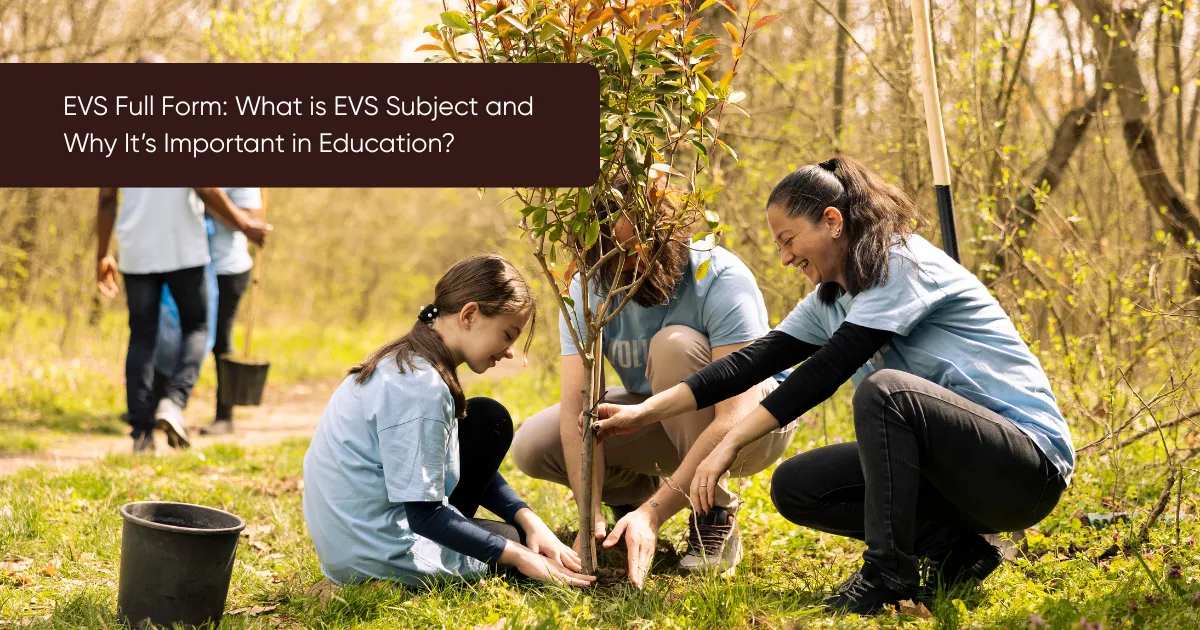
Teaching methods and activities for EVS in schools mostly emphasise hands-on experiential learning. This is aimed at fostering curiosity and environmental awareness among students. Most schools arrange field trips to nearby parks, lakes, and places of ecological importance for students to teach about ecosystems. Activities such as group projects on creating recycled art from waste materials, experiments with pollution control, sand and charcoal filtration, and sustainability activities, build attitudes of environmental concern among students.
Other activities:
- Nature walks
- Eco-club initiatives
- Planting activities
- Environmental talks
- Eco Workshops
- Recycling activities
- Lake cleaning
- Eco-Marches
- Celebrations of the Environment Week
Integrating EVS into daily school activities helps future generations actively contribute to India's goals of sustainability.
Final thoughts
The EVS subject full form is Environmental Studies. The subject helps students develop environmental literacy and a mindset of sustainability. The subject provides a strong foundation for students at the school and university levels. Understanding the EVS subject will foster practical knowledge for sustainable living among citizens, promoting a greener environment.
Ready to pursue a career in EVS? Check out careers, course eligibility, and curriculum details of BSc Environmental Science.
FAQs
Q1. Who is the father of EVS?
A1. Alexander von Humboldt is widely known as the Father of Environmental Science. Ramdeo Misra is known as the father of Indian Ecology.
Q2. What does EVS stand for?
A2. The full form of EVS in education stands for Environmental Studies or Environmental Science.
Q3. Why do we study EVS?
A3. Environmental studies help us to understand the interactions between humans and the environment. It is a practical field that raises awareness of critical global issues and helps adopt sustainable living.
Q4. Is EVS compulsory?
A4. Yes, environmental studies is a compulsory subject in India. It is mandated by the Supreme Court for the elementary and university levels of formal education.