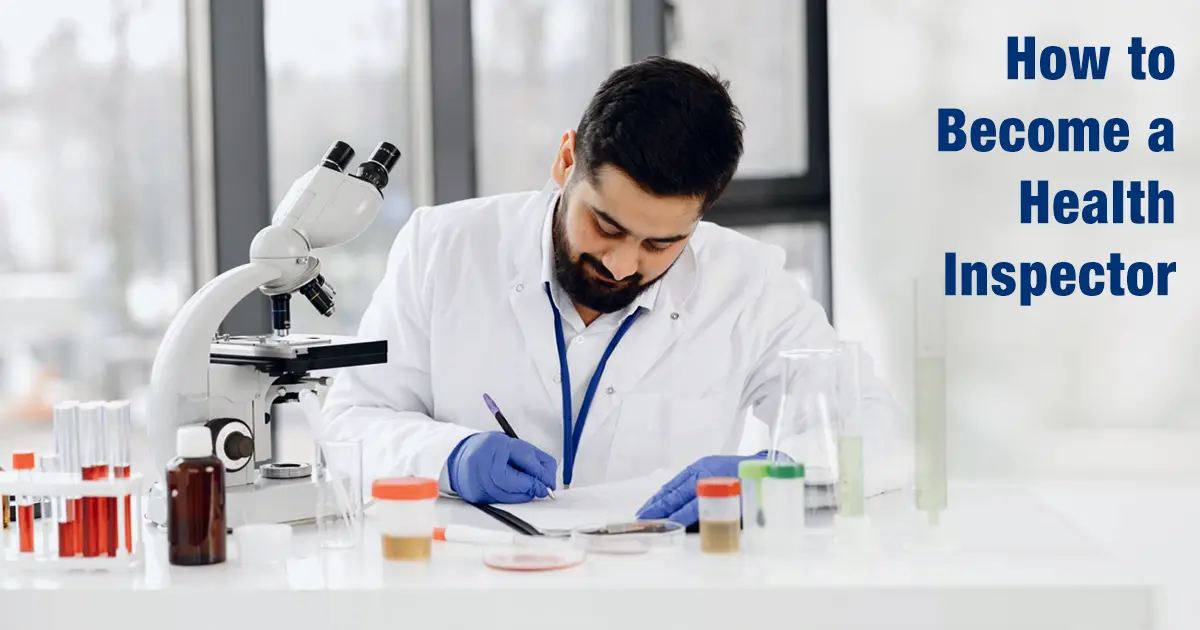
Public health depends on unglamorous, everyday work: checking that a restaurant kitchen is clean, that a water supply is safe, that a factory follows hygiene norms. The people who carry out this work are health inspectors, and their decisions affect communities far more directly than most desk jobs ever could. For students weighing a career in this field, understanding the qualifications, responsibilities, and earning potential involved can make the decision much clearer.
Who is a Health Inspector?
“What is a Health Inspector?” is often the first question students ask before exploring this career path. A health inspector is a public health professional who examines public and private facilities, such as restaurants, hospitals, food processing units, schools, and water treatment plants, to confirm that they meet government-mandated hygiene and safety standards. When a facility falls short, the inspector documents the violation, recommends corrective steps, and in many cases has the legal authority to issue warnings or penalties.
The role sits at the intersection of science and law enforcement. An inspector needs to understand microbiology and sanitation practices well enough to spot a genuine hazard, and they need the judgment to communicate findings clearly to business owners, government officials, and sometimes the public.
Duties and Responsibilities of a Health Inspector
The day-to-day work varies depending on the sector an inspector is assigned to, but certain health inspector duties and responsibilities stay consistent across most postings:
- Conducting scheduled and surprise inspections of food establishments, healthcare facilities, and industrial sites
- Testing water, food, and waste samples for contamination
- Reviewing sanitation records and staff hygiene practices
- Maintaining digital inspection records and documentation
- Using inspection software and digital tools to record findings and track compliance
- Preparing compliance reports and, where necessary, issuing penalty notices
- Educating business owners and staff on hygiene regulations
- Investigating complaints related to foodborne illness or unsanitary conditions
- Coordinating with local health departments during disease outbreaks
Inspectors working in food safety spend much of their time in kitchens and processing units, while those in environmental health may focus on waste disposal sites, sewage systems, or industrial emissions. A public health inspector attached to a municipal corporation often juggles several of these areas at once, particularly in smaller towns where staffing is limited.
Health Inspector Qualifications
Meeting the right health inspector qualifications is an important first step toward this career, but eligibility varies depending on the course, recruiting authority, and state.
Educational Qualification
For diploma-level health inspector courses, candidates may be eligible after completing Class 10 or Class 12, depending on the institution and programme. Some programmes, particularly those related to health and sanitation, may prefer candidates from the Science stream at the higher secondary level.
Government Health Inspector recruitment can have different requirements. Depending on the state and recruiting authority, candidates may need a relevant diploma, such as a Diploma in Health Inspector or Sanitary Inspector, or a bachelor's degree in a related field. Candidates should check the latest recruitment notification for the specific educational and eligibility requirements.
Professional Qualification
Candidates may pursue one of the following qualifications:
| Qualification |
Typical Duration |
Common Entry Requirement |
| Diploma in Sanitary Inspector (DSI) |
1 year |
Class 10 or 12 pass, depending on the programme |
| Diploma in Health Inspector (DHI) |
1 to 2 years |
Class 10 or 12 pass, depending on the programme |
| Diploma in Health and Sanitary Inspector (DHSI) |
1 to 2 years |
Class 12 pass; Science may be preferred |
| Bachelor's degree in Public Health, Food Technology, or Environmental Science |
3 to 4 years |
Class 12 pass |
A bachelor's degree can provide broader career options than a diploma alone, particularly for candidates interested in supervisory positions or specialized areas of environmental and public health. Those who complete an undergraduate degree can also pursue postgraduate study in fields such as public health or food technology to strengthen their technical expertise and prepare for advanced roles.
Beyond formal education, candidates should verify whether their chosen programme is recognized by the relevant state authority or accepted by the recruiting body. Recognition requirements can vary, so checking the eligibility criteria in the applicable government recruitment notification is important before enrolling in a course.
How to Become a Health Inspector: Step-by-Step Path
Understanding how to become a health inspector is easier when the process is broken into clear stages.
- Complete secondary education: Pass Class 10 with the required minimum marks, or continue through Class 12 with Science subjects for a stronger foundation.
- Enroll in a relevant diploma or degree program: Choose a DSI, DHI, DHSI, or a bachelor's degree in public health, environmental science, or food technology based on career goals and available time.
- Complete practical training: Most programs include fieldwork or internships with municipal health departments, hospitals, or food safety agencies, which builds the hands-on experience recruiters look for.
- Prepare for government recruitment exams: Candidates interested in government positions should prepare for relevant State Public Service Commission (PSC) exams, municipal recruitment examinations, and FSSAI-related recruitment processes, where applicable. Eligibility, exam patterns, and selection procedures vary by recruiting authority and state.
- Apply for open positions: Government vacancies are typically advertised by bodies such as State Public Service Commissions, municipal authorities, or other recruiting agencies, while private employers in hospitality, food processing, and healthcare may hire directly.
- Clear the selection process: Government roles may involve a written examination covering public health, sanitation, relevant laws and regulations, and general awareness, followed by an interview or other selection stages. Private sector roles may rely more heavily on interviews and demonstrated technical knowledge.
- Pursue ongoing certification: Many inspectors add short courses in food safety management or environmental compliance over the course of their careers to stay current with changing regulations.
Anyone researching how to become a health inspector will notice that the process rewards patience more than shortcuts; each stage builds on the last, from classroom study to fieldwork to formal selection.
Skills That Matter for a Public Health Inspector
Technical knowledge alone rarely makes someone effective in this role. A capable public health inspector also needs:
- Attention to detail, since violations are often subtle rather than obvious
- Report-writing skills to prepare clear, accurate inspection and compliance reports that can withstand legal or administrative scrutiny
- Clear written and verbal communication for documenting findings and discussing compliance issues with business owners and staff
- Observation skills to identify sanitation, safety, and hygiene violations during inspections
- Basic knowledge of relevant public health legislation and local bylaws
- Ethical judgment to make fair, evidence-based decisions while maintaining professional integrity
- Digital documentation skills for maintaining inspection records, uploading findings, and using inspection or compliance software
- Comfort with lab equipment and sample collection procedures
- Confidence in handling difficult conversations with business owners who may resist compliance
- Physical stamina, since fieldwork often involves long hours on site in industrial or outdoor settings
Career Scope and Opportunities
The demand for a public health inspector has grown steadily, partly because urban populations keep expanding and partly because food safety regulation has tightened across most states. Career opportunities generally fall into three categories.
Government Roles
Municipal corporations, state health departments, and central agencies such as the Food Safety and Standards Authority of India hire inspectors on a regular basis. These positions typically offer job security, defined pay scales, and a clear promotion ladder from junior inspector to senior health officer.
Private Sector Roles
Hotels, hospitals, food manufacturing companies, and logistics firms employ health and safety inspectors to maintain internal compliance and avoid regulatory penalties. These roles often pay more than entry-level government positions but may offer less job security.
Specialized and Emerging Areas
Environmental health inspection, occupational health and safety, and food export compliance are growing niches. As international trade in food products expands, exporters increasingly need inspectors familiar with both domestic and international safety standards, which has created new openings for candidates with strong technical training.
Salary of a Health Inspector
Health inspector salary figures vary depending on sector, location, and experience level, but a clear pattern emerges once earnings are broken down by career stage.
Health Inspector salaries can vary based on experience, location, employer, qualifications, and whether the role is in the government or private sector. According to Glassdoor, Health Inspectors in India have a reported base pay range of approximately ₹20,000 to ₹50,000 per month, with an average base pay of around ₹28,000 per month. The available figures are based on a limited number of salary submissions, so actual compensation may vary.
| Experience Level |
Approximate Salary |
Source |
| Health Inspector, all experience levels |
₹2.4 to ₹6 lakh per year |
Glassdoor India |
Salary figures are indicative and may vary by location, employer, qualifications, experience, and role. Candidates should check current job postings and government recruitment notifications for role-specific pay scales.
Industry Trends and Future Outlook
Public health inspection is shifting in a few notable directions. Digital reporting tools are replacing paper-based inspection logs in many municipalities, with mobile inspection apps and digital compliance systems making it easier to record findings, submit reports, and track corrective actions. GIS mapping is also being used in some public health and environmental monitoring settings to map inspection sites, identify patterns, and support data-driven planning. As a result, newer inspectors are increasingly expected to be comfortable with digital documentation, basic data entry, and reporting software.
There is also a gradual shift toward preventive inspection models, where facilities are audited on a scheduled basis rather than only after complaints arise. This has increased the technical rigor expected of inspectors, since preventive audits require a deeper understanding of processes and compliance requirements, not just spot checks for visible violations.
Career Challenges and Important Considerations
The role is not without its difficulties. Inspectors often face resistance from business owners who see compliance as a cost rather than a safety measure, and fieldwork can mean irregular hours, travel to remote sites, and exposure to unpleasant or hazardous conditions. In smaller municipalities, inspectors may also be stretched across multiple sectors due to staff shortages, which can make it harder to conduct the kind of thorough review the role is meant to provide.
Licensing and periodic recertification requirements also add an administrative burden that some professionals underestimate when entering the field. Staying current with changing food safety and environmental regulations is not optional; it is part of maintaining professional credibility and, in many cases, a legal requirement for continued practice.
Higher Education and Entrepreneurship Pathways
For those who want to move beyond fieldwork, a postgraduate degree in public health, environmental science, or food technology can lead to research positions, policy roles, or academic teaching. Some experienced inspectors also move into private consulting, advising restaurants, hotels, and manufacturers on how to design compliant facilities from the ground up rather than waiting for a violation notice. This consulting route has grown alongside the expansion of the organized food and hospitality sector, where businesses would rather invest in prevention than risk penalties or reputational damage.
Studying Public Health
JAIN (Deemed-to-be University) offers academic programs in life sciences and allied health disciplines that build the scientific foundation relevant to public health and sanitation careers. The coursework typically covers microbiology, environmental science, and health administration, giving students exposure to the subject areas that inspection roles draw on directly. Programs are structured to combine classroom instruction with laboratory work, which helps students develop the practical skills needed for fieldwork later in their careers. Students interested in this direction can review the specific program structures and eligibility criteria on the university's official pages before applying.
Conclusion
A career as a health inspector suits people who want to work with visible, immediate impact on their community's safety. The path involves clear educational steps, a defined set of qualifications, and steady demand across both government and private sectors. Salary growth tends to reward those who combine formal qualifications with fieldwork experience and ongoing certification, making this a career where continued learning pays off directly.
Anyone considering this path should take time to compare diploma and degree options, look closely at the curriculum each program offers, and speak with current professionals about what the fieldwork actually involves before committing.
Explore official program pages and eligibility criteria in detail as a next step for making an informed academic decision.
FAQs
Q1. What is sanitary inspector?
A1. A sanitary inspector is a public health official responsible for examining facilities such as food establishments, water supplies, and waste management systems to confirm they meet hygiene and sanitation standards, and for recommending or enforcing corrective action when standards are not met.
Q2. Is health inspector a good career?
A2. Yes, it can be a good career for those interested in public health and fieldwork. The role offers steady demand across government and private sectors, a clear qualification path, and the satisfaction of protecting community health, though it does involve fieldwork challenges such as irregular hours and occasional resistance from facility owners.
Q3. How to become a food health inspector?
A3. Becoming a food health inspector generally involves completing Class 10 or 12, followed by a diploma or degree in food technology, public health, or a related science field, gaining practical training through internships with food safety departments, and then applying for government or private sector positions, often after clearing a written exam and interview.
Q4. Which degree is best for health inspector?
A4. A bachelor's degree in public health, food technology, or environmental science is generally considered the strongest option, since it offers broader career mobility than a diploma alone and provides a stronger technical foundation for supervisory or specialized roles later in a career.
Q5. What is the highest salary for a health inspector?
A5. Senior health inspectors with five to ten years of experience, particularly those in supervisory or specialized positions, can earn between INR 8.5 and 22 lakh per annum, with actual figures depending on sector, location, and additional certifications.