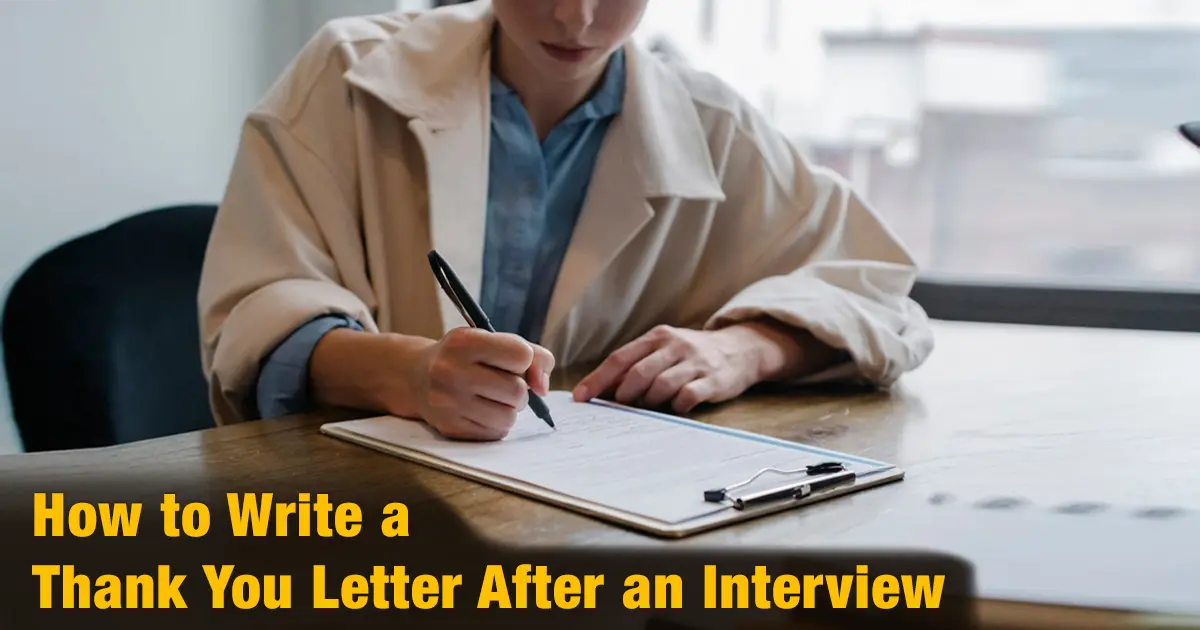
You have just walked out of an interview room or logged off a video call, and you are wondering what comes next. Most candidates assume the interview itself is the final hurdle, but one small step often gets overlooked: following up. A well-written thank you letter interview follow-up can shape how a hiring manager remembers you long after the conversation has ended.
This is not about flattery or empty courtesy. It is about closing the loop on a conversation, reinforcing your interest in the role, and giving the interviewer a reason to keep your name near the top of their list. In this guide, you will learn when to send your note, what to include in it, how to format it for different situations, and which phrases to avoid.
Why a Thank You Note Matters More Than You Think
Hiring decisions are rarely made the moment an interview ends. Interview panels often meet days later to compare notes, and by then, first impressions can begin to fade. A thank you letter after interview discussions gives you another opportunity to reinforce why you are a strong fit for the role. It also demonstrates professionalism, attention to detail, and genuine interest in the position, qualities that many employers value throughout the hiring process.
There is also a practical reason to write one. If you forgot to mention a relevant project or wanted to clarify an answer you felt you rushed through, a follow-up note gives you the opportunity to add that information without seeming pushy. While not every employer evaluates thank-you notes in the same way, many appreciate a thoughtful, well-written message that reflects clear communication and continued interest in the role.
When Should You Send it
Timing matters as much as content. Send your thank you email for interview follow-up within 24 hours of the conversation, ideally the same evening or the following morning. Waiting longer may mean your note arrives after the hiring team has already begun narrowing down candidates, reducing its impact.
If you interviewed with multiple people on the same day, send a separate interview thank you email to each interviewer instead of a single group message. Personalising each note shows that you paid attention to the conversation and appreciated each person's time. If you do not have everyone's email address, ask the recruiter or interview coordinator for their contact details, or send one thoughtful note to your primary point of contact and request that they share your thanks with the rest of the panel.
What to Include in Your Note
A strong thank you letter after interview message does not need to be long. In fact, brevity often works in your favor, since hiring managers read dozens of emails a day. Keep the structure simple:
A Clear Subject Line
Something direct, such as "Thank You – [Job Title] Interview," helps the recipient recognize the email immediately.
A Genuine Opening Line
Mention the specific role and the date of your conversation so there is no ambiguity about which interview you are referencing.
One or two Specific Details From the Conversation
This is where most notes fall flat. Instead of writing that you enjoyed the discussion, mention a particular question, project, or comment the interviewer made that stood out to you.
A Brief Reaffirmation of Interest
State plainly that you remain interested in the position and believe your background aligns with what the team needs.
An Offer to Provide More Information
Let them know you are happy to share references, portfolio work, or further clarification if needed.
A Polite Closing
Thank them again and sign off with your full name and contact details.
Sample Notes for Different Situations
Not every interview follows the same format, so your post interview thank you letter should reflect the situation. Below are examples for common interview scenarios.
After a Panel Interview
Subject: Thank You – Marketing Coordinator Interview at ABC Company
Dear Ms. Rao,
Thank you for taking the time to meet with me and the team yesterday to discuss the Marketing Coordinator position at ABC Company. I especially enjoyed our conversation about the upcoming campaign redesign and the importance of balancing creativity with data-driven decision-making.
Our discussion reinforced my enthusiasm for the role. My experience managing multi-channel marketing campaigns and collaborating with cross-functional teams has prepared me well for the responsibilities you described, and I would welcome the opportunity to contribute to your team.
Please let me know if I can provide any additional information to support my application.
Warm regards,
Aditi Sharma
After a Phone Screening
A thank you note after interview phone screenings can be brief. Thank the recruiter for their time, reaffirm your interest in the role, and mention that you look forward to the next stage of the hiring process if selected. A concise, thoughtful message is usually enough after an initial screening call.
When You Have Not Received an Offer Yet
If the interviewer shared a hiring timeline, wait until that period has passed before following up. If no timeline was provided, waiting about one week after the interview is generally appropriate. Your message should thank the interviewer again, reaffirm your interest in the role, and politely ask whether there are any updates on the hiring process. For example:
I wanted to follow up regarding our interview last week and reiterate my continued interest in the role. I appreciate your time and would be grateful for any updates you are able to share regarding the hiring process.
Common Mistakes to Avoid
Even a short thank you email for interview follow-up can undermine your candidacy if it includes the wrong details. Avoid these common mistakes:
- Being too generic: A note that could have been sent to any company or for any role is unlikely to leave a lasting impression. Refer to a specific discussion, project, or insight from your interview, and connect it to how you can contribute.
- Bringing up salary or benefits: A thank-you email is not the right place to negotiate compensation or ask about benefits. Save those conversations for later stages of the hiring process or after you receive an offer.
- Sounding overly casual: Even if the interview felt informal, keep your follow-up professional, polite, and free of slang or overly familiar language.
- Making it about yourself instead of the role: Rather than repeating your achievements, focus on how your skills and experience align with the team's needs and the responsibilities discussed during the interview.
- Sending it too late: Aim to send your note within 24 hours. While a later follow-up can still be appreciated, a prompt message is more likely to reinforce your interest before hiring decisions progress.
- Typos and rushed writing: Proofread your message carefully. Spelling or grammatical errors can distract from an otherwise thoughtful and professional follow-up.
Building the Habit of Professional Follow-up
Once you have sent your post interview thank you letter, resist the urge to follow up again unless a reasonable amount of time has passed without any response. Writing a clear, well-timed follow-up is a skill that extends beyond job interviews. The same principles, being specific, timely, and courteous, apply to networking conversations, informational interviews, and even internal workplace communication after a meeting. Treating this as a habit rather than a one-time task will serve you throughout your career, not just during a job search.
Writing a thoughtful follow-up is one example of the professional communication skills employers value throughout the hiring process. These skills are developed over time through practice, feedback, and real-world experience rather than in a single interview.
At JAIN (Deemed-to-be University), career readiness initiatives help students build these workplace communication skills alongside their academic learning. Through placement and student development activities, students practise drafting professional emails, cover letters, workplace reports, and other forms of business communication. Faculty mentors and placement coordinators provide feedback during internship and placement cycles, helping students refine the tone, structure, and clarity of their communication before it reaches recruiters. Regular interactions with industry professionals through placement drives, workshops, and guest sessions further strengthen their understanding of professional etiquette in real hiring situations.
A Few Final Considerations
Some candidates wonder whether a handwritten note is more appropriate than an email, particularly in traditional industries such as law or finance. While a handwritten note can be a thoughtful gesture, it takes longer to arrive and may reach the interviewer after hiring decisions are already underway. Unless an employer specifically prefers traditional correspondence, email remains the most practical and reliable option.
It is also helpful to keep a basic thank-you email template that you can adapt after each interview. A template can save time and ensure you include the essential elements, but every message should be personalised. Mention the specific role, refer to a memorable part of the conversation, and tailor the content to each interviewer so your follow-up feels genuine rather than copied.
Conclusion
A thoughtful follow-up message may not change the outcome of every interview, but it can reinforce your interest in the role, clarify a point you wished you had explained better, and leave a positive final impression. Sending a clear, personalised, and timely note demonstrates professionalism and respect for the interviewer's time, making it a valuable part of your overall interview strategy.
If you are a student or recent graduate, seek feedback on your professional communication before entering the placement season. At JAIN (Deemed-to-be University), career services and placement teams help students develop workplace communication skills, including drafting professional emails and interview follow-ups.
Taking advantage of this guidance can help you communicate with greater confidence and make a stronger impression throughout the recruitment process.
FAQs
Q1. How soon should I write a thank-you email after an interview?
A1. You should aim to send your note within 24 hours of the interview, ideally the same evening or the next morning. This keeps your conversation fresh in the interviewer's mind and shows that you are organized and responsive.
Q2. What not to say in a thank-you email after interview?
A2. Avoid discussing salary expectations, benefits, or vacation time in this message. Do not use overly casual language, and steer clear of generic statements that could apply to any company. Keep the focus on the specific conversation you had and the role itself.
Q3. Why is it important to write a thank-you letter?
A3. A thank you note after interview conversations reinforces your interest in the role, gives you an opportunity to clarify or expand on a point you discussed, and demonstrates professionalism. Since hiring decisions are often made days after an interview, sending a thoughtful follow-up can leave a positive final impression while your application is still under consideration.
Q4. How to say thanks in email professionally?
A4. Keep the message brief and specific. Thank the interviewer for their time, reference a particular point from your conversation, restate your interest in the role, and close with a polite sign-off that includes your full name and contact information. Avoid overly formal or stiff language; a warm, direct tone works best.