How significant is the influence of a primary school teacher on a child’s foundational development? This pivotal role demands a blend of patience, creativity, and a dedicated commitment to nurturing young intellects. For those exploring the education sector, understanding the Primary Teacher (PRT) designation and its specific prerequisites is essential. While the trajectory toward primary instruction involves several steps, mastering these core requirements is the first milestone in a distinguished professional journey.
What is PRT Teacher and Its Significance?
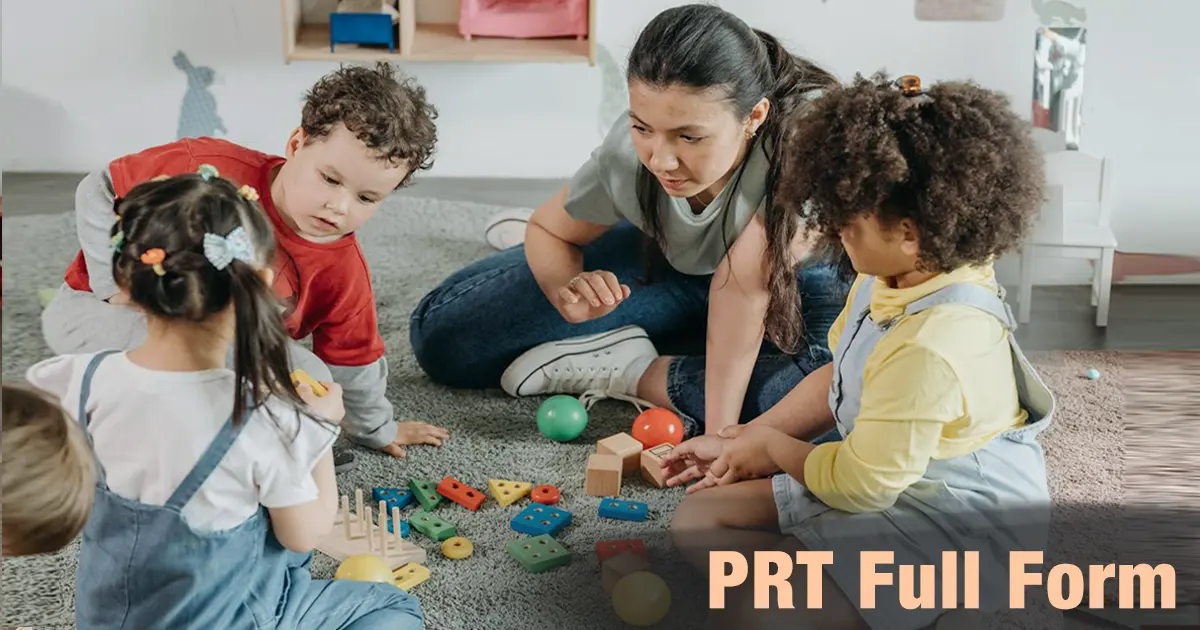
In the field of education, what is PRT teacher is one of the queries posed frequently by those seeking a career in instruction. The abbreviation stands for Primary Teacher, a professional specialized in educating pupils from grades 1 to 5. These educators are responsible for scaffolding foundational knowledge across core subjects, including English, Mathematics, Environmental Science, and Hindi.
The Full Form Explained
Grasping academic nomenclature requires a clear look at its underlying acronyms. The PRT full form represents the Primary Teacher designation. Within the education hierarchy, the distinction between those instructing lower elementary levels, Trained Graduate Teachers (TGT), and Post Graduate Teachers (PGT) is defined by their specific qualifications and target grade levels. While the PRT teacher full form may seem straightforward, the role encompasses a diverse array of pedagogical duties and ethical obligations.
The question, “what is the full form of PRT,” frequently arises as candidates navigate the complexities of entering the profession at the elementary level. Mastering this terminology is critical when applying for institutional vacancies or governmental positions announced on official recruitment portals.
Eligibility for PRT Teacher
Establishing a career in this discipline involves meeting specific standards of academic achievement and professionalism. The eligibility for PRT teacher roles typically necessitates a combination of higher secondary schooling and specialized pedagogical training. Most institutions require candidates to have completed their 10+2 education with a minimum of 50% marks.
In addition to secondary qualifications, candidates must possess a degree or diploma in elementary teacher education. This specialized training is vital for mastering child psychology and effective instructional methodologies. Furthermore, proficiency in both the regional language and English remains an essential criterion for success in these roles.
Essential PRT Teacher Qualification
The educational prerequisites for this field serve as the fundamental framework for professional practice. The PRT teacher qualification generally includes one of the following credentials:
- Diploma in Elementary Education (D.El.Ed): A two-year program focusing on foundational teaching methodologies tailored for the elementary level.
- Bachelor of Elementary Education (B.El.Ed): A comprehensive, four-year integrated degree that combines subject matter expertise with pedagogical training.
- Diploma in Education (D.Ed): A specialized certification emphasizing classroom management techniques and diverse pedagogical practices.
Beyond these academic degrees, most jurisdictions mandate that candidates successfully clear a standardized teacher eligibility test, such as the Central Teacher Eligibility Test (CTET). For those pursuing advanced academic pathways or interdisciplinary studies, various resources are available at JAIN (Deemed-to-be University).
Skills Required for Primary Educators
While formal qualifications are fundamental, several core competencies further ensure the success of a Primary Teacher. Foremost among these is adaptability; as every child is unique, educators must pivot their strategies to accommodate each student's individual pace of learning.
Furthermore, strong organizational skills are indispensable. A teacher must possess the ability to deconstruct complex concepts into engaging narratives and activities that captivate young learners. Finally, proficient communication remains a cornerstone of the profession, enabling teachers to connect effectively with students, parents, and colleagues alike.
Career Scope and Growth
The demand for qualified primary educators remains consistent as the education sector continues to expand. Professionals holding this designation can secure roles within private institutions, government schools, or international academies. With accumulated experience and the pursuit of advanced qualifications such as a Master’s degree or specialized certifications educators can transition into secondary instruction (TGT) or assume leadership roles within school administration.
Education is inherently a process of lifelong learning. By remaining current with evolving pedagogical techniques and advancements in child psychology, educators ensure they provide the strongest possible foundation for their students. For those prepared to influence the trajectory of future generations, JAIN (Deemed-to-be University) offers a range of academic programs designed to support these professional aspirations.
FAQs
Q1. What Does PRT Stand For?
A1. In the context of education, PRT stands for Primary Teacher. This refers to faculty members responsible for the foundational instruction of students in the primary section, typically from Class 1 to Class 5.
Q2. Who is eligible for PRT exam?
A2. Eligibility is determined by the specific standards of the recruiting body, such as KVS or state-level boards. Generally, candidates must have completed their 10+2 with a minimum of 50% marks and possess a recognized diploma or degree in elementary education, such as a D.El.Ed or B.El.Ed. Qualifying for a teacher eligibility test (like the CTET) is also a standard requirement.
Q3. What is the meaning of PRT?
A3. The term PRT signifies a professional designation for an educator specialized in early childhood and elementary pedagogy. It indicates that the individual is trained to implement the core curriculum and facilitate the social and cognitive development of young learners.
Q4. What is the main objective of primary education?
A4. The main objective is to facilitate the holistic development of children. This encompasses establishing strong literacy and numeracy skills while fostering the social-emotional growth and critical thinking necessary for future academic success.
Q5. What is PRT in medical terms?
A5. In medical and scientific contexts, PRT most commonly refers to Physical Rehabilitation Therapy or Pharmaceutical Research and Technology. It should be noted that "Positron Radio Therapy" is not a standard clinical term; it is likely a confusion with PET (Positron Emission Tomography) or general Radiation Therapy.