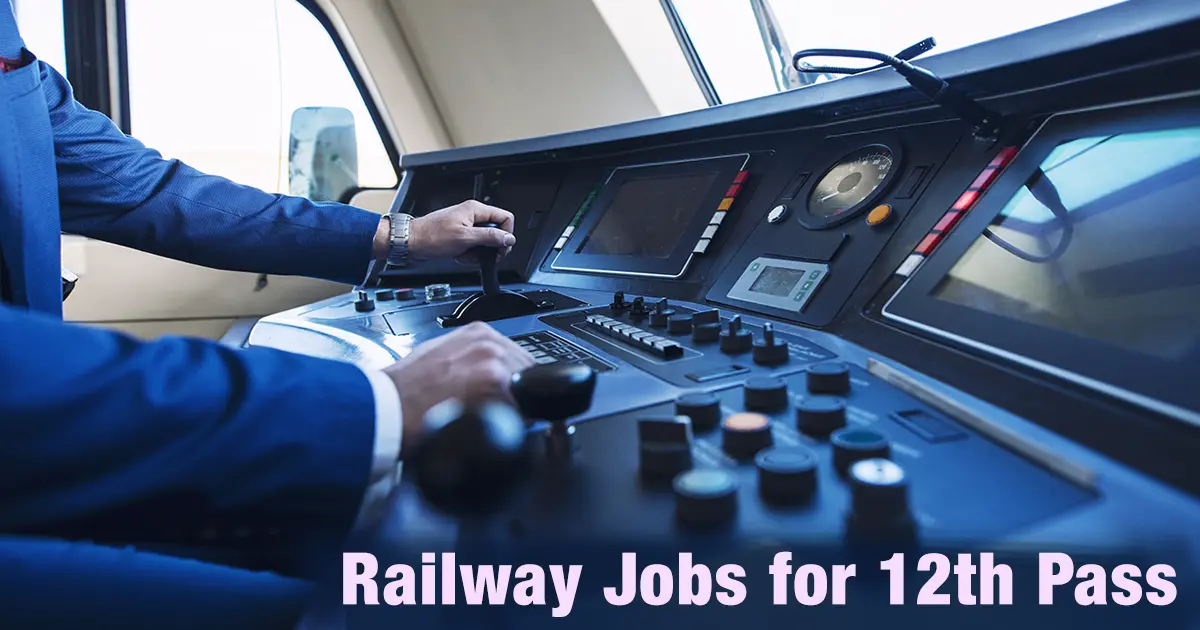
Railway jobs for 12th pass students are highly sought after due to excellent job security, attractive perks, and steady career growth. Positions span multiple departments, including operations, administration, maintenance, and passenger support.
Candidates should carefully review the examination process, post-specific eligibility, and selection stages before applying. When researching the railway jobs for 12th salary, applicants will find that pay scales depend on the specific post, assigned pay level, allowances, and prevailing service rules under the 7th Pay Commission.
Understanding these benefits helps clarify why so many students choose to pursue a career in this sector right after school.
Why Join Indian Railway Jobs After 12th
The Indian Railways provides comprehensive facilities and welfare provisions to its workforce. Securing these railway jobs offers numerous core service-related benefits:
- Medical Facilities: Complete healthcare coverage is accessible for employees and dependent family members through dedicated railway hospitals and health units.
- Housing Accommodations: Government quarters or a House Rent Allowance (HRA) are provided to personnel based on post eligibility and location.
- Travel Privileges: Free travel concessions and residential railway passes are granted to employees and their eligible dependents under prescribed provisions.
- Financial and Retirement Security: Post-service benefits, including gratuity, provident fund, and monthly pension provisions, are strictly governed by standard central government service rules.
- Educational Support: Welfare schemes offer financial assistance and specialized educational support for the children of railway employees
- Career Advancement: Regular departmental examinations and clear promotion procedures allow serving employees to climb to higher ranks during their tenure.
- Comprehensive Allowances: The railway jobs for 12th salary structure is highly competitive because they include essential add-ons like Dearness Allowance (DA), Transport Allowance (TPAL), and performance-linked bonuses as permitted under the regulations.
How to Join Railway Jobs After 12th
Candidates interested in railway jobs after Class 12 are generally required to follow the recruitment process prescribed for the post they wish to apply for.
| S.No. |
Step |
Details |
| 1 |
Check Eligibility |
Pass Class 12 from a recognized board and satisfy the specified conditions. |
| 2 |
Review Subject Requirements |
Verify if technical positions require specific academic or technical qualifications. |
| 3 |
Verify Age Criteria |
Check the post-specific age limit and applicable category relaxations. |
| 4 |
Follow Official Notifications |
Monitor official RRB websites for recruitment updates and application schedules. |
| 5 |
Submit the Application Form |
Apply online through the designated recruitment portal within the timeline. |
| 6 |
Download the Admit Card |
Access the document containing the exam date, center, and instructions. |
| 7 |
Prepare for the Examination |
Study core subjects like Mathematics, General Intelligence & Reasoning, and General Awareness. |
| 8 |
Appear for the CBT Stages |
Complete the required Computer-Based Test stages and secure the cut-off marks. Most recruitments have CBT 1 and CBT 2. |
| 9 |
Complete Additional Selection Stages |
Pass post-specific tests like Typing, Physical Efficiency, Skill, or Aptitude. |
Indian Railway Jobs After 12th
Those looking for the list of Indian railway jobs for 12th pass students can check the table below. It includes the essential details, including the railway exams after 12th, the eligibility, and the salary.
The essential common criteria are to have passed Class 12 from a recognized board with the required subject combinations. However, some roles may have additional requirements.
All the details should, therefore, be checked and read carefully in the official notification on the respective government website.
| Railway Exams After 12th |
Job Role |
Railway Jobs After 12th Eligibility |
Exam Details |
Pay Level & Initial Basic Pay (as per 7th CPC) |
| RRB NTPC (Non-Technical Popular Categories) |
Junior Clerk Cum Typist, Accounts Clerk, Ticket Clerk, etc. |
12th pass or equivalent (50% aggregate marks required for general/OBC posts; relaxations apply per category/higher degrees) |
CBT 1, CBT 2, and Typing Test (where applicable) |
Level 2 (₹19,900) to Level 3 (₹21,700) per month |
| RRB ALP (Assistant Loco Pilot) |
Assistant Loco Pilot, Technician |
10th pass with ITI (Electrical/Mechanical/Engineering) OR 12th pass with Physics & Maths |
CBT 1, CBT 2, and Computer-Based Aptitude Test (CBAT for ALP) |
Level 2 (₹19,900) per month |
| RRB Group D |
Track Maintainer, Assistant Pointsman, Helper, etc. |
Class 10 pass OR ITI OR National Apprenticeship Certificate (NAC) |
CBT and Physical Efficiency Test (PET) |
Level 1 (₹18,000) per month |
| RRB Junior Time Keeper |
Junior Time Keeper (Train Schedules & Timings) |
12th pass or equivalent (50% aggregate marks required; category/higher degree relaxations apply) |
CBT 1, CBT 2, and Typing Test (Note: Post availability varies by recruitment cycle) |
Level 2 (₹19,900) per month |
Railway Jobs After 12th Selection Process
The recruitment stages are not the same for every railway post. The selection process is decided according to the requirements of the vacancy and the recruitment notification.
Computer-Based Test: Many railway examinations include a CBT that covers subjects such as General Knowledge, Mathematics, and Reasoning.
Skill Test: Some posts may be subjected to additional tests like typing tests or tests on the basis of aptitude.
Document Verification: The candidates qualifying the required stages are called for verification of educational and other supporting documents.
Physical Efficiency Test: Some posts include physical fitness requirements and, therefore, require candidates to appear for a PET.
Medical Examination: Medical examination is conducted for those posts for which specific health standards are prescribed by the recruiting authority.
Conclusion
Railway jobs for 12th pass candidates cover different posts across technical, administrative, operational, and support-related departments. Since eligibility conditions, examinations, and recruitment stages may differ from one vacancy to another, candidates should always refer to the official notification before applying.
Many students prepare for recruitment exams while continuing their higher education. JAIN (Deemed-to-be University) offers programs across multiple disciplines for students who wish to continue their academic journey alongside their career plans. Explore the programs offered by JAIN (Deemed-to-be University) to learn more about the available study options.
FAQs
Q1: What are the eligibility criteria for railway jobs after 12th?
A1: To qualify for Indian railway jobs after 12th, a candidate must have passed Class 12 or its equivalent from a recognized educational board. Non-technical roles generally require a minimum aggregate of 50% marks, while technical positions require either a 10+2 passing certificate with Physics and Mathematics or a Class 10 qualification with an ITI certificate. The minimum age limit is typically 18 years, though the maximum age limit varies by recruitment notification and post category.
Q2: Which railway exams can I take after 12th?
A2: After finishing Class 12, candidates are eligible to sit for several official national-level competitive tests conducted by the Railway Recruitment Board (RRB). The most prominent railway exams after 12th include the RRB NTPC Undergraduate exam for clerical roles, the RRB ALP (Assistant Loco Pilot) and Technician exam for operational departments, and the comprehensive RRB Group D selection tests.
Q3: Is there any age limit for railway jobs after 12th?
A3: Yes, strict age boundaries are specified under official recruitment guidelines. The standard age limit for regular railway jobs for 12th pass candidates spans from a minimum of 18 years to a maximum of 30 years. The government mandates granting upper age relaxations to specific applicants, which includes 3 years of relief for OBC candidates and 5 years of relief for SC/ST candidates.
Q4: What is the selection process for railway jobs?
A4: The selection process involves multiple evaluation phases tailored to the specific post. The initial phase consists of a Computer-Based Test (CBT) covering general awareness and quantitative aptitude. Shortlisted candidates then advance to required skill rounds, such as typing or computer aptitude tests. Certain posts, particularly Group D positions, also require a Physical Efficiency Test (PET). The final steps for all roles include mandatory Document Verification and a medical examination.
Q5: Can I get a job in railway after 12th?
A5: Yes, it is fully possible to secure a permanent government job within the Indian Railways immediately after completing Class 12. The organization allocates a large percentage of its annual entry-level vacancies specifically to undergraduate candidates across clerical, operational assistance, and field maintenance wings.
Q6: Which course is best for railway after 12th?
A6: There is no single mandatory degree program, as basic entry is open to all streams, including Arts, Commerce, and Science. However, pursuing an ITI (Industrial Training Institute) course or a specialized Diploma in Electrical, Mechanical, or Automobile Engineering alongside Class 12 is highly beneficial. These vocational programs open pathways to high-paying technical profiles like Assistant Loco Pilot and Technical Grade Assistant.
Q7: How to crack railway exam after 12th?
A7: Cracking the competitive railway exams after 12th requires a systematic preparation strategy focused heavily on time management and absolute clarity of concepts. Candidates must build a solid daily study routine targeting basic Mathematics, logical reasoning skills, and daily general awareness updates. Consistently solving official previous years' question papers and practicing mock tests on computers helps simulate the exact pattern of the Computer-Based Test.