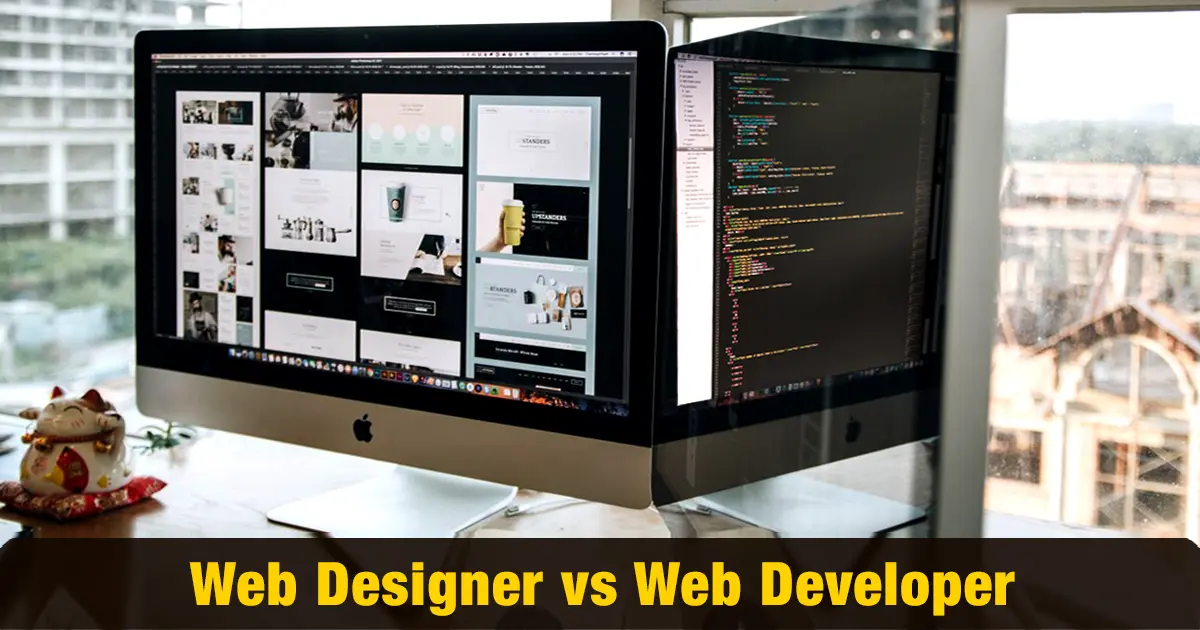
Have you ever visited a stunning website and wondered about the creative minds and technical systems working behind the screen? Think of it like a modern home: a web designer is the interior architect who creates the visual atmosphere, while a web developer is the structural engineer who ensures the foundation, wiring, and systems function without a hitch.
Every modern digital experience relies on a delicate balance between artistic vision and technical execution. However, for aspiring tech professionals, distinguishing between these two fields can be confusing. While both disciplines collaborate to build exceptional digital products, their daily tasks, tools, and career trajectories remain distinct. This guide explains the key differences to help you determine which path aligns with your talents and goals.
Understanding the Core Concepts
To see the full picture, you must first look at the core concepts that separate strategy from construction. Many beginners confuse these terms, assuming that building a website is a single, uniform process. In reality, creating a web application requires two entirely different mindsets and workflows.
Web design centers on visual aesthetics, user experience (UX), and user interface (UI). A designer's main objective is to create an engaging visual journey. Depending on their focus, they may apply color theory, layout grids, visual branding, or UX research to ensure visitors navigate a site with ease. Ultimately, designers shape how a digital product looks, feels, and communicates information.
On the other hand, web development takes those visuals and translates them into functional software. Developers use programming languages, frameworks, and databases to turn static designs into interactive, secure platforms. Depending on their role, such as front-end, back-end, or full-stack, their work ranges from building user interfaces to handling application architecture, database management, and server setup.
Understanding the fundamental difference between web development and web design is essential because it sets the groundwork for how digital teams structure their projects from concept to deployment.
Key Roles and Primary Responsibilities
While designers and developers share the overarching goal of launching a successful website, their day-to-day responsibilities rarely overlap directly. Each role approaches a project from a distinct angle, using different methodologies to solve complex digital problems.
Responsibilities of a Web Designer
A web designer focuses on user satisfaction and brand representation through strategic visual storytelling. Their core tasks include:
- Researching audience needs and mapping out user journeys to guide site structure.
- Drafting low-fidelity wireframes and high-fidelity interactive prototypes to test page layouts.
- Establishing visual brand guidelines, including typography, icon sets, color palettes, and component libraries.
- Designing responsive layouts that adjust seamlessly across desktop, tablet, and mobile displays.
- Evaluating user interfaces for visual hierarchy, readability, and WCAG accessibility compliance.
- Gathering feedback from project leads, clients, or stakeholders to align the visual direction with brand goals.
Responsibilities of a Web Developer
A web developer focuses on execution, site performance, dynamic features, and software logic. Their daily tasks involve:
- Translating UI/UX mockups into production-ready front-end code using modern web standards.
- Writing clean, modular, and scalable software code for client-side or server-side applications.
- Configuring databases, APIs, server interactions, and hosting environments (primarily for back-end and full-stack roles).
- Optimizing website speed, asset loading, and Core Web Vitals for maximum performance.
- Testing applications for cross-browser compatibility, security vulnerabilities, and bug fixes.
- Managing software versions, repository workflows, and deployment pipelines.
Recognizing the fundamental difference between web designer and web developer skill sets helps engineering teams delegate project responsibilities effectively. Furthermore, analyzing the core difference between web designer and web developer roles highlights how visual strategy and technical coding work together to construct modern digital products.
Skills and Toolkits Compared
The tools and competencies required in these fields reflect their distinct priorities. Designers rely heavily on visual software and user empathy, whereas developers depend on logical reasoning, algorithms, and technical syntax.
| Aspect |
Web Designer |
Web Developer |
| Primary Focus |
User experience, visual layout, and branding |
Code implementation, functionality, and data logic |
| Core Tools |
Figma, Framer, Penpot, Photoshop, Illustrator, Sketch |
VS Code, Git, GitHub, Postman, Docker, Terminal |
| Key Technologies |
Prototyping platforms, design systems, wireframing tools |
Front-End: HTML5, CSS3, JavaScript, TypeScript, React
Back-End: Node.js, Python, SQL, PHP, Java |
| Mindset |
Creative, empathetic, visual, human-centered |
Analytical, logical, problem-solving, structural |
| Key Metrics |
Engagement rate, bounce rate, visual consistency |
Page load speed, uptime, security, clean code structure |
A web designer spends hours perfecting component spacing, typographic scale, and micro-animations inside tools like Figma or Framer. They must master color theory, visual hierarchy, information architecture, and design thinking.
In contrast, a web developer works within code editors, command-line interfaces, and execution environments. They must understand algorithmic logic, state management, asynchronous programming, system architecture, and network protocols. To explore how coding and system architecture fit into broader tech fields, candidates can read about software engineering vs web development code and design to see where these specializations branch out.
Ultimately, looking at a web designer vs web developer highlights a clear distinction: while designers construct the user interface blueprint, developers build the engine that drives it.
Types of Web Developers and Web Designers
Both fields offer specialized career tracks that allow professionals to deepen their expertise in specific aspects of the creation process.
Web Design Specializations
- UI (User Interface) Designer: Focuses specifically on the visual elements of a digital product, including buttons, form fields, iconography, color schemes, and visual consistency.
- UX (User Experience) Designer: Concentrates on research, user journeys, information hierarchy, usability testing, and ensuring that interacting with the site feels natural and effortless.
- Interaction Designer: Specializes in how users navigate and interact with interface elements, defining micro-interactions, state changes, and flow logic to maximize usability.
- Motion Designer: Focuses on dynamic visual effects, loading transitions, UI animations, and interactive motion elements that enhance user engagement and visual feedback.
Web Development Specializations
- Front-End Developer: Constructs the client-facing portion of the website using HTML, CSS, JavaScript, and frameworks like React, Angular, or Vue. They ensure the designer's vision translates accurately into interactive web code.
- Back-End Developer: Manages the server-side of the application. They write code in languages such as Python, Java, Node.js, or PHP, while configuring databases (MySQL, PostgreSQL, MongoDB) and API integration.
- Full-Stack Developer: Possesses complete proficiency across both front-end and back-end tech stacks. They can build complete applications from the user interface down to server infrastructure.
Understanding how these technical paths operate alongside visual strategy underscores why analyzing web development vs web design is essential for aspiring technology professionals. Examining these specializations highlights why understanding web development vs web design is so valuable for students deciding where to focus their academic energy.
Salary Expectations and Career Growth
Salary structures in both fields vary based on experience level, specialized tech stacks, geographical location, and organizational scale. The following table provides a comprehensive overview of industry compensation standards across entry, mid, and senior levels in India.
| Career Stage / Metric |
Web Designer (UI/UX) |
Web Developer (Front-End / Back-End / Full-Stack) |
| Entry-Level (0–2 Years) |
₹1.5 LPA – ₹3.5 LPA |
₹2.8 LPA – ₹5.0 LPA |
| Mid-Level (3–6 Years) |
₹4.5 LPA – ₹8.0 LPA |
₹6.0 LPA – ₹12.0 LPA |
| Senior Level (7+ Years) |
₹10.0 LPA – ₹18.0+ LPA |
₹15.0 LPA – ₹30.0+ LPA |
| Primary Compensation Drivers |
UX research skill, Figma design systems, product strategy |
Architecture design, cloud infrastructure, full-stack frameworks |
| Career Advancement Titles |
Lead Designer, UX Architect, Creative Director |
Technical Lead, Solutions Architect, Chief Technology Officer |
Data Sources & References: The compensation data listed above is benchmarked from industry salary reports and hiring data published by leading recruitment and education platforms:Naukri.com Salary Insights for Tech Roles, Coursera Web Designer & Developer Salary Guide, Jobted India Web Designer Salary Benchmark, Indeed Career Salary Intelligence, AmbitionBox Company Compensation Datasets
Career progression for designers usually leads to roles like Lead UI/UX Designer, Creative Director, or Head of Product Design. Developers typically advance into Senior Software Engineer, Technical Lead, Solutions Architect, or Chief Technology Officer (CTO) positions.
Analyzing the market dynamics of a Web Designer vs Web Developer reveals that while both offer rewarding growth, technical development roles often experience higher initial salary ceilings due to the complexity of software infrastructure.
Which Path Should You Choose?
Deciding between these two rewarding domains ultimately depends on your personal strengths, problem-solving style, and career aspirations.
Choose Web Design if you:
- Have a keen eye for aesthetics, visual layout, and color harmony.
- Enjoy understanding human psychology and empathy-driven problem-solving.
- Prefer working with visual creation software over writing lines of complex code.
- Want to focus on how users feel and interact with digital brands.
Choose Web Development if you:
- Enjoy logical puzzle-solving, mathematics, and structured coding.
- Like building functional systems, working with APIs, and handling data structures.
- Are fascinated by how software operates behind the scenes.
- Want to master programming languages and software architecture.
Recognizing the key difference between web development and web design empowers students to select an educational program that matches their long-term professional aspirations. There is no better option, only the one that aligns better with your interests.
Conclusion
While both careers are integral to building modern web applications, they require vastly different mindsets and toolsets:
- Web Designers focus on the surface and experience, crafting visual layouts, design systems, interactive flows, and brand identities that feel intuitive to users.
- Web Developers build the engine underneath, writing clean code, structuring back-end databases, integrating APIs, and ensuring the site is fast, secure, and scalable.
If you thrive on visual storytelling, user empathy, and aesthetic harmony, web design is your ideal track. If you prefer logical problem-solving, structural algorithms, and building functional systems, web development is where you will excel.
For students looking to build a strong foundation in these disciplines, choosing an industry-aligned academic program is a critical step. JAIN (Deemed-to-be University) offers undergraduate and postgraduate degrees in Computer Science, Information Technology, and Software Engineering. Through hands-on laboratory work, modern curricula, and dedicated placement support, these programs equip aspiring tech professionals with practical skills across front-end systems, back-end architecture, and digital product design.
Explore the available tech programs today to find the right path for your career goals.
FAQs
Q1. Which is better, web designing or web development?
A1. Neither field is inherently superior, as both are essential for creating successful websites. Web designing is ideal for individuals who enjoy visual aesthetics, user research, and creative problem-solving. Web development suits those who prefer logical thinking, programming, database management, and building functional systems. The best choice depends on personal skills, interests, and career goals.
Q2. Who gets paid more, web designer or web developer?
A2. Generally, web developers, especially full-stack developers and back-end engineers, command slightly higher starting salaries due to the technical complexity of software architecture. However, senior UI/UX designers and product design leaders in specialized tech companies also earn highly competitive compensation packages that match senior developer salaries.
Q3. Are web development and web designing the same or different?
A3. They are two distinct disciplines focused on different aspects of website creation. Web designing focuses on the visual layout, user experience, typography, and visual interface using design tools like Figma. Web development involves writing code using technologies like HTML and CSS, along with programming languages such as JavaScript and Python, to make those designs fully functional, interactive, and secure on the web.
Q4. Can a web developer be a web designer?
A4. Yes, a professional can master both disciplines. Individuals who possess both design and development skills are often referred to as design engineers or front-end engineers with UI/UX skills. Having expertise in both areas enables professionals to create visual mockups and write the corresponding front-end code independently, making them highly valuable assets to startups and modern product teams.