What is Database?
In an increasingly digital landscape, we generate an astonishing volume of data every second. From mundane actions like refreshing a social media feed to the management of global financial systems, data serves as the invisible driving force behind modern systems. However, raw information is only valuable when it is organised, accessible, and secure; this is where the foundational concept of a database becomes essential.
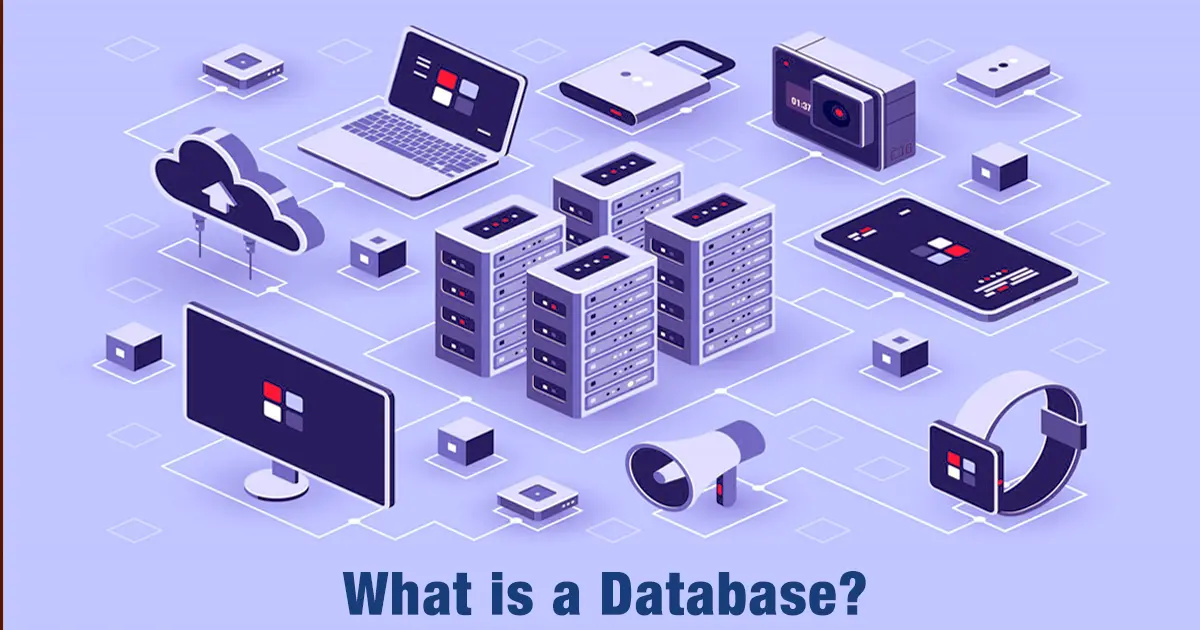
To define what is database in the simplest terms: it is an organised collection of structured information usually stored electronically in a computer system. While a simple word-processor document can store a list of information, it lacks the relational structure and retrieval capabilities of a true database.
In professional and academic settings, such as the School of Engineering and Technology (SET) at JAIN (Deemed-to-be University), mastering these systems is a fundamental cornerstone of modern computer science and data engineering.
A Brief History of Database Systems
Understanding the history of database development is essential to appreciating modern data architecture. In the early years of computing, data was stored in flat files without relational structure. This meant information was recorded in a linear format, making cross-referencing and data retrieval extremely difficult and inefficient.
The 1960s marked the introduction of the first database management systems, specifically hierarchical and network models. However, the most significant shift occurred in the 1970s when E.F. Codd introduced the relational model. This innovation allowed data to be stored in structured tables with rows and columns, linked using primary and foreign keys to ensure data integrity and complex querying capabilities.
Simply put, a database is an organised collection of structured information stored electronically. While a basic word-processor document can store a list, it lacks the relational depth and retrieval speed of a true database. As the industry moved into the Big Data era, the landscape evolved further into cloud and NoSQL databases. These modern systems are designed to accommodate the massive volume, velocity, and variety of data that traditional relational models were not originally built to handle.
The Fundamentals of Database Systems
To fully understand the architecture of modern information systems, it is necessary to explore the core components of a database environment. A database system typically includes a database, a Database Management System (DBMS), and the associated application programs.
The primary purpose of database system architecture is to provide an optimised framework for storing and retrieving information. By utilising a DBMS, users can interact with data through a layer of abstraction, meaning they do not need to understand the physical storage complexities of the underlying hardware.
This abstraction enables multiple users to access and manipulate data simultaneously while minimising errors and maintaining consistency. In a professional context, a well-implemented DBMS ensures data integrity and operational security by providing structured access controls and concurrency management.
Key Components of Database
A database system consists of interconnected components that collectively ensure efficient data storage, retrieval, and management. The key components include:
- Hardware: Physical infrastructure such as servers, storage systems, and network devices that support database operations.
- Software: The Database Management System (DBMS), which facilitates data definition, manipulation, and control. Examples include MySQL, PostgreSQL, and Oracle Database.
- Data: Structured information stored within the database, forming the core asset of the system.
- Procedures: Standardised protocols governing database usage, including access control, backup, and recovery mechanisms.
- Query Language: SQL (Structured Query Language), used for defining, querying, and managing data within relational database systems.
- Users: Stakeholders interacting with the system, including end users, application programmers, and Database Administrators (DBAs), who oversee performance, security, and maintenance.
Understanding these components is fundamental to ensuring data integrity, system efficiency, and scalability in modern database environments.
Defining Characteristics of Database Systems
What distinguishes a robust database system from a simple spreadsheet or basic file system? Several core characteristics define the functionality and reliability of these modern data environments:
- Data-Program Independence: Unlike traditional file systems, where modifying data structures often necessitates significant changes to the underlying application, database systems maintain a clear separation. Data is stored in a system catalogue (metadata), allowing the database to remain largely independent of the software that accesses it.
- Self-Describing Nature: A database contains not only the data itself but also a complete definition of its structure and constraints. This metadata is stored in the database catalogue, making the system self-describing.
- Support for Multiple Views: Different users require different perspectives on the same data. For instance, a general user may only have access to specific performance metrics, while a system administrator requires a comprehensive view of the entire dataset. This allows for tailored access without duplicating information.
- Data Sharing and Multi-User Transaction Processing: In a collaborative environment, multiple users often need to access and update records simultaneously. A sophisticated DBMS employs concurrency control to ensure that if two individuals update the same record at once, the system maintains data integrity and processes the transactions correctly.
Exploring the Diverse Types of Databases
Not all data has the same structure or requirements; consequently, various types of databases and architectures are utilised to perform specific functions. Depending on the nature of the information and the required retrieval speed, organisations typically implement one of the following models:
- Relational Databases (RDBMS): These systems use a structured table format to organise data. They are ideal for managing structured data where the relationships between different data points are clearly defined and consistent.
- NoSQL Databases: These do not rely on traditional table structures, making them well-suited for unstructured or semi-structured data, such as social media feeds, sensor logs, or real-time big data applications.
- Distributed Databases: In these systems, data is distributed across multiple systems or locations. The storage devices may be located within the same physical network or dispersed across different geographical regions to improve redundancy and access speeds.
- Cloud Databases: These operate on virtualised platforms, offering a high degree of scalability and flexibility. They allow organisations to adjust storage and computing power dynamically based on real-time demand.
The selection of one database type over another depends on system requirements, whether the objective is to develop a large-scale enterprise solution or a streamlined mobile application. At the School of Engineering and Technology (SET) at JAIN (Deemed-to-be University), understanding these types of databases and their distinctions is a core component of mastering modern data management and software architecture.
The Importance of Databases in Modern Society
Modern database systems are fundamental to the infrastructure of daily life. Every time an individual withdraws cash from an ATM, books an airline ticket, or registers for a course at JAIN (Deemed-to-be University), a database is actively managing that information.
The significance of these systems lies in their ability to process vast quantities of data with high accuracy. They facilitate data integration, allowing information from various departments to be consolidated into a comprehensive view of an organisation's operational health. Without the efficiency of modern databases, the logistics of contemporary living would be overwhelmed by the burden of manual record-keeping.
Furthermore, the implementation of a database system extends beyond mere storage and retrieval to encompass critical security measures. Modern database systems support security features such as encryption to protect personal information and defend against unauthorised access, ensuring that sensitive data remains private and secure.
Conclusion
In summary, database systems serve as the foundational architecture of the digital age. By mastering the fundamentals of these systems, professionals can leverage information management and utilisation to foster global innovation. From the historical evolution of data storage to the sophisticated, multi-model databases used today, the indispensable nature of these frameworks is evident in every modern sector, including the seamless operation of an ATM or the management of global logistics.
The significance of these systems lies in their ability to maintain high accuracy across massive datasets while ensuring long-term reliability. Furthermore, modern database systems support security features such as encryption and multi-factor authentication, protecting sensitive information from unauthorised access.
For those aiming to navigate the complexities of 21st-century technology and master the art of information management, a specialised academic foundation is a prerequisite for success.
Advance your career by joining a community of innovators at the School of Engineering and Technology (SET) at JAIN (Deemed-to-be University). Take the first step toward a resilient future in computer science and data architecture.
FAQs
Q1. What do you mean by Database?
A1. A database is a structured collection of data that is stored and accessed electronically. It allows for the efficient management, retrieval, and updating of information through a computer system.
Q2. Why is a Database important?
A2. A database is important because it allows organisations to store large volumes of data in an organised manner. It ensures data security, reduces redundancy, and allows multiple users to access information simultaneously and accurately.
Q3. What is a datastore?
A3. A datastore is a broad term for a repository used for the persistent storage and management of data collections. While it includes Databases, it can also refer to simpler storage formats like file systems or email storage.
Q4. What are Databases used for?
A4. Databases are used for a wide variety of tasks, including managing customer records, processing financial transactions, tracking inventory in warehouses, and storing student information in educational institutions.
Q5. What is DBMS?
A5. DBMS stands for Database Management System. It is the software that interacts with end users, applications, and the Database itself to capture and analyse data.
Q6. What is an example of a Database?
A6. A common example of a Database is a bank's system for managing customer accounts. It stores personal details, transaction histories, and balance information in a way that is easily searchable and secure.
Q7. What is the need of Database?
A7. The need for a database arises from the requirement to handle data more efficiently than manual filing or simple spreadsheets. It provides better data integrity, easier updates, and faster search capabilities for growing amounts of information.