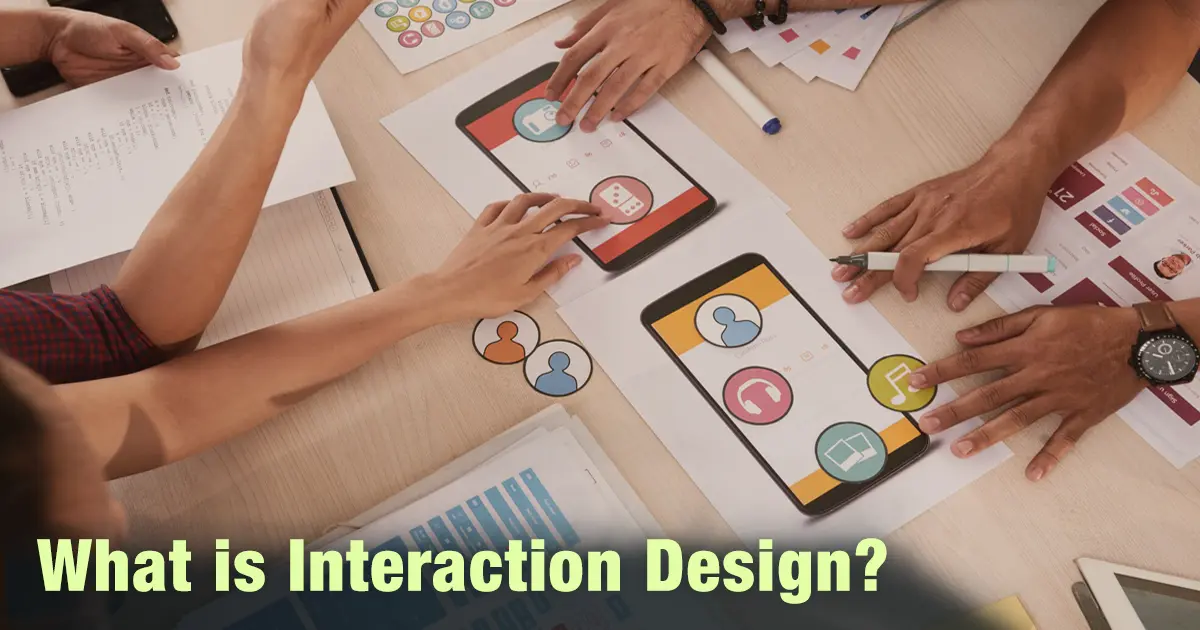
What is Interaction Design?
In an increasingly digital landscape, the quality of our technological interactions profoundly shapes our daily experiences. From navigating a mobile application to operating complex software interfaces, users engage directly with the intentional output of interaction designers.
At its core, interaction design is the professional practice of creating interactive products, environments, systems, and services. It transcends visual aesthetics, focusing instead on how these elements are integrated to foster meaningful relationships between people and technology.
While traditional graphic design focuses on static imagery, interaction design centres on the "moment of use." It emphasises the dynamic interplay of movement, sound, space, and time. The primary objective is to ensure that every digital touchpoint is intuitive, efficient, and engaging, transforming a functional process into a seamless user experience.
Why Interaction Design is Important in the Modern Era?
The importance of interaction design lies in its capacity to bridge the gap between human intent and machine action. In an increasingly saturated digital marketplace, functional utility is no longer sufficient; a product must offer a seamless experience to remain competitive. Without intentional design, even the most advanced technology remains inaccessible and frustrating to the end-user.
Effective interaction design minimises cognitive load, allowing users to achieve their objectives with efficiency and ease. By providing timely and relevant feedback, these systems ensure that users remain informed and in control throughout the process. For organisations, this transition from friction to fluidity results in higher user retention, reduced support requirements, and a more resilient brand reputation. Mastering these principles is essential for professionals aiming to drive innovation in the next generation of technological development.
The 5 Dimensions of Interaction Design
To understand the intricacy of this domain, it is essential to consider the five dimensions of interaction design. Originally proposed by Gillian Crampton Smith and expanded by Kevin Silver, these dimensions provide a holistic framework for evaluating any interactive system:
- Words (1D): This dimension encompasses all textual elements, including button labels, headers, and instructions. Effective interaction relies on text that is legible, concise, and capable of communicating complex information simply.
- Visual Representations (2D): This includes all non-textual elements such as icons, typography, and imagery. These graphical components serve to augment the written word, guiding the user through the interface and providing visual cues for navigation.
- Physical Objects or Space (3D): Interaction design must account for the physical hardware through which the user engages with the system. Whether the medium is a smartphone, a laptop, or an environmental kiosk, the physical form factor significantly influences the design approach.
- Time (4D): This dimension refers to media that change with time, such as animations, videos, and audio. It measures how the interaction unfolds as the user moves through a sequence of actions.
- Behaviour (5D): This dimension addresses the underlying mechanics of the system—how the previous four dimensions interact to respond to user input. it focuses on the operational "action and reaction" loop that defines the overall user experience.
Fundamental Interaction Design Principles
To develop a sophisticated interface, designers must adhere to fundamental interaction design principles. These frameworks ensure that an interface remains user-centric and functionally intuitive.
- Consistency: A coherent interface ensures that words, visual cues, and actions maintain the same meaning across all screens. This familiarity reduces the user’s cognitive load and enhances ease of use.
- Visibility of System Status: The system must consistently inform users of its current state. By providing timely and relevant feedback, the interface ensures the user is never left uncertain about the outcome of an action.
- Affordance: Design elements should inherently communicate their functionality. For example, a button should appear clickable, and a slider should visually suggest its draggable nature.
- Learnability: An effective interface allows users to navigate and complete tasks with minimal instruction. The design should be intuitive enough to operate without requiring an extensive manual.
- Error Prevention and Recovery: Beyond offering clear error messages, a robust interface is designed to minimise the likelihood of errors occurring. When they do occur, the system should offer a simple path to recovery.
- Feedback: Every user interaction should trigger a clear response. Whether through visual changes, haptic signals, or audio cues, feedback confirms that the system has registered the user's intent.
Mastering these core principles allows designers to develop interfaces that feel natural and unobtrusive, aligning seamlessly with human psychology and user expectations.
What Interaction Designers do on a Daily Basis
Professionals pursuing a career in this field often inquire about the daily responsibilities and operational workflows of the role. The primary function of an interaction designer involves a strategic combination of user research, architectural planning, and iterative execution.
The process begins with conducting user research to define the target audience's needs and align them with the overarching business objectives. Following this research phase, designers develop wireframes and low-fidelity prototypes to establish the logical "flow" of an application. This stage necessitates rigorous usability testing to identify potential friction points and refine the user journey.
This is a highly collaborative role, requiring close integration with development teams. Rather than merely ensuring a product matches a static visual, interaction designers work with engineers to maintain functional integrity during the transition from prototype to final build. Their core objective is to translate complex technical requirements into a simple, intuitive, and seamless user experience.
Why Choose a Career in Interaction Design?
As technology becomes increasingly integrated into daily life—from smart home systems to wearable health devices—the demand for interaction designers and UX professionals is rising at an unprecedented rate. This emerging sector presents a significant opportunity for individuals with a strong aptitude for problem-solving and a deep understanding of human-computer interaction.
Professionals in this field apply a sophisticated, creative, and technical skill set to shape how the global population engages with digital systems. By enhancing user experience through intuitive design, they directly improve functional accessibility and the quality of life for diverse user groups. The role offers a meaningful career path for those dedicated to bridging the gap between complex technological capabilities and seamless, innovative solutions.
Conclusion
Interaction design is more than a trending industry term; it serves as the foundational backbone of the global digital economy. By mastering the dimensions and principles of this craft, professionals can build a world where technology more effectively serves human needs. For those ready to shape the future of digital experiences, the field offers a transformative path in the evolving landscape of interaction design (IxD).
Choosing the right educational foundation is vital for those beginning this professional journey. A rigorous academic environment provides the theoretical depth and practical technical skills required to lead in the competitive sector of user experience and interface design.
You can explore the best Interaction Design colleges in Bangalore to find programmes that offer the perfect blend of theoretical knowledge and practical industry exposure.
Are you ready to transform your passion for design into a professional career?
Explore our specialised courses at JAIN (Deemed-to-be University) and become a leader in the tech industry today!
Frequently Asked Questions (FAQs)
Q1. What is mean by Interaction Design?
A1. Interaction Design is the practice of designing the way users interact with digital products. It focuses on creating engaging interfaces with well-thought-out behaviours to enhance the user experience.
Q2. What makes for good Interaction Design?
A2. Good Interaction Design is defined by its usability, accessibility, and emotional appeal. It should be consistent, provide clear feedback, and allow the user to complete tasks with the least amount of friction possible.
Q3. What do Interaction Designers do?
A3. They create the logic and flow of digital products. This includes developing wireframes, building interactive prototypes, and conducting user research to ensure the interface meets the needs of the target audience.
Q4. What are the main principles of Interaction Design?
A4. The core principles include consistency, visibility, affordance, feedback, and constraints. These ensure that the digital environment is predictable and easy for the user to navigate.
Q5. What skills do Interaction Designers need?
A5. Key skills include proficiency in design tools like Figma or Adobe XD, a strong understanding of cognitive psychology, analytical thinking, and the ability to communicate ideas through prototyping and storytelling.
Q6. What is the average Interaction Designer salary?
A6. Salaries vary based on experience and location. In India, entry-level Interaction Designers can expect between 5 and 8 Lakhs per annum, while senior professionals in major tech hubs like Bangalore can earn well over 20 Lakhs per annum.