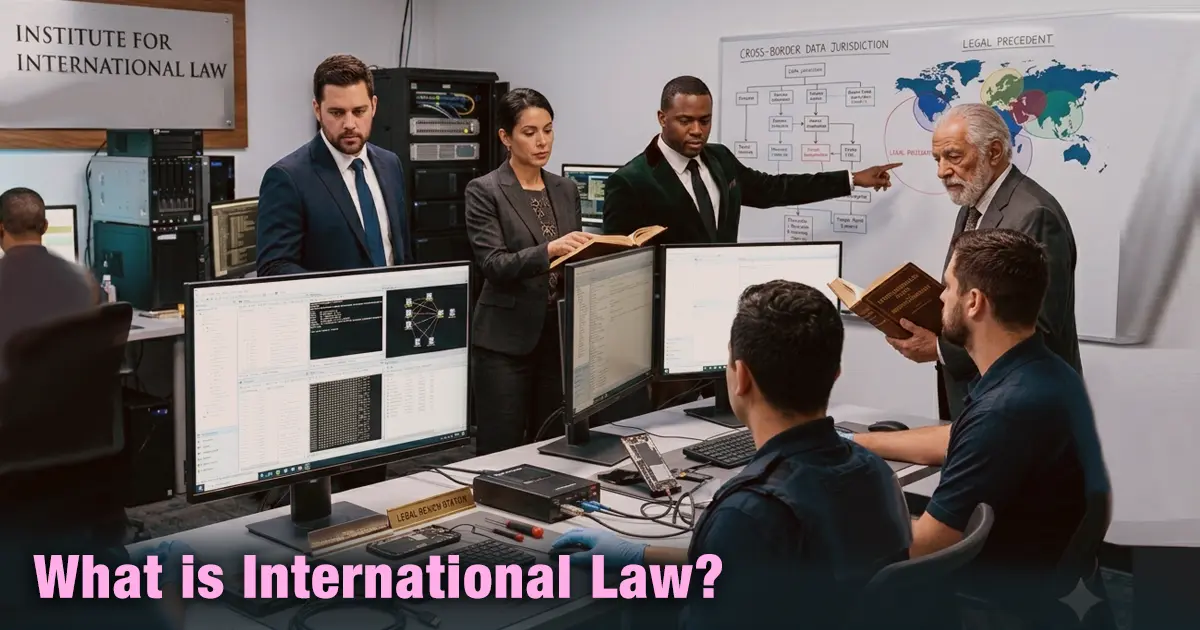
Imagine a world where countries can do anything without any rules to bind them together.
Can you think of the consequences? Trade will collapse, conflicts will escalate, and cooperation between nations will be difficult.
International Law is that glue that binds nations together. It guides the countries on how to interact in a proper and civilised manner.
International Law is a set of rules and principles that countries voluntarily agree upon to ensure peaceful coexistence and cooperation.
Unlike domestic law, International Law does not have a central authority to enforce it. Instead, it largely depends on the consent and mutual agreement of nations.
Frameworks like the Charter of the United Nations outline these principles. However, enforcement depends on the willingness of countries to comply rather than a strict global governing power.
This blog aims to shed light on this topic to help you make an informed career decision.
What is International Law?
International law is the system of rules, guidelines, and standards that govern the relationships between sovereign states and other international entities.
It addresses different issues around the world, such as:
- Basic human rights of individuals
- Disarmament and control of weapons
- International crimes and justice
- Refugees, migration, and nationality issues
- Treatment of prisoners and conduct during war
- Use of force between states
International Law also regulates shared global interests such as:
- Environment and sustainable development
- International waters and oceans
- Outer space
- Global communication systems
- International trade
Is International Law the same as International Comity?
No. International law is legally binding, whereas international comity refers to voluntary practices followed by states out of respect or courtesy (e.g., saluting foreign warships).
Types of International Law
There are three main types of International Law, as discussed below:
| Type of Law |
Description |
Key Areas Covered |
Example |
| Public International Law |
Governs relationships between countries and international organisations. |
Human rights, environment, oceans, international trade, global agreements |
United Nations climate agreements, like the Paris Agreement, or child rights conventions |
| Private International Law (Conflict of Laws) |
Deals with disputes involving individuals or companies across countries and decides which law applies. |
Contracts, family law, property, torts, and intellectual property |
Divorce cases involving partners from different countries or international business contract disputes |
| Supranational Law |
Occurs when countries give authority to a higher body whose decisions override national laws. |
Regional governance, legal authority across member states |
European Union laws under which the European Court of Justice can overrule member states |
Sources of International Law
Article 38 of the Statute of the International Court of Justice defines the main sources of International Law.
It includes components like practices followed by states, formal agreements between countries, court rulings, etc. These sources are as follows:
| Source |
Description |
Key Features |
| Treaty Law |
Based on formal agreements (treaties and conventions) signed and ratified by states. |
Legally binding only on signatory states; governs interactions between countries; based on the principle of “agreements must be honoured.” |
| Customary International Law |
Develops from consistent state practices and accepted norms over time. |
Binding on all states (even non-signatories); based on general acceptance; less clearly defined than treaties |
| General Principles of Law |
Fundamental legal principles recognised by most legal systems globally. |
Fill gaps in international law; universally accepted; support fairness, justice, and legal consistency. |
| Judicial Decisions and Scholarly Writings |
Decisions of international courts and writings of respected legal scholars. |
Subsidiary sources; used for interpretation and clarification; not independently binding. |
Scope of International Law
International Law has grown significantly over the years as countries have become more interconnected with each other. This growth creates diverse opportunities across various legal fields. The scope of International Law is as follows:
Diplomacy and Foreign Relations
International Law provides the legal framework for relations between countries. It governs treaties and agreements that promote peaceful cooperation. Diplomats and legal experts work hand in hand to resolve international conflicts and strengthen ties between countries.
Human Rights and Humanitarian Law
This area focuses on protecting the fundamental rights and freedoms of all individuals. Professionals work with governments, non-governmental organisations (NGOs), and international bodies to address issues like discrimination and injustice. Institutions such as the International Criminal Court ensure accountability for serious violations.
International Criminal Law
International Law also deals with prosecuting individuals for serious crimes such as genocide, war crimes, and crimes against humanity. The main goal is to bring justice and hold offenders responsible for their actions. This is carried out by bodies like the International Criminal Court.
International Trade and Business Law
Legal practitioners deal with international trade agreements, adherence to international regulations and resolution of international business disputes. These laws regulate international trade and business transactions.
Environmental Law and Sustainable Development
International Law is concerned with environmental protection and the sustainable use of resources on Earth. This includes treaties on climate change, biodiversity and conservation, which facilitate international collaboration.
Final Thoughts
The purpose of international law is significant in maintaining global order.
It helps protect human rights, regulate global trade activities, and resolve conflicts on a global scale to ensure that every country can live in harmony.
If you want to be a part of this dynamic system and make a meaningful impact, pursuing a relevant course in International Law can be a powerful step forward.
Pursuing this course will help you develop the knowledge, skills, and global perspective needed to thrive in careers across diplomacy, global organisations, and legal practice.
FAQs
Q1: What is the definition of International Law?
A1: International law is a set of rules, norms, and principles that govern the relationships between countries and other global actors. It ensures order and cooperation in international affairs.
Q2: Why study International Law?
A2: Studying international law helps in understanding global legal systems and addressing issues like human rights, trade, and conflicts. It also opens up career opportunities in global organisations and legal practice.
Q3: What is the International Court of Justice?
A3: The International Court of Justice is the main judicial body of the United Nations that settles legal disputes between countries and provides advisory opinions on international legal issues.
Q4: In what areas does International Law apply?
A4: International law applies to areas such as human rights, international trade, environmental protection, diplomacy, and conflict resolution between states.