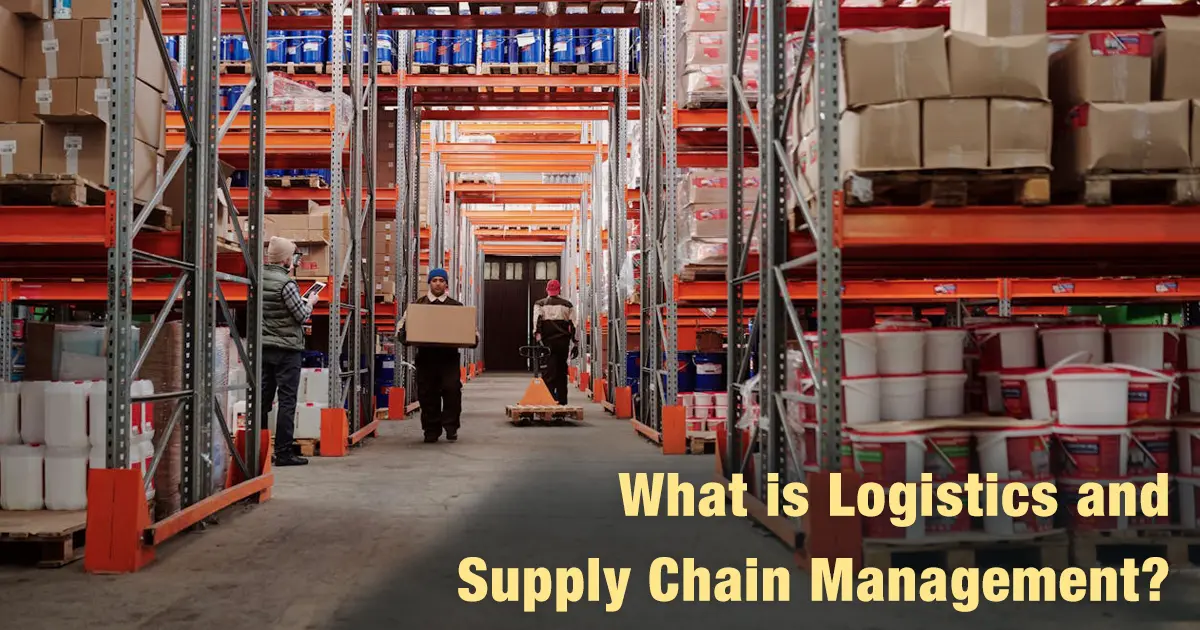
Logistics deals with moving and storing goods. Supply chain management, on the other hand, connects sourcing, production, and delivery into one flow.
Both work together to ensure that products are available when and where they are needed.
These interconnected frameworks are not just operational tools. They influence how efficiently industries function and how reliably goods reach people. Due to these reasons, the two concepts have become an essential part of everyday business operations.
In this guide, we will understand the importance, benefits, and meaning of logistics and supply chain management. We will also explore the career scope of this field.
A Quick Glance at Logistics and Supply Chain Management
To begin exploring the introduction of logistics and supply chain management, you should first understand that these terms seem similar, but they serve distinct purposes.
Supply chain management is an all-encompassing concept. It brings together multiple processes like sourcing, production, and distribution to achieve a competitive advantage. Logistics, on the other hand, focuses on the movement, flow, and storage of goods within the larger system called supply chain management.
You can understand the concept of logistics and supply chain management in simple terms. Think of logistics as a part of supply chain management, and consider supply chain management as a process covering the entire process from start to finish.
What is Logistics?
Logistics is the part that keeps everything moving smoothly. It deals with how products and information move from suppliers to the final customer.
This includes activities such as procurement, manufacturing support, inventory handling, and distribution. All of these work together to ensure that goods move efficiently from raw materials to final delivery without delays.
The main aim of logistics is simple. The right product should reach the right place, at the right time, in the right condition, and at the right cost.
Logistics is usually divided into two parts:
- Inbound logistics: Focuses on sourcing, handling, and storing raw materials before production
- Outbound logistics: Deals with storing, transporting, and delivering finished goods to customers
What is Supply Chain Management?
Supply chain management focuses on how different organisations work together to move a product from raw materials to the final customer. It connects suppliers, manufacturers, and distributors into one system to improve efficiency and deliver better value.
Instead of handling just one activity, supply chain management brings multiple functions together.
In practice, supply chain management involves several organisations working together to manage the flow of materials and ensure the final product meets requirements. This makes logistics a part of the broader supply chain management system.
In recent years, many companies have started reaching out to external partners (third-party logistics and fourth-party logistics) to improve their efficiency. The providers of the third-party logistics (3PL) handle services like transportation and warehousing, while fourth-party logistics (4PL) providers manage the entire supply chain and coordinate different stakeholders.
Key Differences Between Logistics and Supply Chain Management
Understanding their differences helps in seeing how each function contributes to the overall system.
| Basis |
Logistics |
Supply Chain Management (SCM) |
| Scope |
Manages the specific movement, storage, and distribution of goods. |
Oversees end-to-end processes, from raw material sourcing to final delivery. |
| Focus |
Prioritises timely delivery and meeting immediate customer requirements. |
Targets overall operational efficiency and long-term competitive advantage. |
| Role |
Functions as a specialised component within a larger network. |
Serves as the overarching framework connecting all business processes. |
| Approach |
Executes tactical activities like transportation and warehousing. |
Coordinates complex functions across multiple departments and organisations. |
| Evolution |
Originates from traditional military supply and transport operations. |
Emerges from modern, integrated business and value-chain systems. |
Benefits of Logistics and Supply Chain Management
While logistics handles execution at the ground level, supply chain management ensures everything is aligned at a broader level. Together, they influence the cost, speed, and overall performance of a business.
The following table outlines the combined benefits of these two functions:
| Benefit |
How it Works |
Impact on Business |
| Cost Reduction |
Optimises transportation routes and reduces inventory holding costs. |
Increases overall profit margins. |
| Enhanced Efficiency |
Synchronises production schedules with delivery timelines. |
Eliminates delays and resource wastage. |
| Superior Service |
Ensures products reach the customer on time and in perfect condition. |
Builds long-term brand loyalty. |
| Risk Mitigation |
Identifies potential bottlenecks and provides backup supply options. |
Keeps the business running during disruptions. |
| Competitive Edge |
Allows for faster responses to changing market trends and demands. |
Helps outpace competitors in the market. |
Career in Logistics and Supply Chain Management
A career in logistics and supply chain management offers a wide range of roles across industries. If you are considering this field, programmes like BCom Logistics and Supply Chain Management help build the right mix of technical knowledge and practical understanding needed for these roles.
Note: Not all of these roles are typically available at the entry level. Some positions require prior experience, and progression into them usually happens over time as you build skills and industry exposure.
| Role |
What the Role Involves |
| Supply Chain Analyst |
Analyses data to improve efficiency and reduce costs across the supply chain. |
| Procurement Manager |
Manages sourcing of materials and ensures cost-effective purchasing decisions. |
| Logistics Coordinator |
Handles transportation, scheduling, and smooth movement of goods. |
| Operations Manager |
Oversees daily processes to ensure everything runs efficiently. |
| Demand Planner |
Forecasts demand to maintain the right balance between supply and demand. |
| Inventory Control Specialist |
Tracks stock levels and avoids overstocking or shortages. |
| Warehouse Operations Manager |
Manages storage, handling, and dispatch within warehouses. |
| Transportation Analyst |
Evaluates transport systems to improve delivery efficiency and reduce delays. |
Practical exposure also plays an important role. Internships, live projects, and simulation-based learning help in understanding how systems work beyond textbooks.
You can further strengthen your profile and improve job opportunities in this field by earning certifications such as:
- CSCP (Certified Supply Chain Professional): Validates your ability to manage end-to-end supply chain operations and integration across an organisation.
- CPIM (Certified in Production and Inventory Management): Focuses on the internal operations and mastery of essential terminology and concepts for production and inventory control.
Conclusion
Recognising the importance of logistics and supply chain management is essential as these functions continue to shape how goods move and businesses operate in a connected economy. As global systems become more complex, the demand for structured processes and skilled professionals is constantly growing.
If you are interested in building a career in this field, explore programme details like the BCom or MBA Logistics and Supply Chain Management at JAIN (Deemed-to-be University). These programmes combine theoretical knowledge with practical industry exposure to prepare students for the evolving market.
FAQs
Q1: Is logistics and supply chain a good career?
A1: Yes, it is an excellent career choice in India, driven by the booming e-commerce sector and infrastructure initiatives like the PM Gati Shakti plan. The field offers diverse opportunities in operations and procurement. It promises strong job security and competitive salaries.
Q2: What are the 5 stages of SCM?
A2: Based on the industry-standard SCOR model, the five essential stages are:
- Plan: Forecasting market demand and designing the overall strategy.
- Source: Selecting vendors and procuring raw materials.
- Make: Scheduling and executing production or manufacturing.
- Deliver: Managing logistics, warehousing, and final customer fulfillment.
- Return: Handling reverse logistics, product returns, and post-delivery support.
Q3: What skills are needed for logistics?
A3: Success in logistics requires a blend of hard technical capabilities and core interpersonal strengths. Technical competencies include data-driven decision-making, proficiency in automated supply chain management software, and knowledge of global transportation regulations. Equally important are essential soft skills like rapid problem-solving during transit delays, cross-departmental coordination, and clear communication with international freight partners.
Q4: What are the 5 pillars of supply chain?
A4: While there is no single universally standardized framework for the "five pillars," many modern business models define them as Visibility, Flexibility, Collaboration, Control, and Sustainability. Together, these strategic focus areas ensure an organization can quickly adapt to global market shifts, build transparent vendor relationships, maintain quality standards, and meet modern eco-friendly compliance goals.
Q5: What are the 3 P's in supply chain?
A5: In many organizational frameworks, the 3 Ps stand for People, Process, and Product. People represent the skilled human talent executing daily tasks; Process refers to the standardized workflows ensuring operational speed; and Product focuses on the quality and inventory management of moving goods. While this specific terminology varies across different corporate academic models, it serves as a helpful baseline for resource allocation.