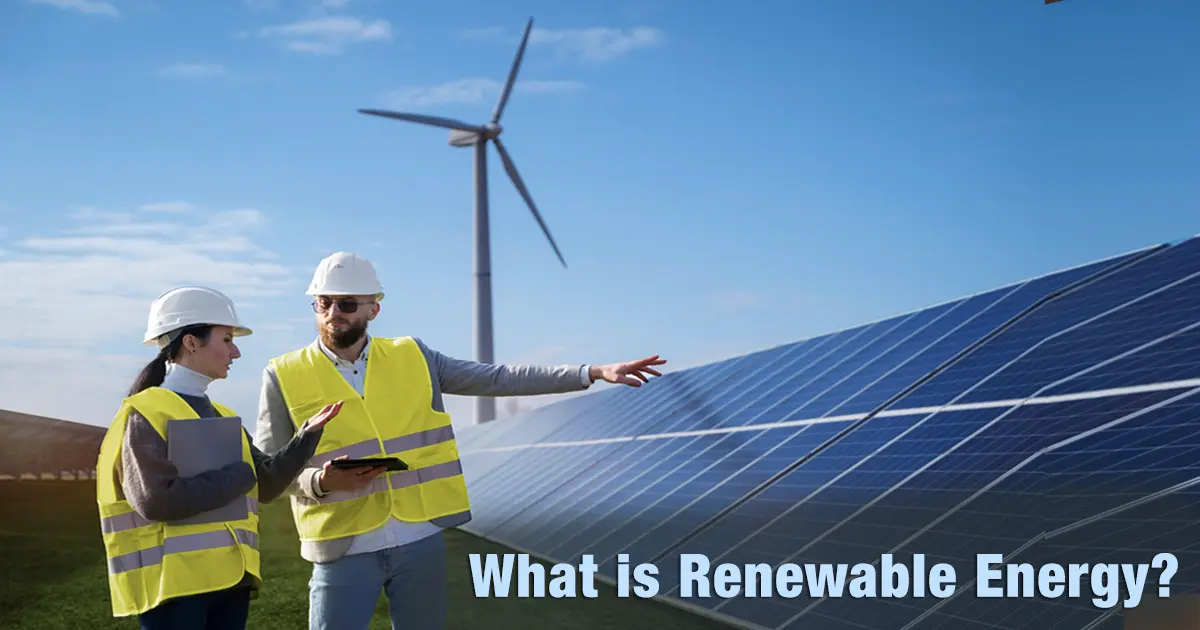
Renewable energy sources are rapidly transforming the way we power homes, factories, and vehicles. They offer a cleaner, more sustainable alternative to the fossil fuels that have long damaged the environment. They help address the problems caused by climate change, driving a global shift toward sustainable practices. This blog explores what renewable energy is, its advantages, global usage, and challenges that demonstrate its significance today.
What is Renewable Energy?
Renewable Energy sources are those that are naturally replenished. These form a key part of the global energy supply, powering homes, industries, and transportation. Solar, wind and hydropower are examples of renewable energy. Unlike fossil fuels, these sustainable sources produce little or no greenhouse gases in their entire lifecycle, making them essential for combating climate change.
Why do we Need Renewable Energy?
The need of Renewable Energy arises from the shift away from polluting fossil fuels such as coal, oil, and natural gas. These non‑renewable energy sources contribute to climate change and resource scarcity. With finite reserves depleting, using renewable energy sources can ensure long‑term energy security. Renewable energy also helps address pressing global challenges such as resource depletion and environmental degradation. Relying on this energy offers a sustainable alternative by providing clean, inexhaustible power that drastically cuts emissions and pollution.
Examples of Renewable Energy
Examples of renewable energy include solar power from sunlight, wind energy from wind turbines, and hydropower from flowing or falling water. Other common examples are geothermal energy from heat beneath the Earth’s surface and biomass energy from organic materials such as wood, crops, and waste.
Types of Renewable Energy
Solar, wind, hydroelectric, geothermal, and biomass are all different types of renewable energy sources. These sources are economically cost-effective and a sustainable alternative to depleting sources like fossil fuels.
- Solar energy harnesses sunlight via photovoltaic panels or mirrors to produce both heat and electricity.
- Wind energy uses turbines to convert wind kinetic energy into power on land, offshore, and in coastal areas.
- Hydropower relies on flowing water through dams or rivers to spin turbines for electricity.
- Geothermal energy capitalises on the Earth's internal heat, sourced from hot springs or underground reservoirs.
- Biomass is obtained from organic materials such as wood waste, which is converted into biofuels.
Benefits of Renewable Energy
Renewable energy finds applications in daily life through solar panels that power lights and appliances. They help supply power to homes, buildings and assist in sustainable transportation. Electric Vehicles (EVs) and scooters can be charged using electricity drawn from solar panels, wind farms, or other renewable grids. Uses of renewable energy include using biomass for wood stoves or modern pellet stoves, utilising waste products for energy. One of the key uses of renewable energy is installing small turbines on residential homes to generate electricity for household purposes.
Economically, renewable energy systems can significantly reduce or eliminate fuel costs for many technologies, such as solar and wind power. Key benefits of renewable energy include reducing carbon emissions, mitigating global warming, and safeguarding ecosystems. Furthermore, these technologies generate employment opportunities within the solar, wind, bioenergy, and smart grid sectors. Clean energy can help reduce air pollution, which in turn may lower the incidence of respiratory illnesses and improve public health outcomes.
Global Renewable Energy Usage
Renewable energy is the fastest-growing energy source. It contributes to nearly 30% of global electricity production. In the coming years, renewable energy is projected to become the world’s largest source of electricity, overtaking coal. China currently occupies the leading position for renewable capacity, with the U.S., Brazil, Canada, and India trailing. The G20 countries are responsible for more than 88% of new capacity, and global renewable capacity hit 3,610 GW, fueled by a surge in solar and wind power. India’s distributed renewable energy sector, particularly solar power, is playing a major role in this global expansion.
Challenges of Using Renewable Energy
Despite their potential, renewable energy sources face several challenges. Solar and wind energy, for instance, experience fluctuations in output due to factors such as weather and time. Furthermore, the integration of renewable energy necessitates extensive energy storage systems and considerable infrastructural investment. Constrained material supply chains and weather dependence are some of the other major challenges of using renewable energy. Moreover, the dependence of many countries on imported solar panels and raw materials introduces geopolitical vulnerabilities and supply chain limitations.
Conclusion
In conclusion, renewable energy offers a sustainable, long-term energy solution by harnessing the power of inexhaustible natural sources. Renewable energy sources like solar, wind, hydropower, geothermal, and biomass provide distinct advantages for the environment. In addition, they contribute to lower emissions, stimulate economic growth, and generate employment. Nations worldwide, including China, the United States, Germany, and Brazil, are at the forefront, boasting extensive solar farms, wind turbines, and hydropower installations. Hence, embracing renewables today helps build a cleaner and more resilient energy system for the future.
The field of renewable energy offers promising career opportunities for those interested in this path. They can pursue dedicated programmes such as a BSc Renewable Energy. It helps equip students with the skills needed in sectors of sustainability and energy innovation.
FAQs
Q1. What is meant by renewable energy?
A1. Renewable energy refers to power derived from naturally replenishing sources such as sunlight, wind, water, geothermal heat, and biomass. These sources renew faster than they are consumed.
Q2. What is the meaning of renewable resources?
A2. Renewable resources are natural resources that can replenish themselves with time, enabling continued use without depletion.
Q3. Why is renewable energy important?
A3. Renewable energy is crucial because it provides a sustainable, inexhaustible, and cleaner alternative to fossil fuels. It helps combat climate change, enhances energy security, and promotes economic growth through job creation.
Q4. Where is renewable energy used the most?
A4. Renewable energy sees wide adoption in countries like China, the United States, Germany, and Brazil. Europe excels in offshore wind and hydropower.
Q5. Why do we need renewable energy?
A5. We need renewable energy to transition from polluting finite fossil fuels and achieve sustainable development. It also helps mitigate global warming, ensuring long-term energy availability.
Q6. Is nuclear energy renewable?
A6. No, nuclear energy is not renewable. It relies on uranium, a finite resource mined from the Earth, despite producing low-carbon power.
Q7. What is non-renewable energy?
A7. Non-renewable energy is the energy derived from finite resources such as coal, oil, and natural gas. These take over millions of years and cannot be replenished on human timescales.
Q8. What is the future of renewable energy?
A8. The future of renewable energy is promising, driven by falling costs, advances in battery storage, and policies such as net‑zero targets. This leads to an expanding role in transport, industry, and power systems.
Q9. How to make renewable energy?
A9. Renewable energy is generated through technologies such as photovoltaic panels for solar, wind turbines for kinetic energy conversion, and dams for hydropower. Geothermal energy uses heat exchangers, and biomass uses combustion or gasification to convert organic material into energy.