According to an article by the Indian Express, India will provide 25% of the global workforce and contribute 15% of world GDP by 2047.
With the growing economy, the demand for skilled professionals is also increasing significantly. Several government initiatives have been introduced to improve skills training via vocational education through universities.
In the current labor market, employers value individuals who possess real-life skills. Vocational education is an integral part of this ecosystem that helps you develop practical skills required to build a successful career across different sectors.
While vocational education is not a replacement for traditional education, it is a valuable pathway in today's job market. To understand more about the benefits, importance and advantages of vocational education, read on.
What is Vocational Education?
Vocational education is a form of training aimed at providing you with the skills required for a specific job.
It is also known as Career and Technical Education (CTE) or work-based learning.
Vocational education programs can be found in a number of industries, such as automotive technology, electrical, health care, hospitality, information technology, construction and more.
Many vocational programs include internships, apprenticeships, workshops or laboratory sessions that provide practical experience in the real-world.
Importance of Vocational Education
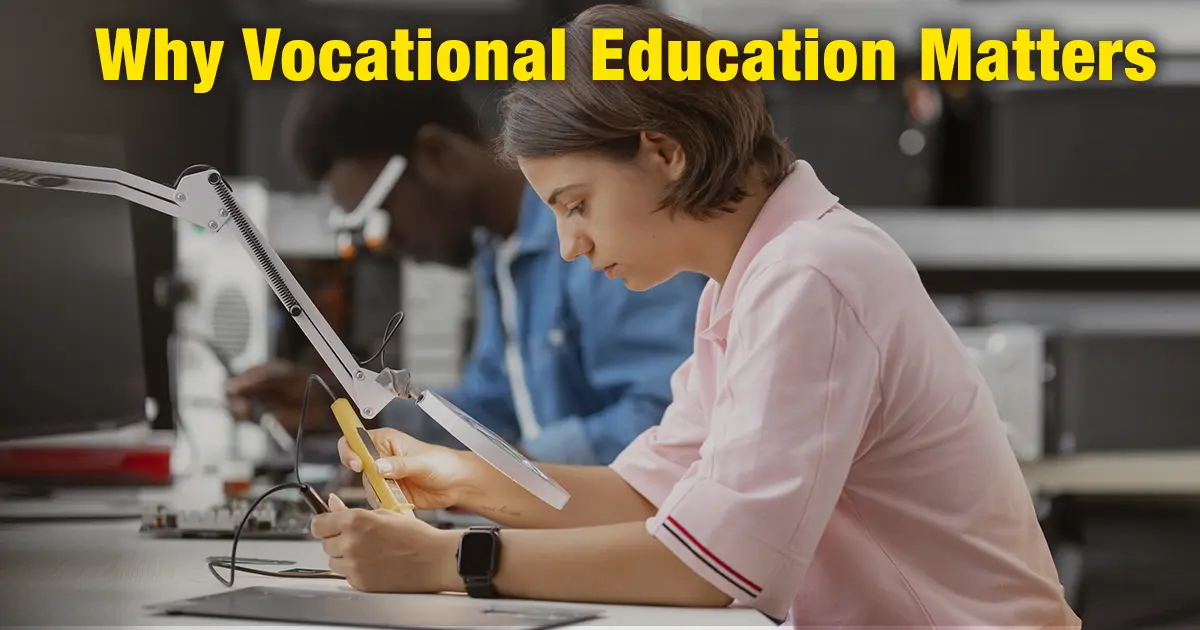
Unlike traditional academic programs, it focuses on hands-on learning, thus preparing you for direct employment.
The reasons why vocational education matters are discussed below:
| Importance of Vocational Education |
Why It Matters |
Real-life Example |
| Bridges the education-employment gap |
Combines classroom learning with practical training, making students job-ready from day one. |
A student studying Automobile Technology gains hands-on experience repairing vehicles during training before joining a service centre. |
| Addresses the skills gap |
Trains students in industry-demanded skills, helping employers find qualified professionals. |
Hospitals recruit trained Medical Lab Technicians from vocational institutes instead of spending months on training new hires. |
| Promotes inclusive education |
Provides accessible, flexible, and affordable learning opportunities for students from different backgrounds. |
A working professional enrols in an evening Electrician course to gain a certification without leaving their job. |
| Supports economic growth |
Creates a skilled workforce that improves productivity and meets industry requirements. |
Skilled welders, technicians, and machine operators contribute to manufacturing and infrastructure projects across the country. |
| Creates multiple career pathways |
Allows students to start working, pursue higher studies, earn certifications, or become entrepreneurs. |
A Beauty & Wellness graduate starts working at a salon and later opens their own beauty studio. |
| Encourages practical, career-focused learning |
Focuses on hands-on training, internships, and real-world projects instead of only theory. |
A Hospitality student completes an internship at a hotel, gaining customer service and operational experience before graduation. |
Benefits of Vocational Education
Vocational education offers flexibility, early job entry, and industry relevance, which are greatly valued in today's economy.
It is a powerful tool that can help you achieve career success and personal fulfilment early on. The benefits of vocational education are discussed below:
| Benefits |
How It Benefits You |
| Develop Job-Ready Skills |
Gain practical, industry-specific skills through hands-on training, enabling you to perform workplace tasks with confidence from day one. |
| Boost Your Employability |
Increase your chances of getting hired by acquiring specialised skills and practical experience that employers actively seek. |
| Start Earning Sooner |
Complete shorter vocational programs and enter the workforce earlier, allowing you to begin your career faster. |
| Gain Real-World Experience |
Work on internships, apprenticeships, and industry projects while studying to build practical experience before graduation. |
| Build Professional Confidence |
Strengthen your ability to handle workplace responsibilities by applying your knowledge in real-life situations. |
| Strengthen Essential Soft Skills |
Improve communication, teamwork, problem-solving, time management, and professionalism through collaborative learning and workplace training. |
| Earn While You Learn |
Take advantage of paid apprenticeships or internships that let you gain experience while earning an income. |
| Prepare for Global Careers |
Develop cross-cultural communication skills and gain exposure to diverse work environments, preparing you for international career opportunities. |
| Pursue a Career You're Passionate About |
Choose a vocational program that aligns with your interests, making learning more engaging and your career more fulfilling. |
| Continue Growing Professionally |
Upskill or reskill throughout your career to stay relevant, adapt to industry changes, and explore new opportunities. |
Advantages of Vocational Education
Traditional education and vocational education serve different purposes.
Traditional education will help you develop theoretical knowledge and skills that you may need to cultivate for a few years to become employable. Vocational education, on the other hand, teaches you life skills and helps students become job-ready sooner.
The advantages of vocational education compared to traditional studies are as follows:
| Aspect |
Vocational Education |
Traditional Education |
| Purpose |
Prepares you for a specific occupation or industry through specialised training. |
Provides broad academic knowledge across multiple disciplines before career specialisation. |
| Curriculum |
Focuses on industry-specific subjects and technical competencies. |
Covers a wide range of academic subjects along with foundational and elective courses. |
| Learning Environment |
Training takes place in workshops, laboratories, training centres, and industry settings. |
Learning primarily takes place in classrooms through lectures, tutorials, and seminars. |
| Assessment Method |
Skills are assessed through practical demonstrations, projects, and competency-based evaluations. |
Performance is mainly assessed through written examinations, assignments, and academic tests. |
| Specialization |
Allows you to specialise in your chosen field from the beginning of the program. |
Students usually study general subjects before selecting a specialisation. |
| Industry Involvement |
Courses are often developed with input from employers and industry professionals to meet workforce requirements. |
Industry collaboration varies depending on the institution and program. |
| Cost-Effectiveness |
Many vocational programmes have shorter durations, which may reduce the overall cost of education. |
Usually involves higher tuition fees and a longer duration of study, resulting in a greater financial commitment. |
| Best Suited For |
Ideal if you want to build expertise in a specific trade or profession and prefer applied learning. |
Ideal if you want to pursue academic, research, or professional careers that require extensive theoretical knowledge. |
Final Thoughts
The job market these days is not limited to theoretical knowledge alone. It belongs to those who can adapt and innovate using practical skills in real life.
If you want to stay competent in this changing world, then opting for a vocational course can help you achieve this.
With new technologies and new industries emerging at a constant pace, practical skills can help you pursue multiple job opportunities.
Check out vocational courses across various industries to find a program that matches your interest, strength and long-term goals.
FAQs
Q1: What is the aim of vocational education?
A1: The aim of vocational education is to equip you with practical, job-specific skills and industry knowledge required for a particular profession. It prepares you for employment by combining theoretical learning with hands-on training.
Q2: Why vocational education?
A2: The importance of vocational education lies in its ability to help you develop practical, industry-relevant skills required for careers in various industries. It bridges the gap between classroom learning and workplace requirements, making you better prepared for employment and long-term career growth.
Q3: What is vocational skills?
A3: Vocational skills are practical and technical abilities required to perform specific jobs or trades, such as electrical work, nursing, graphic design, automotive repair, or hospitality. These skills are developed through hands-on training and real-world practice.