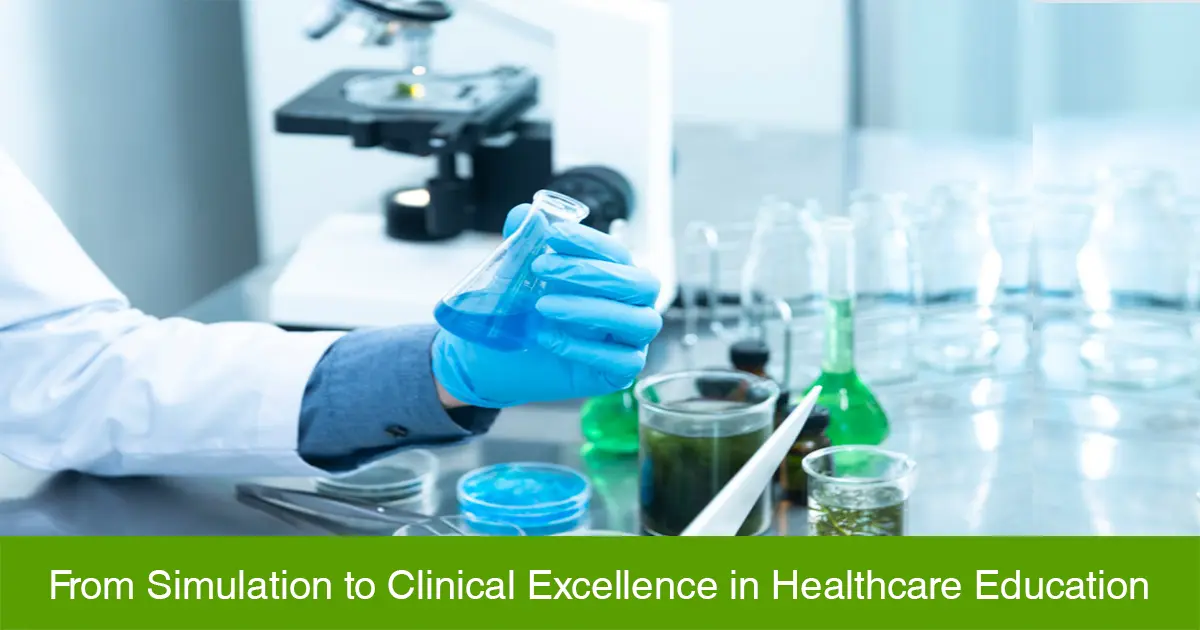
From Simulation to Success: Bridging the Gap Between Theory and Clinical Excellence.
Healthcare today demands more than knowledge: it demands readiness, the ability to think clearly under pressure, act decisively in complex environments, and deliver compassionate care from day one, which defines true clinical excellence. At the School of Allied Healthcare and Sciences (SAHS), education is not theoretical preparation; it is real-world training, purposefully designed to shape confident healthcare professionals.
From Simulation Labs to Real World Practice: Bridging Theory and Clinical Excellence
In modern healthcare, theoretical knowledge alone is no longer sufficient. Hospitals, diagnostic centres, research facilities, and most importantly, patients demand professionals who are confident, adaptable, ethically grounded, and ready to perform from day one. The stakes are high, the environments are dynamic, and the margin for error is minimal. At the School of Allied Healthcare & Sciences, we recognise this reality and have consciously created an educational ecosystem to bridge the critical gap between classroom learning and clinical excellence.
At SAHS, we don’t just teach students what to do. We train them rigorously in how to do it safely, competently, and confidently.
Learning Beyond Textbooks: Education That Mirrors Reality
Healthcare is a practice-driven profession. While strong theoretical foundations are essential, they must be translated into real-world competence. At SAHS, learning is experiential by design. Every program integrates theory with structured hands-on training, ensuring that students repeatedly apply what they learn in realistic settings. This approach transforms passive learners into active professionals in training who understand not only procedures but also decision-making, teamwork, ethics, and patient-centred care.
Our philosophy is simple: students should never encounter real-world complexity for the first time after graduation.
Simulation Laboratories: A Safe Space to Master High-Stakes Skills
Simulation laboratories form the backbone of the SAHS learning experience. These advanced facilities replicate real clinical environments, including intensive care units, emergency rooms, diagnostic suites, and procedural settings, allowing students to engage in immersive, scenario-based learning.
Within these simulated environments, students practice complex procedures, clinical reasoning, and crisis management without putting patients at risk. This “fail-safe” model encourages exploration, critical thinking, and improvement.
Key outcomes of simulation-based training include:
- Fail Safely, Learn Deeply: Mistakes are treated as structured learning opportunities rather than liabilities. Students analyse what went wrong, why it happened, and how to correct it, an approach that builds resilience and accountability.
- Confidence Under Pressure: Repeated exposure to emergency scenarios and time-sensitive decision making prepares students to stay calm, focused, and effective in real clinical situations.
- Clinical Judgment & Ethics: Simulations are designed not just to test technical skills, but also ethical reasoning, prioritisation, and patient safety considerations.
- Soft Skills Development: Communication, leadership, teamwork, and interprofessional coordination are embedded into every simulation skill that are just as critical as technical expertise in modern healthcare.
By the time students enter real clinical environments, they have already rehearsed the complexity of healthcare delivery multiple times.
Advanced Laboratories: Training on Industry Standard Technology
One of the most common challenges faced by healthcare graduates is unfamiliarity with real-world equipment. SAHS addresses this gap decisively. Our advanced laboratories are designed to mirror professional diagnostic, research, and clinical environments, equipped with industry-standard instruments and technologies used in leading hospitals and research centres.
Students train on the same equipment categories they will encounter in professional practice, gaining hands-on familiarity long before employment. This exposure ensures:
- Technical Proficiency from Day One: Graduates require minimal onboarding time, making them immediately valuable to employers.
- Confidence with Complex Systems: Repeated use builds comfort with calibration, troubleshooting, safety protocols, and workflow integration.
- Research and Innovation Readiness: For students pursuing research or higher studies, lab exposure fosters analytical thinking, precision, and data-driven decision-making.
By integrating advanced laboratory training early and consistently, SAHS ensures that graduates do not merely “know about” equipment; they know how to use it responsibly and effectively.
Field Training: Real Patients, Real Impact
While simulation builds a strong foundation, real-world exposure is where professional identity truly forms. SAHS places strong emphasis on structured field training through internships, clinical postings, and industry collaborations.
Under the supervision of experienced professionals, students step into authentic healthcare settings and engage directly with real patients, real workflows, and real challenges. This exposure allows students to:
- Navigate diverse patient populations and case complexities
- Understand institutional protocols, ethics, and professional conduct
- Work within multidisciplinary healthcare teams
- Experience shift work, workload management, and real-time decision making
Field training transforms students from learners into practitioners, reinforcing accountability, empathy, and professional discipline. By the time they graduate, SAHS students are not intimidated by real clinical environments; they are already a part of them.
Mentorship, Reflection, and Professional Maturity
Beyond infrastructure and technology, what truly distinguishes SAHS is its emphasis on mentorship and reflective learning. Faculty members act not only as educators but as mentors who guide students through professional challenges, ethical dilemmas, and career decisions.
Structured reflection sessions, case discussions, and feedback mechanisms help students internalise experiences, identify their strengths, and work on areas of improvement. This holistic approach nurtures professional maturity, an attribute that employers value as much as technical skill.
The SAHS Promise: Career Ready Graduates
The ultimate goal of SAHS is clear: employability with excellence. Our graduates do not leave with just a degree; they leave with confidence, competence, and credibility. They have already:
- Handled industry-grade equipment
- Managed simulated and real clinical scenarios
- Worked within healthcare teams
- Communicated with patients and professionals
- Understood the realities of healthcare delivery
As a result, SAHS graduates transition seamlessly from student roles to professional responsibilities. They are not merely prepared to enter the healthcare workforce; they are prepared to lead, innovate, and elevate it.
At SAHS, education is not preparation for the future.
It is practice for the real world starting today.