Geology is vital for understanding the Earth’s structure, natural resources, and environmental processes. Geologists play an important role in mineral exploration, groundwater management, infrastructure planning, and environmental sustainability for the functioning of diverse industries. These include mining, oil and gas, construction, and disaster management.
For students interested in earth science and research, geology provides a unique blend of scientific study and field experience. This blog serves as a guide to becoming a geologist in India, covering the qualifications, career opportunities, and the scope for geologists in the country.
What Does a Geologist do?
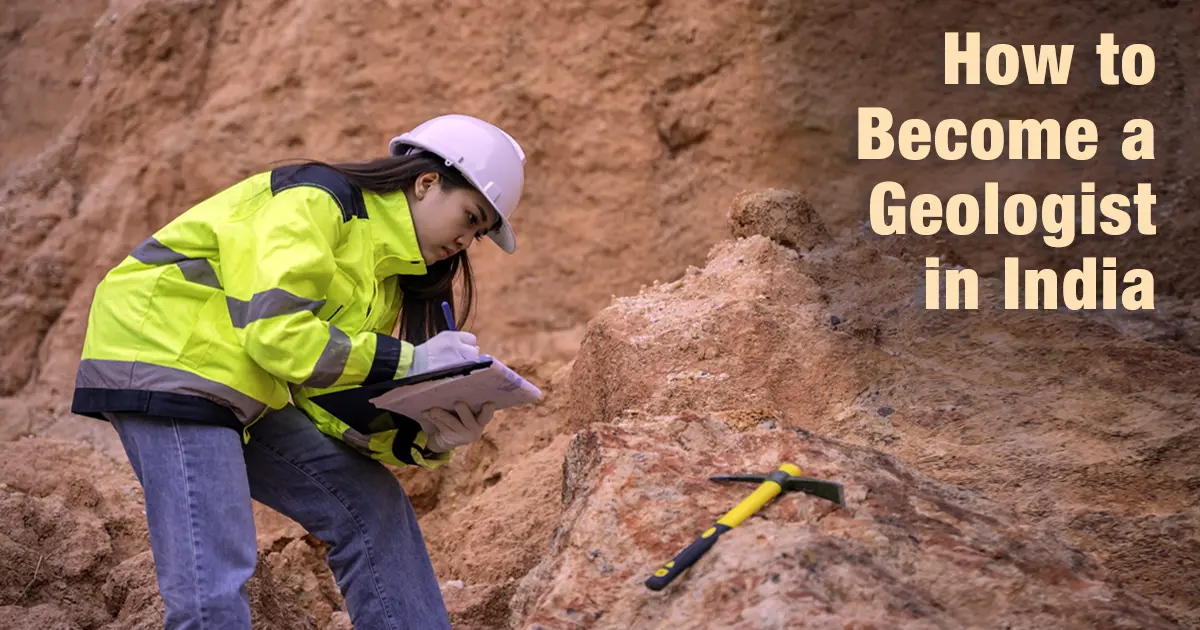
Before understanding how to become a geologist in India, it is important to know what a geologist does. A geologist studies the earth’s materials, structure, and processes. Their work includes analysing rocks, minerals, soil, fossils, and groundwater to understand geological history and identify valuable resources.
Major work areas include the following:
- Mineral exploration
- Oil and gas exploration
- Hydrogeology
- Petroleum and energy
- Environmental geology
- Engineering geology
Field surveys, geological mapping, sample collection, laboratory analysis, and data interpretation are also part of their work.
How to Become a Geologist in India
Students who are interested in a career in geology often wonder which educational pathway to follow. To become a geologist in India, you need to have a solid science background and some specific academic training. Here is step-by-step guidance for students who want to follow this road.
- Choose Class 12 Science Stream: The first step is to complete Class 12 with science subjects like Physics, Chemistry and Mathematics or Biology. This is the basis for further studies in geology.
- Complete a formal Bachelor’s Degree: After Class 12, students must specialise in geology-related undergraduate programs. Popular options include:
- B.Sc. Geology
- B.Sc. Applied Geology
- B.Sc. Earth Science
- B.Tech Geological Technology
- B.Tech Mining Engineering
- B.Tech Earth Sciences
These courses cover key subjects like mineralogy, petrology, structural geology, geophysics, and geomorphology.
- Gain Practical Experience: Geology is a practical discipline that requires understanding of fieldwork and technical training. Students should start building their experience through internships, research projects, and geological surveys right from their bachelor's. They can focus on technical skills such as
- GIS and remote sensing
- Geological mapping
- Data interpretation
- Technical reporting
- Pursue a Master’s degree: While entry-level opportunities exist after graduation, postgraduate education improves career prospects significantly. Popular options available for students include:
- M.Sc. Geology
- M.Sc. Applied Geology
- M.Sc. Geophysics
- M.Tech Geological Technology
Specialisation in areas such as hydrogeology, mining geology, petroleum geology, or environmental geology can improve employability.
How to Gain Practical Experience
Practical experience is a major advantage when it comes to building a career in geology, as companies generally prefer candidates with field exposure and technical skills.
In India, students studying Geology generally get practical training in the form of field training, internships and research projects during their undergraduate or postgraduate education.
- Fieldwork: Most Geology programs incorporate field trips to train students in geological mapping, rock identification, mineral analysis and survey methods.
- Summer internships: Students may also seek internship positions with mining groups, oil and gas and environmental consulting firms.
- Research projects: Students interested in research can gain valuable technical exposure through participation in geological surveys, laboratory work or dissertation projects.
Building practical exposure early can therefore improve both internship and job opportunities.
Skills Required to Become a Geologist
To succeed in Geology, students need a blend of technical knowledge and practical skills. Below are some of the practical skills.
| Skill |
Description |
| Analytical thinking |
Interpret complex geological data and spot patterns |
| Scientific observation |
Carefully examine rocks, minerals, and formations in the field. |
| Problem-solving |
Make decisions for exploration, resource management, and environmental issues. |
| Research ability |
Conduct surveys, analyse results, and contribute to studies. |
| Communication skills |
Prepare reports, present findings, and collaborate with teams. |
| Field adaptability |
Work effectively across varied terrains and challenging conditions. |
Scope of Geology in India
The scope of Geology in India is growing due to rising industrial demand and environmental challenges. India’s economic growth significantly depends on mining, infrastructure, water resource management, and energy production. With increasing awareness of climate change and sustainability, the demand for specialists in the fields of Hydrogeology, Environmental Geology, and disaster management is on the rise. Key areas of scope include:
- Mining and mineral exploration
- Oil and gas industries
- Groundwater management
- Infrastructure development
- Environmental sustainability projects
Jobs for Geologists in India
Geologists can find opportunities in both government and private sectors. Top employers include Geological Survey of India, Oil and Natural Gas Corporation, Coal India Limited, mining companies, construction firms, and environmental consultancies. Common job roles that students can find include:
- Geologist
- Exploration Geologist
- Hydrogeologist
- Mining Geologist
- Geophysicist
- Environmental Consultant
Many students also prefer government Geology jobs in India because of job security and structured career growth. Recruitment for these government jobs is generally through competitive exams.
Salary of a Geologist in India
In India, a geologist can expect a salary that relies on many aspects such as educational credentials, technical capabilities, industry, and years of experience. Those in highly technical fields such as mining, petroleum and geotechnical consulting are often better compensated because of their technical expertise. Pay scales in the private sector are usually higher when compared to government roles. where salaries are determined by fixed pay scales.
Typical salary ranges for a geologist in India include:
| Job role |
Average entry-level salary |
| Geologist |
INR 4–5 LPA |
| Petroleum Geologist |
INR 6–8 LPA |
| Hydrogeologist |
INR 3–5 LPA |
| Engineering Geologist |
INR 3–5 LPA |
| Exploration Geologist |
INR 3–5 LPA |
| Mine Geologist |
INR 3–5 LPA |
Final Thoughts
Geology is a promising field offering excellent opportunities in resource exploration, mining, environmental sustainability, infrastructure development, and disaster management. It is a perfect fit for those interested in science, research, and field-based work. The field offers strong long-term career prospects in both private sector roles and government Geology jobs in India, along with competitive salary packages. With the increasing scope of Geology in India, the field continues to emerge as a promising career option for future science enthusiasts.
Students interested in earth sciences and geology-related careers can also explore interdisciplinary fields such as environmental science, sustainability studies, and applied research programs. This will help them build strong analytical and field-based skills.
FAQs
Q1. What is a Geologist?
A1. A geologist is a scientist who studies the Earth’s structure, materials, and processes.
Q2. Where do Geologists work?
A2. Geologists work in mining companies, oil and gas firms, research institutions, government agencies, and environmental consultancies.
Q3. How hard is it to become a Geologist?
A3. Becoming a geologist requires strong science skills and specialised education, but is manageable with consistent study and field training.
Q4. Is it hard to be a Geologist?
A4. A career in geology can be challenging because of fieldwork and technical requirements, but it offers rewarding opportunities for those passionate about this field.
Q5. Are Geologists in high demand?
A5. Yes, geologists are in growing demand across industries such as mining, energy, infrastructure, and environmental management in India.
Q6. What are the highest-paying Geology jobs?
A6. The highest-paying roles include petroleum geologist, mining geologist, geophysicist, and environmental consultant.