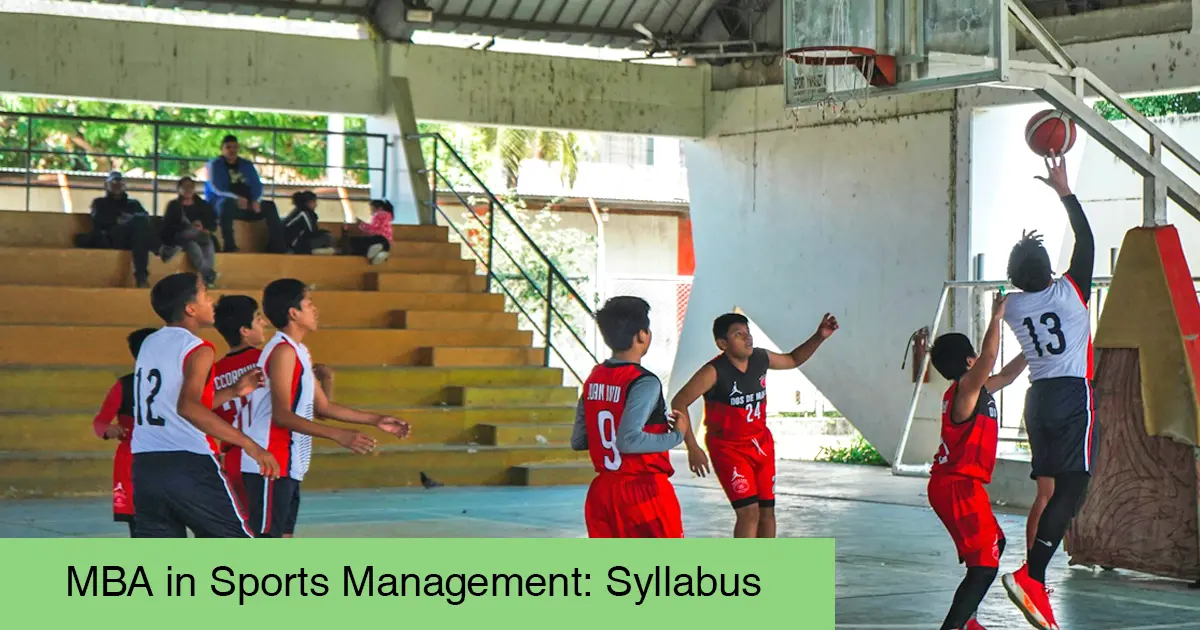
What does it take to run a sports league like the IPL or ISL smoothly, beyond the players on the field?
The answer lies in the fast-growing world of Sports Management, a career that has gained popularity in India over the past few years.
The Indian sports industry, valued at approximately INR 158 billion in 2023, is experiencing exponential growth due to the introduction of leagues across cricket, football, kabaddi, badminton, hockey, and emerging sectors such as eSports and Pickleball.
Every team, tournament, and fan experience depends on skilled professionals managing marketing, operations, public relations, and facilities. This, in turn, creates a surge of high-paying job opportunities such as Athletic Director, Sports Director, Facility Manager, Marketing Manager, etc.
The best way to start a career in this field is by pursuing a Master of Business Administration (MBA) in Sports Management If you are interested to know more about the course and the job opportunities it has to offer, stay with us till the end of this page.
What is an MBA in Sports Management?
MBA in Sports Management is a two-year full-time postgraduate programme. You can pursue this degree if you are passionate about sports and want to understand them from a business perspective.
The MBA in Sports Management subjects expose you to the latest trends, opportunities, and challenges in the sports industry. You learn how to plan, organise, manage, budget, and lead sports teams, events, or sports organisations as part of your curriculum. The course details are summarised below:
| Category |
Details |
| Name of Degree |
Master of Business Administration (MBA) in Sports Management |
| Course level |
Postgraduate degree |
| Duration |
2 years (4 semesters, full-time programme) |
| Examination type |
Semester-based internal and external evaluations |
| Eligibility |
Bachelor’s degree with at least 50% marks from a recognised university |
| Admission process |
Merit-based and entrance exam-based selection |
| Top recruiting areas |
Sports federations, universities, sports marketing firms, fitness organisations, event management companies, sports agencies, and athletic associations |
| Common job roles |
Sports administrator, team manager, sports consultant, event coordinator, athletic program manager, sports facility manager |
| Higher education scope |
Opportunity to pursue MPhil, PhD, or specialised certifications in sports analytics, sports law, or event management |
MBA in Sports Management Eligibility Criteria
To be eligible for the programme, you must obtain a Bachelor’s degree in any discipline, with at least 50% marks from a recognised university.
You are required to clear one of the MBA entrance exams held at the state or national level to qualify for admission, such as Common Admission Test (CAT), Management Aptitude Test (MAT), Symbiosis National Aptitude Test (SNAP) and others.
Some institutions may also conduct their own aptitude tests, followed by a personal interview and a group discussion.
If you are in the final year of your Bachelor’s programme, you can still apply for the course on a provisional basis.
MBA in Sports Management Syllabus
The MBA in Sports Management syllabus blends core business subjects with sports-focused modules to help you understand how management principles work in the sports industry.
You learn areas like sports marketing, event management, finance, and sports law to make a meaningful impact in the sports industry. The subjects in the MBA in Sports Management syllabus have been mentioned below:
| Semester I |
Semester II |
| Organisational Behaviour |
Research Methodology |
| Business Statistics |
Entrepreneurship Management |
| Managerial Economics |
Marketing Strategy & Applications |
| Principles of Management |
Human Resource Management |
| Business Law |
Indian Economy |
| IT for Managerial Applications |
Production Management |
| Marketing Management |
Financial Management |
| Financial Accounting |
Cost & Management Accounting |
| Business Environment |
Legal Aspects of Business |
| Foreign Language Part-I* |
Foreign Language Part-II* |
| Semester III |
Semester IV |
| Contemporary Sports Issues |
Administration of Games |
| Sports Facilities & Planning |
International Business |
| Sports Media & Event Handling |
Sports Training & Conditioning |
| Psychology of Sports & Business Ethics |
Managing & Promoting Sports Events |
| Business Mathematics |
Environment Management & Business Ethics |
| Funding Models in Sports |
Sports Law & Risk Management |
| Operations Research |
Sponsorships and Endorsements - Amateur and Professional |
| Strategic Business Policy |
Management Control Systems |
| Sports Medicine & Nutrition |
Final Project |
*Foreign Language may be an optional subject offered in specific institutes to improve communication skills in international events and increase the chances of employment in global companies or international leagues.
MBA in Sports Management Scope in India
The MBA in Sports Management scope in India is vast, offering arious careers in sports marketing, sports event management, athletic administration, sports analytics, facility management, sports media and more. Below, we have mentioned some of the best MBA in Sports Management jobs in India.
Career in Sports Management
The sports industry in India has experienced significant growth in recent years, driven by the rise of professional leagues, increased audience engagement, and higher corporate investments. Several organisations are recruiting skilled professionals who understand the business side of sports. Here are some of the leading Sports Management degree job opportunities:
| Job Role |
Description |
| Athletic Director* |
You oversee sports programmes, manage coaching staff, schedules, and budgets, and ensure smooth operations in schools, colleges, or sports institutions. |
| Sports Manager |
You handle the business and administrative side of sports teams and events, including planning, coordination, and team operations. |
| Sports Consultant |
You provide expert guidance to sports organisations on performance improvement, branding, operations, or facility management. |
| Sports Marketing Manager |
You promote sports teams, events, or brands through marketing campaigns, sponsorships, and fan engagement strategies. |
| Sports General Manager |
You manage overall team or club operations, including recruitment of players, managing renewal and signing of new sports contracts, handling budgets, and overseeing overall operations of the sports facility or firm. |
*The salary of an Athletic Director employed in a sports institute may depend entirely on the organisation offering the job role. Usually, top-tier private sports institutes can offer great salary packages for this job role.
How to Become a Sports Manager in India - Key Skills Required
If you are wondering how to become a Sports Manager in India, please keep in mind that educational qualifications are not enough. Besides education and certifications, you need to possess valid skills that will help you outperform the competition and demonstrate your efficiency in the workplace. Here are some top skills that you must develop if you wish to pursue a career as a Sports Manager:
- Maintaining strong professional ethics is essential when working in the sports industry.
- You must make quick, confident, and analytical decisions.
- You should possess excellent communication skills to effectively interact with athletes, teams, sponsors, and the media.
- You are expected to work effectively in teams and collaborate across departments to achieve common goals.
- You benefit from having a genuine passion for sports and their impact on society.
- Having a competitive drive will help in stakeholder negotiation and overall performance of your organisation.
MBA Sports Management Salary
The salary for MBA graduates in Sports Management varies based on several factors. Your experience level, the city where you work, the organisation’s reputation, and the overall demand within the sports industry all play a significant role.
At the beginning of your career, you may earn around INR 3.5 - 5 Lakhs Per Anum (LPA). With a few years of experience, salaries can rise to INR 7–8 LPA, and professionals with over 10 years of experience can earn up to INR 10-12 LPA and more.
Key Takeaways
The sports industry in India is growing, and with it comes a rising demand for professionals who can manage teams, events, and sports organisations efficiently.
An MBA in Sports Management opens doors to a variety of careers, including athletic administration, sports marketing, event management, and more.
This field offers attractive salaries, job security, and the opportunity to play a key role in shaping the future of sports in the country.
Enrol in the MBA in Sports Management offered by JAIN (Deemed-to-be University)’s CMS Business School, in academic partnership with MBA ESG India, and gain industry expertise and exposure.
FAQs
Q1. Is Sports Management a good career in India?
A1: Yes. Sports Management is a promising career in India, especially with the rapid growth of professional leagues, media, and sports-related businesses. It offers diverse roles across marketing, PR, broadcasting, event management, analytics, and operations.
Q2. How to make career in sports in India?
A2: To build a career in sports in India, you should either play professionally or work in an administrative capacity in any sports facility or organisation. You can take up certified courses or degrees in areas like coaching, MBA in Sports Management, or physical education.
Alongside this, participate in competitions, gain practical exposure, and pursue relevant education to develop the skills needed for your chosen sports career path.
Q3. What are the eligibility criteria for an MBA in Sports Management?
A3: To be eligible for an MBA in Sports Management, you need a Bachelor's degree in any discipline with a minimum aggregate of 50% from a recognised university. You also need a valid score on a national or university-specific entrance exam, such as the CAT, GMAT, or MAT.
Q4. What is the duration of an MBA in Sports Management?
A4: The duration of an MBA in Sports Management is 2 years, divided into 4 semesters.
Q5. What skills will I gain from an MBA in Sports Management?
A5: You will develop industry-specific skills such as strategic planning, financial analysis, marketing, event management, and leadership.
Q6. Is an MBA in Sports Management recognised globally?
A6: An MBA in Sports Management is internationally recognised when completed from a reputed, accredited institution. It can lead to global career opportunities across sports organisations.
However, its acceptance largely depends on the business school’s reputation and international accreditations, such as the Association to Advance Collegiate Schools of Business (AACSB) and the European Quality Improvement System (EQUIS), among others.
Q7. Is there a demand for Sports Management professionals in India?
A7: Yes. There is a high demand for sports management professionals in India due to the rise of private leagues, such as the Indian Premier League (IPL), Indian Super League (ISL), and Pro Kabaddi League (PKL), among others. You can work across various roles, such as event management, marketing, athlete management, sports analytics, and e-sports management.
Q8. Can I pursue a PhD after an MBA in Sports Management?
A8: Yes. You can pursue a PhD after an MBA in Sports Management. However, you need to qualify for the University Grants Commission – National Eligibility Test (UGC - NET) or Graduate Aptitude Test in Engineering (GATE) exam.