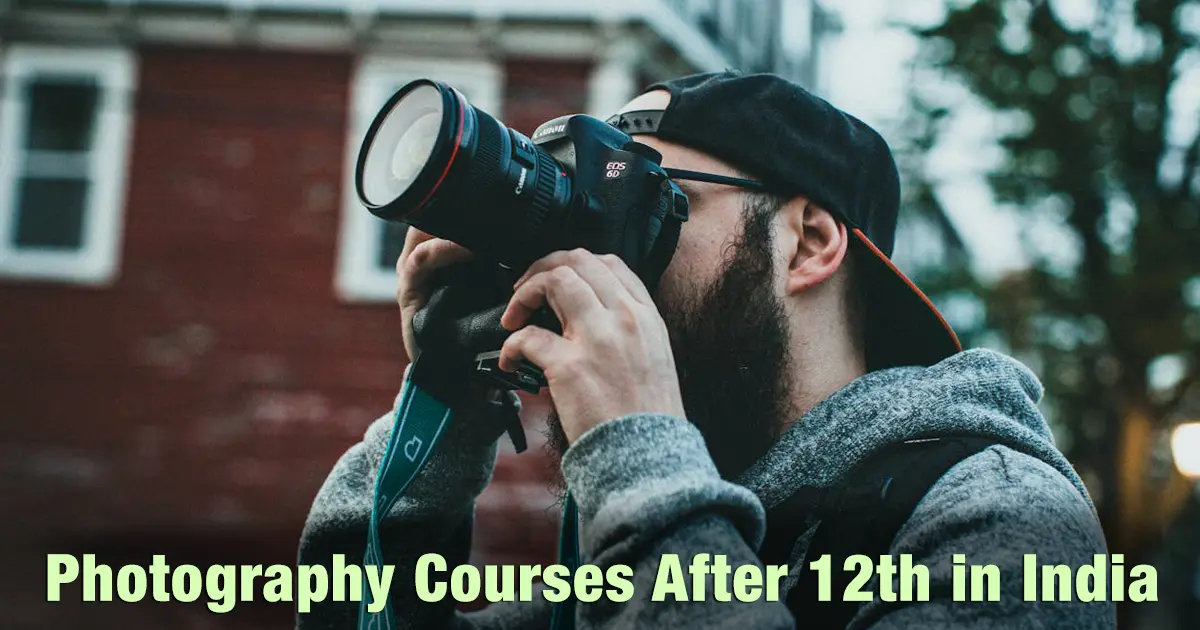
Photography is no longer merely a hobby. It is now an integral part of businesses that need visuals to communicate, brand, and create content. Across both digital platforms and commercial ventures, the demand for professionally trained photographers has increased significantly.
Determining how to become a photographer after 12th involves identifying the most suitable learning path. Beyond developing foundational skills, aspiring professionals require a comprehensive understanding of training options, course formats, and potential career outcomes.
Reviewing the best photography courses after 12th provides clarity on eligibility requirements and how specific curricula connect to industry standards.
This guide examines these aspects step by step and helps understand what to expect and how to begin a career in photography..
What is Photography?
Photography has evolved into a serious profession that plays a crucial role in media, advertising, fashion, and journalism. It serves as a powerful medium for communicating complex ideas and narratives through visual representation. Fundamentally, it is the art and science of capturing light to create compelling visual stories. Visual content remains indispensable, whether for digital product advertisements or photojournalism.
For those entering the field, mastering the practical application of technical elements, such as lighting, exposure, and composition, is more critical than understanding the underlying theory alone.
Types of Photography Courses in India
Institutes in India offer a diverse range of programs, from short-term certificate courses to comprehensive degree programs in photography. The table below outlines the primary types of photography courses and their essential details.
| Course Type |
Duration |
Focus Area |
Ideal For |
| Certificate Courses |
3 to 6 Months |
Basics of camera handling, lighting, and specific genres like wedding or editing. |
Beginners looking for a quick start or hobbyists. |
| Diploma Courses |
1 Year |
Technical skills, studio lighting, editing software, and portfolio building. |
Students planning to build job-ready skills after 12th. |
| Bachelor’s Degree Courses |
3 to 4 Years |
In-depth theory, history of art, visual communication, and advanced practical training. |
Those seeking a comprehensive career and higher education. |
| Master’s Degree Courses |
2 Years |
Research, specialization in a niche (e.g., wildlife, fashion), and artistic development. |
Graduates aiming for teaching or specialized roles. |
Best Photography Courses After 12th
Choosing the right course mainly depends on specific career goals and the time commitment required for study. While degree programs offer a broader understanding of the field, a diploma is the right choice for entering the workforce early.
Here are some of the most popular courses in photography in India:
| Course Name |
Duration |
Key Subjects Covered |
| B.F.A. in Photography |
4 Years |
Art history, advertising photography, aesthetics, and photojournalism. |
| B.A. in Visual Arts and Photography |
3 Years |
Visual storytelling, digital media, cinematography, and editing. |
| Diploma in Professional Photography |
1 Year |
Studio lighting, fashion photography, product shoots, and image post-processing. |
| Diploma in Fashion Photography |
1 Year |
Modeling lighting, styling, fashion trends, and commercial editing. |
| B.Sc. in Cinema and Photography |
3 Years |
Motion picture photography, visual effects, and media technology. |
Eligibility for Photography Courses After 12th
Eligibility requirements for photography programs in India are broad, allowing one to choose from a wide range of programs. The typical eligibility criteria are mentioned below.
- Educational Requirement: Completion of Class 12 from a recognized national or state board.
- Minimum Marks: A minimum aggregate of 45% to 50% in the qualifying examination is typically required.
- Stream Flexibility: Students from any academic stream, Science, Commerce, or Arts, are eligible to apply.
- Admission Basis: Enrollment is generally based on merit, though specific institutions may require entrance tests or aptitude assessments.
- Portfolio Requirement: Some programs include an interview process involving a portfolio review to evaluate an applicant's visual aptitude.
How to Become a Photographer After 12th
Becoming a successful photographer requires a mix of formal education, practical experience, and networking. Proficiency cannot be attained through theoretical study alone; active engagement in field-based practice is essential for mastery.
- Complete Your 10+2: Finish higher secondary education in any stream to meet the basic eligibility for professional courses.
- Enroll in a Professional Program: Join a BFA or a Diploma program to build expertise in technical rules of composition, lighting, and editing software like Adobe Photoshop and Lightroom.
- Understand Your Gear: While learning, master the manual settings of a DSLR or Mirrorless camera. Understand how ISO, aperture, and shutter speed work together.
- Build a Portfolio: Start clicking pictures regularly. Create a collection to show potential clients or employers. A strong portfolio is often more valuable than a degree in this industry.
- Choose a Niche: Experiment initially, but eventually decide to specialize in weddings, fashion, wildlife, or news.
- Intern with a Pro: Photography is best learned on the job. Assist a senior photographer in understanding how to manage clients, handle equipment, and work under pressure.
- Create an Online Presence: Use platforms like Instagram or Behance to showcase the work. Digital presence helps attract freelance projects and job offers.
Career Opportunities in Photography in India
Professional opportunities for photographers in India have diversified extensively alongside the rapid growth of digital media, e-commerce, and advertising. Today, companies need high-quality visuals for various platforms, ranging from Instagram Reels to billboard campaigns.
| Job Profile |
Role Description |
Estimated Starting Salary (Per Annum)* |
| Fashion Photographer |
Works with models, designers, and magazines to capture clothing and lifestyle trends. |
₹3.5 Lakh – ₹6 Lakh |
| Photojournalist |
Captures news events for newspapers, news channels, and digital media houses. |
₹3 Lakh – ₹5 Lakh |
| Wedding Photographer |
Documents weddings and events. This is a highly lucrative freelance market in India. |
₹3 Lakh – ₹8 Lakh (Project-based) |
| Product Photographer |
Shoots products for e-commerce sites (like Amazon/Flipkart) and catalogs. |
₹2.5 Lakh – ₹4.5 Lakh |
| Wildlife Photographer |
Captures animals and nature. Often works with magazines, NGOs, or as a freelancer selling prints. |
₹2.5 Lakh – ₹5 Lakh |
| Forensic Photographer |
Documents crime scenes for police and investigative agencies (requires specialized training). |
₹3 Lakh – ₹6 Lakh |
*Salary figures are approximate and vary based on location, experience, and the specific employer.
Conclusion
Photography today offers a mix of creative work and professional opportunities, especially as demand continues to grow across media and digital platforms. Choosing the right course after Class 12 helps you build both technical skills and industry understanding from the start.
For those pursuing this career path, selecting a university that provides both structured training and practical engagement is vital. Within this framework, programs at JAIN (Deemed-to-be University) are designed to facilitate a smooth transition from basic concepts to comprehensive professional mastery. Explore the program details today on the University’s website.
FAQs
Q1: How do I start a career in photography?
A1: Start by mastering camera settings and building a strong portfolio. While self-learning is possible, enrolling in various types of photography courses, such as a professional diploma, helps in gaining technical expertise and industry connections more efficiently.
Q2: Will AI replace photography?
A2: AI is unlikely to replace photographers but will fundamentally evolve their workflow. While AI can generate digital imagery, it cannot replicate the human perspective, emotional depth, or the physical presence required to capture authentic, real-world events.
Q3: What qualifications do I need to be a photographer?
A3: A specific degree is not mandatory, but enrolling in the best after 12th photography courses is the most effective way to master studio lighting and advanced editing. Most employers and clients prioritize a high-quality portfolio and technical proficiency over formal academic credentials.
Q4: What are the basic rules of photography?
A4: Photography basics involve controlling light using aperture, shutter speed, and ISO, along with applying simple composition techniques like balance and proper subject placement to improve image quality.