Have you ever wondered how science can reshape the way we live, eat, and heal?
Biotechnology is the field that aims to solve real-world problems, from feeding a growing population to revolutionising medicine.
Biotechnology began with early practices like fermentation and selective breeding and later advanced to modern innovations such as genetically modified crops and gene editing.
Nowadays, it addresses some of the most burning issues in the world, such as climate resilience, precision healthcare, sustainable energy, and food security.
The bioeconomy is projected to grow to 300 billion dollars in India alone and make a 4.25 percent contribution to GDP with a yearly growth of 17.9 percent.
The Biotechnology field is on the rise and it will make a niche discipline into a center of contemporary innovation.
This blog provides insights we need to know about Biotechnology:
What is Biotechnology?
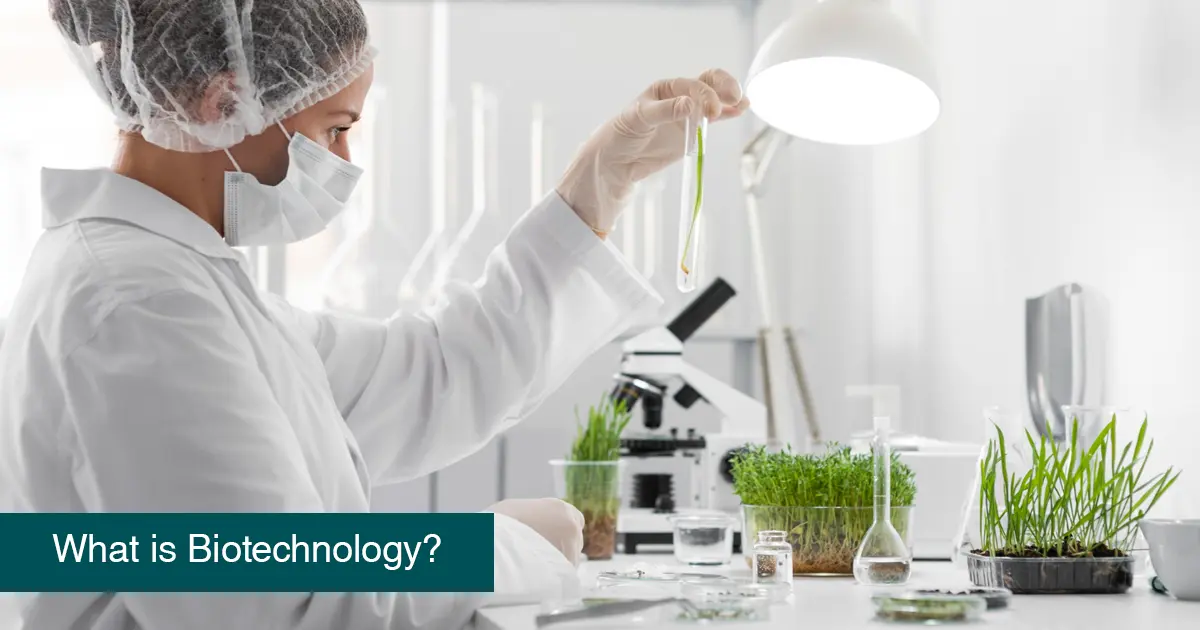
Before answering the question ‘what is Biotechnology’, it is necessary to understand that the term is a combination of two disciplines: Biology and Technology, which aims to create new innovative products and solutions to improve human life.
Fundamentally, biotechnology involves the application of cellular or biomolecular applications in the production of technologies that can improve human health, as well as environmental sustainability.
Biotechnology has been practised by humans for over 6000 years, where microorganisms are used to manufacture daily items like bread and cheese and to preserve dairy foods.
Biotechnology today is an interdisciplinary area which comprises genetics, biochemistry, and molecular biology.
Types of Biotechnology
Biotechnology is categorised by its colour or application. The different types of Biotechnology are as follows:
Red Biotechnology
Red Biotechnology is concerned with medicine and healthcare. It encompasses vaccine and medication development, stem cell research, and its application in the regeneration of human tissues.
Green Biotechnology
Green Biotechnology deals with agriculture. It aims to develop resistant and drought-tolerant crops. It is also useful in reducing or eradicating diseases that are common amongst livestock.
Yellow Biotechnology
Yellow Biotechnology is concerned with the production of food. It emphasises better food quality and better production processes, including fermentation, a process used in brewing, winemaking, cheesemaking, and alcohol production.
White Biotechnology
White Biotechnology is also known as industrial biotechnology. It promotes sustainable manufacturing methods that consume fewer resources and supports the production of goods such as biofuels and industrial materials.
Blue Biotechnology
Blue Biotechnology focuses on the study and use of marine resources. It supports industries such as cosmetics, pharmaceuticals, and biofuels while also protecting and sustaining aquatic ecosystems.
Gold Biotechnology
Gold Biotechnology is commonly referred to as Bioinformatics. It uses computer tools to solve biological problems. This field of biotechnology plays a crucial role across functional, structural, and proteomic research.
Purple Biotechnology
Purple biotechnology is concerned with the legal and ethical issues of biotechnology. It lays emphasis on patents, intellectual property rights and the regulatory framework concerning biotechnological innovations.
Grey Biotechnology
Grey Biotechnology focuses mainly on environmental applications. It is concerned with the conservation of biodiversity, finding ways to eliminate pollutants and restoring ecosystems.
Please note: Gold, Purple and Grey Biotechnology are thematic classifications, and the scientific names may differ.
Process of Biotechnology
The process of Biotechnology entails using living organisms or their parts (such as cells, enzymes) to produce useful solutions or products that can benefit humankind.
The main steps in this process include:
- Isolation of genetic material: Isolation of the DNA containing the genes of interest.
- Purification of DNA: The elimination of undesired cellular material to get clean DNA.
- Cutting of the DNA: The process of cutting the DNA with the help of enzymes to isolate the desired genes.
- Amplification of genes: Reconstruction of multiple copies of the target genes by applying methods such as PCR.
- Insertion into host: A technique of inserting the target genes into a competent host organism.
- Gene product: The gene is inserted into the host, resulting in the production of the target protein or trait.
Benefits of Biotechnology
With its innovative techniques and processes, Biotechnology has been making a significant impact on the world. The benefits of Biotechnology are listed below:
Production of Nutritious Food
Biotechnological advancement has ensured that crops are improved in terms of nutrient content, quality, and digestibility, which makes the nutritional value of our foods much better.
Development of the Medical Industry
The progress in Biotechnology over the years in understanding the genetic nature of human beings has greatly aided medical advancement. Examples include monoclonal antibodies, insulin, vaccines, and gene therapy products.
Lowering the Worldwide Ecological Footprint
Environmental biotechnologies are in a prime position to replace harmful materials and chemical processes with cleaner, environmentally friendly and sustainable biological alternatives.
Application of Biotechnology Across Different Fields
Biotechnology has wide-ranging applications, such as developing genetically modified crops, waste treatment methods, agricultural products, energy production, and processed foods. Let us learn more about Biotechnology and its applications:
Biotechnology and Its Applications in Agriculture
| Aspect |
Description |
Examples |
| Genetically Engineered Crops |
Introduction of desired genes using genetic engineering and recombinant DNA technology |
Genetically modified crops |
| Pest Resistance |
Crops are modified to resist insects and pests |
Bt cotton, Bt corn |
| Nutritional Enhancement |
Food crops are enriched with essential nutrients |
Golden rice (vitamin A-enriched) |
| Disease Resistance |
Plants are made resistant to viruses and parasites |
Virus-resistant squash, pest-resistant tobacco |
| Improved Shelf Life |
Enzymes responsible for fruit softening are blocked |
Flavr Savr tomato |
Biotechnology and Its Applications in Medicine
| Aspect |
Description |
Examples |
| Drug and Vaccine Production |
Production of safe therapeutic drugs using recombinant DNA technology |
Antibiotics, vaccines |
| Digestive Enzymes |
Modified microorganisms produce enzymes to aid digestion |
Enzyme supplements |
| Gene Therapy |
Correction of genetic disorders by introducing functional genes |
ADA deficiency treatment |
| Molecular Diagnostics |
Early disease detection using molecular techniques |
PCR, ELISA |
Biotechnology and Its Applications in Industry
| Aspect |
Description |
Examples |
| Textile Industry |
Improved quality of fibres through biotechnology |
Stronger, wrinkle-resistant cotton |
| Detergent Industry |
Use of enzymes to enhance cleaning efficiency |
Proteases |
| Biofertilisers |
Environment-friendly alternatives to chemical fertilisers |
Microbial fertilisers |
| Food Processing |
Use of microorganisms in fermentation processes |
Bread, alcohol, cheese |
| Alternative Raw Materials |
Plant-based sources replace petroleum |
Corn-based chemicals |
Biotechnology and its Applications in Environment
| Aspect |
Description |
Examples |
| Waste Management |
Treatment of industrial and food waste using enzymes |
Bioreactors |
| Biodegradable Products |
Conversion of organic waste into eco-friendly materials |
Biodegradable plastics |
| Pollution Reduction |
Reduction of harmful gases from fossil fuels |
Bioremediation, phytoremediation, biofuels |
| Energy Production |
Production of renewable fuels using biotechnology |
Bio-methane, biodiesel, ethanol |
Future of Biotechnology
Over the past three decades, the Biotechnology future has often been associated with bold predictions such as curing major diseases, ending global hunger, and reducing dependence on petrochemicals.
In reality, progress has been more gradual. There have been steady improvements in food production, material science, and medical treatments.
However, the next 20 years are expected to be different. The Biotechnology future is likely to influence a much wider range of human experiences. Let us understand the key areas that can undergo massive changes in the coming years:
| Biotechnology Area |
Overview |
Potential Benefits |
| Digital Healthcare & Precision Medicine |
Combining health data, genetics, and IoT for personalised care |
Early disease prediction, targeted treatments |
| Bioprinting & Personalised Therapies |
3D-printed tissues, genetic and cell-based treatments |
Organ replacement, better chronic disease management |
| Ecological Engineering |
Genetically modified plants, animals, and microbes |
Sustainable food, water efficiency, climate adaptation |
| Human–Computer Interfaces |
Brain-computer links and sensory augmentation |
Improved cognition, medical rehabilitation |
| Biomanufacturing |
Bio-based production of materials and chemicals |
Lower emissions, reduced fossil fuel use |
| DNA-Based Data Storage |
Storing data using synthetic DNA |
Massive, long-term data storage |
| Disease Eradication |
Advanced treatments and prevention methods |
Longer life expectancy, improved global health |
| On-Demand Medicine Production |
Rapid, localised drug and vaccine manufacturing |
Faster pandemic response |
| Synthetic Organisms |
Creation of new life forms with expanded genetics |
Scientific breakthroughs, new materials |
Biotech Challenges
Besides its remarkable benefits, the field also faces a range of challenges. These biotech challenges must be carefully addressed to ensure that biotechnology develops responsibly and equitably.
Ethical Concerns
Genetic manipulation, embryo manipulation or making artificial organisms raises ethical and moral concerns as to whether human beings should interfere with life and nature.
Inequality of Access
Advanced biotech treatments and therapies can be costly, and this can cause disparities between those who are able to afford them and those who are not.
Privacy and Data Security
Genetic and health information collected can compromise an individual's privacy and can be subject to misuse, discrimination, or surveillance.
Environmental Risks
Ecological engineering and genetically modified organisms can interfere with ecosystems, replace native species, or lead to unintended outcomes.
Regulatory and Legal Challenges
The variation of laws in various countries makes the implementation of biotech innovations such as GMOs, gene therapies, and synthetic organisms difficult.
Biosafety and Biosecurity Risks
Misuse of synthetic organisms or genetically engineered pathogens can pose health and security threats.
Final Thoughts
From revolutionising medicine to driving sustainable industrial solutions, Biotechnology's impact spans every aspect of modern life.
While the future promises groundbreaking innovations, the field must navigate ethical, social, and environmental challenges responsibly.
Embracing biotechnology thoughtfully can unlock immense potential, offering solutions to some of humanity’s most pressing problems.
If you wish to pursue a career in this field, you can consider our Biotechnology courses, offered at JAIN (Deemed-to-be-University)
FAQs
Q1. What is Biotech?
A1: Biotechnology is the field that combines biology and technology to develop products and processes that improve human life, health, agriculture, and industry.
Q2. What does Biotechnology deal with?
A2: It deals with manipulating living organisms, cells, and genetic material to create useful products, enhance crop yields, produce medicines, and develop sustainable industrial solutions.
Q3. How does Biotechnology benefit humans?
A3: Biotechnology benefits humans by producing medicines, vaccines and genetically modified crops. It also contributes to sustainable energy and develops tools for environmental sustainability and improved quality of life.
Q4. What are the implications of Biotechnology?
A4: Biotechnology has ethical, social, environmental, and economic implications, including privacy concerns, inequality of access, ecological risks, and debates over genetic manipulation.
Q5. Who is the father of Biotechnology?
A5: The father of Biotechnology is Károly Ereky. He was a Hungarian agricultural engineer who coined the term 'Biotechnology' in 1919.