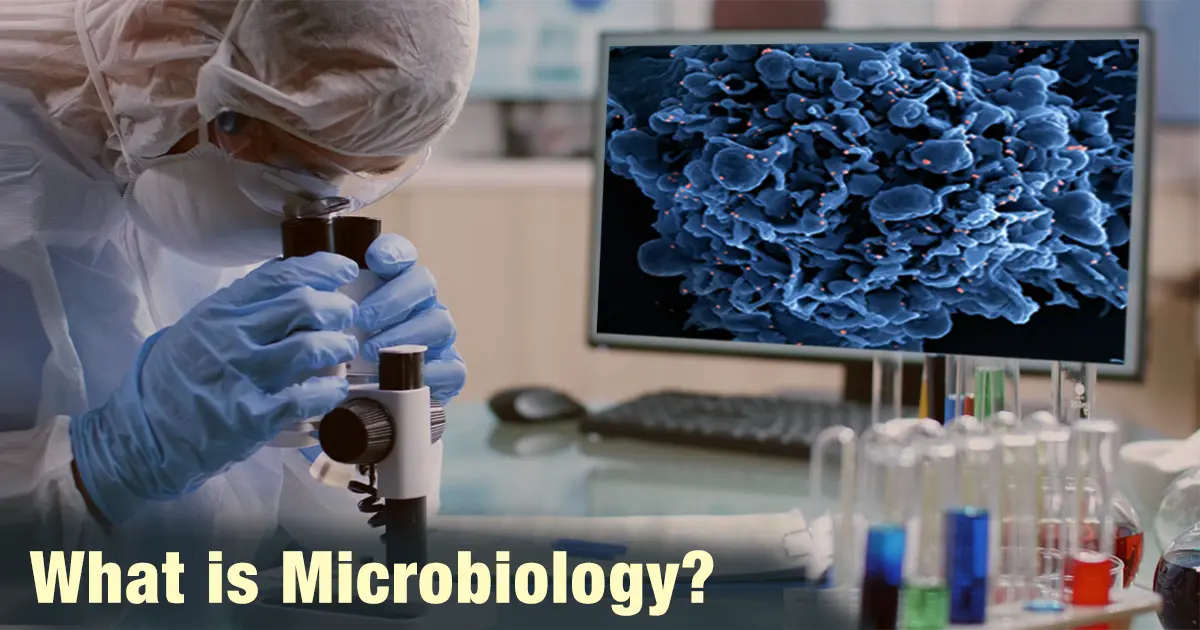
Microbiology focuses on microscopic organisms that are invisible to the naked eye, but their effects are easy to notice in daily life. Whether it is medicines used in treatment or the food we consume, many basic processes depend on how these microorganisms function. It provides a critical framework for understanding life at a microscopic level.
Exploring the various branches of microbiology helps grasp the extensive reach of this discipline. The field is shifting from simple observation toward direct application, where microorganisms are used to solve problems of the real world.
The future of microbiology is closely linked to developing new solutions across healthcare, environmental studies, and technology.
Read below to explore microbiology, its types, importance, and career scope in depth.
What is Microbiology?
Microbiology deals with organisms that cannot be seen directly. The principles of microbiology examine how these microbes survive, adapt to their environments, and influence human life in diverse ways.
Understanding this field requires an analysis of the different types of microorganisms present in nature. This includes bacteria, viruses, fungi, protozoa, and algae. Each group behaves differently and plays its own role.
Research focuses on how these organisms function, specifically their structure, genetic makeup, and behavior in natural systems. By applying the principles of microbiology, the behaviour of various microorganisms in real-world scenarios can be understood well. This helps diagnose diseases as well as produce medicine.
Branches of Microbiology
The field is broadly categorised into different types of microbiology, depending on whether the focus is on fundamental research or practical use. These divisions help in studying microorganisms more effectively and applying that knowledge in practical scenarios.
| Category |
Branches & Focus Area |
| Organism-Based Branches |
- Bacteriology: Study of bacteria and their roles in various environments.
- Virology: Analysis of viruses and their effects on living hosts.
- Mycology: Exploration of fungi, including yeasts and moulds.
- Parasitology: Study of parasites and their relationships with hosts.
- Immunology: Study of the immune system and its response to microbes.
|
| Applied Branches |
- Medical Microbiology: Focus on diagnosing, treating, and preventing infectious diseases.
- Industrial Microbiology: Using microbes for large-scale production of vitamins, enzymes, or fuels.
- Food Microbiology: Ensuring food safety and studying fermentation and spoilage.
|
Applications of Microbiology
Microbiology is not limited to lab work. Its applications are evident across industries where microorganisms are part of how processes actually run.
| Area |
How it is used |
| Healthcare |
Identifies pathogens and tests antibiotic effectiveness; includes the development of vaccines like those for Hepatitis B. |
| Biotechnology |
Uses microbes to produce vitamins, amino acids, and biodegradable materials |
| Environmental science |
Applies bioremediation to break down oil spills and toxic waste, using specific bacteria to clean contaminated soil. |
| Food industry |
Ensures food safety and supports fermentation for products like bread, cheese, and beverages, while preventing spoilage |
Importance of Microbiology
The importance of microbiology is evident in the fundamental life processes that sustain our planet. Microorganisms are essential for supporting plant growth and maintaining oxygen levels, especially in aquatic environments.
| Area |
Real-World Impact |
| Environment |
Drives nitrogen fixation for soil fertility and generates a significant portion of the Earth's oxygen production. |
| Healthcare |
Enables vaccine development and global disease tracking, as seen during the COVID-19 pandemic. |
| Human health |
The human microbiome is crucial for strengthening immunity, aiding digestion, and influencing mental well-being. |
Scope of Microbiology
For those exploring microbiology jobs, the field offers diverse career paths across multiple sectors. The scope extends beyond laboratory research to include critical roles in public health, safety standards, and industrial production.
| Sector |
Career Scope and Roles |
| Pharmaceuticals |
Opportunities in drug discovery and R&D for developing new antibiotics and therapeutics. |
| Public health |
Roles as epidemiologists or health officers monitoring disease outbreaks in government and global health bodies. |
| Quality Control (QC) |
Careers in microbial safety testing for manufacturing, ensuring products are free from contamination. |
| Agriculture |
Opportunities in developing bio-fertilisers and sustainable farming solutions to improve crop yields. |
| Growth Sectors in India |
Rising demand in clinical diagnostics and environmental consultancy, driven by India's expanding healthcare and biotech infrastructure. |
Future of Microbiology
The future of microbiology is defined by advancements like synthetic biology and gene editing. The field is progressing toward microbial engineering, where microorganisms are specifically designed to address global challenges such as waste management, carbon capture, and the development of personalised therapies.
| Area |
What is Changing |
| Synthetic biology |
Microbes are being designed to perform tasks like carbon capture |
| Gene editing |
CRISPR-based techniques are improving precision in genetic modification |
| Healthcare innovation |
Microbiome research may lead to treatments replacing traditional medicines |
| Long-term impact |
Microorganisms are expected to play a key role in future scientific progress |
Conclusion
Microbiology connects small-scale life with larger systems that affect health and the environment. As research in biotechnology and genetics continues, the need for trained professionals is increasing. If you are interested in this field, building the right skills early can help you move forward in this area.
Advance your professional journey with JAIN (Deemed-to-be University). Explore the industry-aligned Microbiology programmes and gain the expertise needed to excel in this dynamic field. Apply Now!
FAQs
Q1: What is meant by microbiology?
A1: Microbiology is the biological study of microscopic organisms, known as microbes, which are too small to be seen by the naked eye, such as bacteria, viruses, archaea, fungi, and protozoa.
Q2: What is the study of microorganisms called?
A2: The study of microorganisms is called microbiology.
Q3: Why is microbiology important?
A3: Various tools and techniques in microbiology are essential for diagnosing and treating infectious diseases. This field supports the development of vaccines and antibiotics, ensures food safety through various processes, and maintains environmental health via waste decomposition and nutrient cycling.
Q4: What is the difference between bacteriology and virology?
A4: There are different types of microbiology. Bacteriology focuses on bacteria, which are single-celled living organisms. Virology focuses on viruses, which are smaller, non-living genetic particles that require a host cell to replicate. Bacteria are typically treated with antibiotics, whereas viruses are not.
Q5: What careers can I pursue with a degree in microbiology?
A5: You can work as a Biomedical Scientist, Quality Control (QC) Analyst in pharma or food industries, Research Scientist, Clinical Microbiologist, or an Environmental Consultant.
Q6: How do microbiologists identify bacteria?
A6: Identification is achieved through Gram staining (to observe cell wall structure), microscopy (to observe shape), biochemical assays (to test metabolic activities), and modern DNA sequencing (PCR) to match genetic markers.
Q7: Who is the father of microbiology?
A7: Antonie van Leeuwenhoek is the "father of microbiology" for being the first to observe microbes. Louis Pasteur is often called the "father of modern microbiology" for his work on vaccination and fermentation.
Q8: Is microbiology a good career in India?
A8: Yes. India is a global pharmaceutical and biotechnology hub. There is high demand for microbiologists in vaccine manufacturing, drug research, clinical diagnostic labs, and the expanding food processing sector.
Q9: Why study microbiology?
A9: It allows you to solve global challenges like antibiotic resistance and climate change. It is a field at the forefront of modern medicine and sustainable technology.
Q10: What is the future of microbiology?
A10: The future is expected to be shaped by synthetic biology, CRISPR gene editing, and microbiome therapy, where microbes are engineered to produce green energy or personalised medicines.