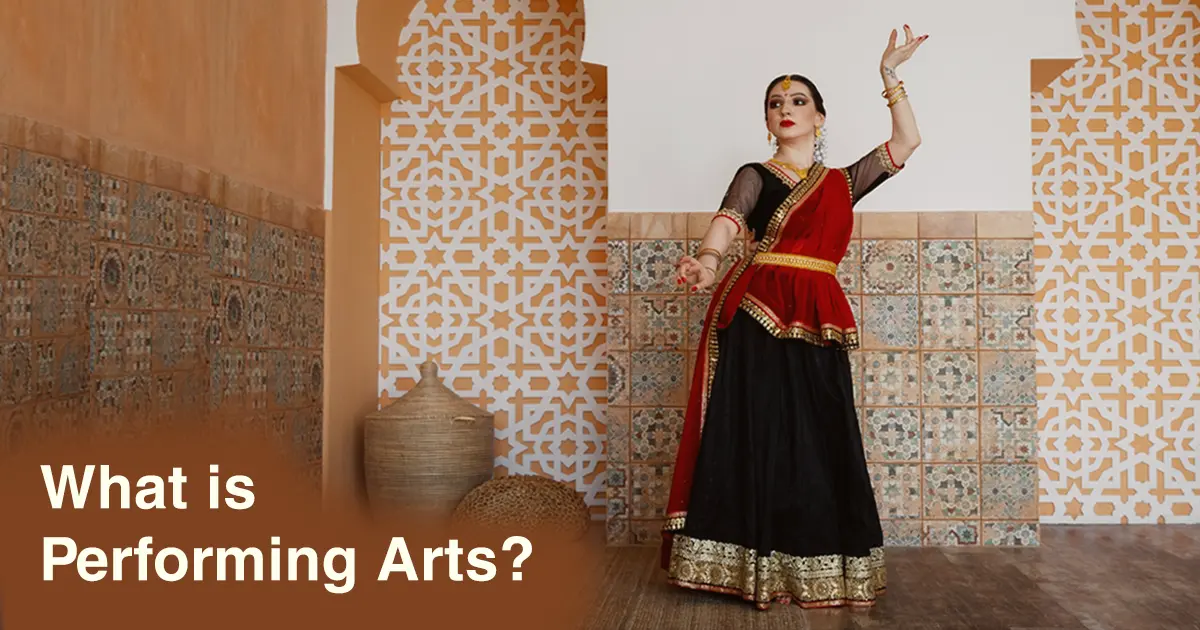
What makes a performance stay with us long after the curtains close?
Performing Arts are far more than just entertainment; they are a powerful form of human expression that has existed for thousands of years.
While styles and traditions differ across cultures and historical eras, the arts' ability to connect people remains timeless.
From theatre and dance to music, the performing arts enrich our lives by bringing stories to life and evoking emotions that words alone often cannot express. They also challenge stereotypes, reshape perspectives, and encourage deeper understanding.
For students aspiring to join Performing Arts schools, this field offers an industry filled with creativity, fulfilment, and meaningful opportunities.
In this article, we explore what Performing Arts is, types, examples, the importance of Performing Arts and more in depth:
What is Performing Arts?
The Performing Arts are art forms in which artists use their voices or body language to convey expression.
Unlike a static form of expression, Performing Arts is dynamic in nature and involves movement, sound, expression and storytelling.
Performing Arts Examples
Music is a significant type of Performing Arts, and it can be either classical or popular. It usually represents the history and cultural customs of the people. Performances may be purely instrumental, as in the case of a classical orchestra or can involve a mix of singers and instruments such as guitars and drums.
The other important example of Performing Art is dance. While ballet is a classical dance style, there are other forms of dance as well, such as contemporary, jazz, tap, etc. There are also a lot of traditional dances, such as religious dances and folk dances. These dance forms praise harvest, battle, the changing of seasons and significant events in the lives of the community.
Theatre brings together a number of Performing Arts aspects, including acting, singing, dancing, music, puppetry, and pantomime. A number of creative professionals, such as fashion and costume designers, choreographers, and art directors, support these performances.
Besides classic theatres, performing artists may also perform in entertainment venues such as hotels, amusement parks, and cruise ships, where live performances are a significant feature of the experience.
History of Performing Arts
The history of the performing arts dates back thousands of years. Prehistoric cave paintings depict the first instances of human performance representing scenes of dancing and storytelling.
Performance was highly valued in ancient civilisations such as those of the Greeks and Egyptians. Music and dance were used to honour religious rituals as well as entertain the audience.
Greek theatre was a major influence on shaping contemporary performance. It started in Athens in the 6th century, and it was commonly performed in outdoor places, commonly referred to as amphitheatres.
Different characters were performed by actors in masks. The Greeks also developed different types of drama, such as comedies, tragedies, and satirical plays.
Types of Performing Arts
There are many examples of Performing Arts, each involving live or recorded expression meant to engage an audience. Some of the major types of Performing Arts include:
| Type of Performing Art |
Description |
| Theatre |
Live performance of plays in front of an audience. |
| Musical Theatre |
Theatre performances that combine acting with songs sung by the actors. |
| Music |
Writing, recording, and performing vocal or instrumental compositions in front of an audience. |
| Dance |
Performing rhythmic and often choreographed movements, usually set to music. |
Importance of Performing Arts
There are numerous benefits associated with learning Performing Arts. It teaches you to think creatively, promotes innovation and respect for people of other cultures and backgrounds.
These forms of art encourage you to share your feelings, use your creativity, and find your own voice.
Every Performing Art, music, dance or theatre involves the mind, body and emotions differently. This participation assists in forming self-confidence and enables people to have meaningful self-expression.
Studies suggest that students involved in performing arts often develop skills that positively support academic performance. The trust, social skills and communication skills they acquire make them more ready to perform well in diverse careers as they become young adults.
Courses Offered in Performing Arts
There are various courses offered in the field of Performing Arts at various educational levels. The course offers different subjects, such as Music, Dance, Acting, and Theatre. Some of the popular courses in this field are as follows:
| Level of Education |
Courses Offered |
Duration |
Eligibility |
| Diploma |
- Diploma in Performing Arts (Vocal)
- Diploma in Performing Arts (Drama)
- Diploma in Theatre, Acting and Filmmaking
- Diploma in Acting for Television
- Diploma in Dance-Bharatnatyam and Kathak
|
1-4 Years |
Pass 10th grade in any stream from a recognised board with at least 45% marks |
| Undergraduate |
- Bachelor of Performing Arts (BPA) in Music, Dance or Theatre
- Bachelor of Arts (Honours) in Music
|
3 years |
Pass 10+2 in any stream with a minimum eligibility of 50% from a recognised board of education |
| Postgraduate |
Master of Performing Arts (MPA) in Music, Dance or Theatre |
2 years |
Bachelor’s degree in the same or a relevant field with at least 50% marks from a recognised university |
| Doctorate |
Doctor of Philosophy (PhD) in Performing Arts (Dance/Music/Theatre/Filmmaking) |
3-5 years (depends on the candidate’s research skills, university guidelines, etc.) |
Master's degree in the same or a relevant field with at least 55% marks from a recognised university |
Please note: Eligibility criteria may vary based on the institution you are applying to. For better clarity, please contact the admissions office directly or visit the university’s official website.
Key Subjects in Performing Arts
The syllabus for a Performing Arts course varies based on the level of study and the chosen specialisation. Some of the key Performing Arts subjects are as follows:
| Music |
Dance |
Theatre |
| Sanskrit for Music |
Dance History |
Voice & Elocution and Body Preparation |
| Introduction to the Theory of Indian Music |
Dance Aesthetics |
Drama & Dramaturgy |
| Music Education |
Music for Dance |
History and Development of Western/Asian Theatre, Play & Playwright |
| Mind Management & Human Values |
Anatomy and Physiology |
Make Up & Costume |
| Musical Instruments and Maintenance / Western Composers |
Dance Notation and Documentation |
Performance and Ritual in Indian Knowledge Systems: The Epics, Sanskrit Theatre, and Folk Traditions |
| Indian Music Composers / Introduction to European Music |
Costume, Makeup, and Stagecraft |
Electricity & Stage-Lighting |
| Ensemble Playing / Recording Techniques |
Rhythm and Nritya |
History and Development of Indian Theatre, Play & Playwright |
| Concert / Songwriting |
Choreography |
Alternative & Applied Theatre |
| Practical - 1: Abhyasagana - 1(Carnatic Vocal or Carnatic Violin or Mridangam or Western Piano) |
Practical: Core Dance Technique (Kathak, Bharatnatyam, etc) |
Practical: Acting-Methods & Methodologies |
| Practical - 2: Compositional Forms - 1(Carnatic Vocal or Carnatic Violin or Mridangam or Western Piano) |
Practical: Dance Repertoire |
Practical: Sound Design & Theatre Music |
| Practical - 3: Practical approach to Music Theory - 1(Carnatic Vocal, Carnatic Violin, Mridangam, Western Piano) |
Practical: Technical Knowledge of Pakhavaj, Makeup
Techniques,
Sound Operating |
Practical: Scenography (Set–Design & Designing a Play) |
Dissertation / Khanjira*
*To study the development of a new musical instrument in traditional South Indian classical music known as the Khanjira |
Performance Project / Internship |
Stage Performance (Directed by Students) |
Please note: The subject list is only indicative and the actual syllabus may differ, based on the university you are applying to.
Career in Performing Arts
After completing a course in Performing Arts, you can pursue opportunities in various fields such as entertainment, cultural organisations, the music industry, and other related creative sectors.
Some of the career options in this field are as follows:
| Job Title |
Job Description |
| Dance Teacher |
Trains students in dance techniques, performance skills, and artistic expression. |
| Choreographer |
Designs and arranges dance movements for stage, film, and live performances. |
| Screenwriter |
Writes scripts and screenplays for films, television shows, or digital media. |
| Musical Theatre Performer |
Performs acting, singing, and dancing roles in musical stage productions. |
| Playback Singer |
Records songs for films or media where actors lip-sync on screen. |
| Lyricist |
Writes song lyrics that convey emotions, themes, and storytelling. |
| Actor |
Portrays characters to entertain, inform, or instruct audiences across film, television, theatre, etc |
Way Forward
Performing Arts helps you discover your voice, build confidence, and tell stories that move people. These forms of art offer a meaningful way to express ideas, preserve culture, and connect with audiences across the world.
If you feel drawn to creativity, performance, and self-expression, pursuing a course in Performing Arts can open doors to a fulfilling academic and professional journey.
Take the next step toward turning your passion into purpose. Explore Performing Arts courses and enrol today to begin your journey in a field where creativity meets expression!
FAQs
Q1: What is the meaning of Performance Art?
A1: Performance Art refers to art forms where ideas and emotions are expressed through live or recorded performances involving movement, sound, and expression. It is presented to an audience and often combines creativity, storytelling, and physical presence.
Q2: Is poetry a Performing Art?
A2: Yes. Poetry can be considered a performing art when it is recited or performed aloud, such as in spoken word or slam poetry. The use of voice, rhythm, and expression transforms poetry into a performance experience.
Q3: Is digital art real art?
A3: Yes. Digital art is a legitimate form of art created using digital tools and technology. Like traditional art, it involves creativity, skill, and artistic expression, just in a modern medium.