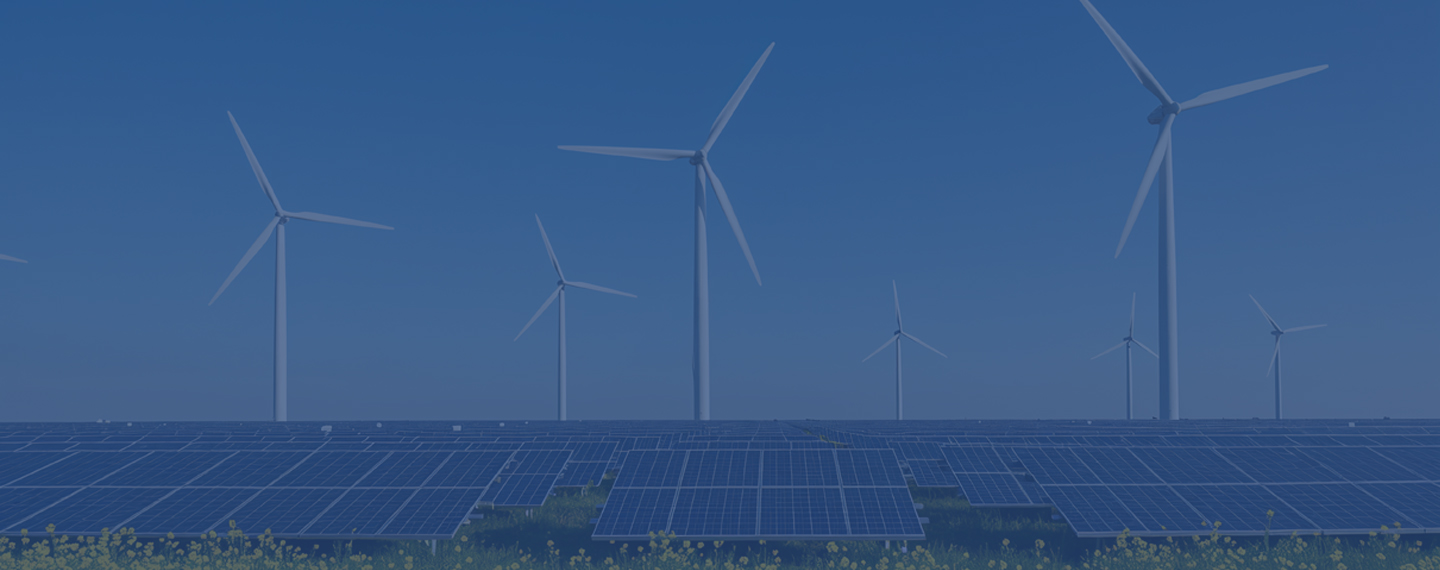
The B.Sc (Honours / Honours with Research) in Renewable Energy at JAIN (Deemed-to-be University) is an interdisciplinary and future-oriented undergraduate programme designed to equip learners with the scientific, technological, and policy-driven competencies required in the global clean-energy landscape. As one of the best B.Sc Renewable Energy colleges in Bangalore, the University offers a research-driven academic experience that prepares students for emerging careers in sustainability and energy innovation.
Aligned with NEP 2020, UGC FYUGP Guidelines 2022, NCrF 2023, and NHEQF 2022, the programme adopts a flexible Major–Minor framework, enabling learners to major in Renewable Energy while choosing a Minor in Physics, Computer Science, or Energy Economics and Policies. This structure positions the University among the top B.Sc Renewable Energy colleges in Bangalore and strengthens its standing as one of the best colleges for B.Sc Renewable Energy in India.
Students engage with a comprehensive curriculum covering solar, wind, hydro, biomass, hydrogen, and emerging green technologies, reinforced by specialised laboratories, simulation tools, field-based learning, and industry interaction. The programme further offers the prestigious IBM Certification in AI & ML, enhancing learners’ technological readiness for evolving energy-sector careers. With its strong research ecosystem, state-of-the-art laboratories, and industry partnerships, JAIN (Deemed-to-be University) is consistently recognised among the top B.Sc Renewable Energy colleges in India.
4 Years (8 Semesters)
# 34, 1st Cross
JC Road, Bengaluru
Karnataka, India - 560027
+91 - 80 43430100
176 Credits (As per UGC FYUGP & NCrF)
A student who has passed Level 4 / Class 12 schooling (either through formal schooling or through the open school system) or its equivalent shall be eligible for admission to B.Sc. programmes.
However, students who have not studied requisite courses from Science discipline related to the respective programmes will have to undertake the prescribed bridge course(s).
Additional Certification: AI & ML certification by IBM

Graduates of the B.Sc. (Honours / Honours with Research) in Renewable Energy with Minor in Physics / Computer Science / Energy Economics and Policies are well-prepared for diverse and evolving professional pathways, including:
Renewable Energy Systems & Sustainable Technology Practice
Graduates build, analyse, and optimise renewable energy systems—solar, wind, bioenergy, and hybrid technologies. They work where physics, engineering, and environmental science meet. They improve efficiency, system performance, and sustainability. Their role extends beyond technical execution. They make responsible decisions, balancing energy needs, environmental impact, and resilience in a climate-constrained world.
Digital, Data-Driven & Smart Energy Roles
Graduates bring computational thinking and data literacy. They design and interpret digital energy models, smart grids, and management systems. They apply programming, simulation tools, and analytics to optimise generation, storage, and distribution. They engage with AI-assisted optimisation and the Internet of Energy. These roles demand precision, ethical data use, and turning complex outputs into action.
Research, Innovation & Advanced Studies
Graduates with strong research orientation contribute to experimental studies, applied research projects, and interdisciplinary innovation in clean energy technologies. They design experiments, analyse data, and communicate findings with academic rigour, supporting careers in research laboratories and innovation centres, as well as progression to postgraduate and doctoral studies. Their work strengthens evidence-based solutions to global energy challenges and advances the scientific foundations of sustainable transitions.
Energy Economics, Policy & Sustainability Governance
Graduates analyse energy markets, regulations, and policies for renewable technologies. They help design policy, assess impacts, and report on sustainability. They translate technical knowledge into economic and social insight. With an understanding of ethics and governance, they support decision-making in public and advisory roles.
Industry, Consultancy & Entrepreneurial Pathways
Graduates work in industry, consultancy, and entrepreneurial ventures. They blend technical expertise with strategy and innovation, assessing feasibility and managing projects. They communicate with varied stakeholders and support clean energy solutions. Some create start-ups or social enterprises to meet local and global energy needs, demonstrating adaptability and leadership.
These pathways show the programme builds adaptability. Graduates navigate technological advancements, policy changes, and new priorities to contribute to a sustainable energy future.
Ready to take the next step? Our counsellors are here to provide you with more information about the programme.
Call us +91 73376 13222
Not sure of your choice?
Visit us at the Admissions Office located in Jayanagar 9th Block and meet us.
Access the map here.
Yes, you may choose Physics, Computer Science or Energy Economics and Policies.
The Minor runs only when enough students choose it.
You cannot change your Minor after you opt for and receive it.
Yes. The curriculum is aligned with NEP 2020 and related frameworks.
Honours includes a project; you complete a 12-credit dissertation in Semesters 7 and 8 for Honours with Research.
Yes. With Honours with Research and ≥75%, you are eligible for PhD admission via selection criteria.
You will graduate with a B.Sc (Honours).
Yes, the degree aligns with global standards and is widely accepted.
Yes. As per UGC FYUGP norms, the degree certificate will specify “B.Sc (Honours/Honours with Research) in Renewable Energy with Minor in [Discipline]”.
Yes, with prior departmental approval, external projects are allowed if the academic standards are met.