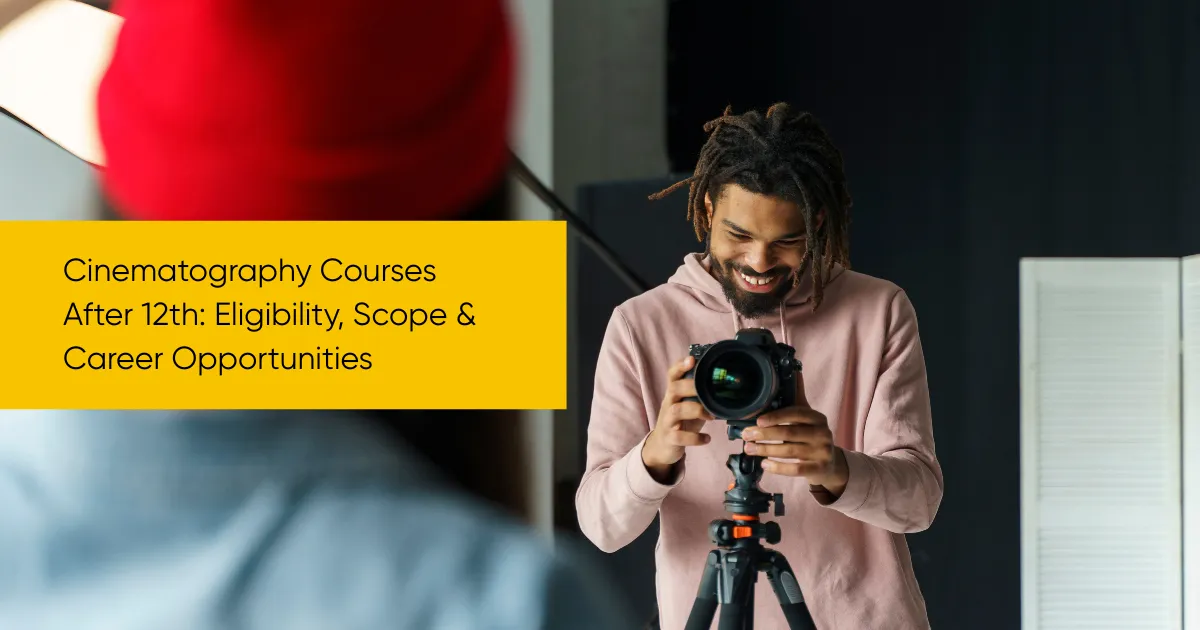
Cinematography is the art and technique of capturing visual stories through camera work, lighting, composition, and movement. It plays a central role in filmmaking, television production, advertising, and digital content creation, helping transform creative ideas into engaging visual experiences.
For students interested in filmmaking, visual media, and camera technology, Cinematography courses after 12th offer an opportunity to develop both technical skills and artistic understanding. These programs typically cover areas such as camera operations, lighting techniques, visual storytelling, editing fundamentals, and production workflows, preparing learners for various roles within the media and entertainment industry.
This article examines eligibility criteria, available course options, career opportunities, salary prospects, and important factors to consider before pursuing a career in Cinematography.
Understanding Cinematography as a Career
Cinematography involves planning and capturing the visual elements of a production to support its narrative, tone, and artistic vision. Cinematographers, also known as Directors of Photography (DoPs), are responsible for decisions related to camera placement, lens selection, lighting design, shot composition, and camera movement. They work closely with directors, production designers, and technical crews to translate creative concepts into visual storytelling.
The profession spans a wide range of media formats and production environments. In addition to film and television, cinematographers contribute to documentaries, advertising campaigns, streaming platforms, branded content, live productions, and digital media projects. The expansion of online entertainment, video-based marketing, and content creation has increased the need for professionals who can combine technical expertise with visual storytelling skills across diverse platforms.
Why Students Consider Cinematography After 12th
For students considering a career behind the camera, formal training can provide a structured introduction to the technical, creative, and production aspects of visual media. Enrolling in a program after completing higher secondary education allows learners to develop practical skills, understand industry workflows, and gain experience with professional production environments from an early stage.
Some of the key benefits of Cinematography course after 12th include:
- Learning the fundamentals of camera operations, lighting, framing, and shot composition
- Gaining practical experience with professional filmmaking and production equipment
- Developing technical skills in areas such as visual planning, camera movement, and image creation
- Understanding how different stages of production work together, from pre-production to post-production
- Building a portfolio of academic and project-based work that can support future opportunities
- Exposure to collaborative production environments that reflect real-world media and entertainment projects
- Acquiring skills that can be applied across film, television, advertising, digital media, and content production
Eligibility for Cinematography Courses After 12th
The Eligibility for Cinematography courses after 12th varies by institution and program level. In most cases, applicants must have completed 10+2 from a recognized board. Some institutions may also evaluate candidates through entrance examinations, interviews, aptitude assessments, or portfolio reviews to assess their interest and potential in visual media and filmmaking.
| Requirement |
Details |
| Educational Qualification |
Completion of 10+2 from a recognized board |
| Minimum Marks |
Varies by institution and program |
| Academic Stream |
Eligibility criteria differ by institution; many programs accept applicants from multiple streams |
| Admission Process |
May include entrance tests, interviews, aptitude assessments, or portfolio reviews |
| Additional Considerations |
Interest in filmmaking, photography, visual storytelling, and media production can be advantageous |
Types of Courses in Cinematography
Students interested in pursuing Cinematography can choose from several academic and professional training options depending on their career objectives, preferred learning format, and time commitment. Understanding the different types of courses in Cinematography can help students select a pathway that aligns with their long-term goals.
| Course Type |
Typical Duration |
Focus Area |
| Certificate Programs |
3 to 12 months |
Fundamental camera and lighting techniques |
| Diploma Programs |
1 to 2 years |
Practical filmmaking and Cinematography training |
| Undergraduate Degree Programs |
3 to 4 years |
Comprehensive education in film and media production |
| Specialized Workshops |
Few days to several weeks |
Advanced technical skill development |
| Professional Training Programs |
Varies |
Industry-focused practical exposure |
Certificate and workshop programs are often suitable for learners seeking introductory knowledge or specific technical skills within a shorter timeframe. Diploma programs typically emphasize hands-on training and practical production experience.
Students interested in a broader understanding of filmmaking, media production, and related disciplines may prefer undergraduate degree programs, which generally combine academic study with project-based learning and industry exposure.
What Students Learn in Cinematography Programs
The curriculum of Cinematography courses in India is designed to help students understand how visual narratives are created and produced across different media formats. These programs typically combine technical training with creative development, enabling learners to work with cameras, lighting systems, production equipment, and digital technologies while understanding the principles of visual storytelling.
Common areas of study include:
- Camera operations and equipment handling
- Film language and visual storytelling techniques
- Lighting design and image creation
- Shot composition and framing principles
- Color theory and visual aesthetics
- Lens selection and camera optics
- Digital Cinematography technologies
- Film and video production processes
- Editing fundamentals and post-production workflows
- Sound synchronization and audiovisual coordination
- Documentary filmmaking practices
- Studio and multi-camera production techniques
Through these subjects, students develop the ability to plan, capture, and manage visual content while gaining an understanding of how different production departments collaborate to create finished media projects.
Skills Required for a Career in Cinematography
Success in Cinematography requires a combination of technical expertise, creative thinking, and professional collaboration. The skills required for a career in Cinematography help professionals manage both the artistic and practical demands of visual production.
Key skills include:
- Visual storytelling – Translating scripts and concepts into compelling visual narratives.
- Camera operation and technical proficiency – Understanding camera systems, lenses, framing, and movement techniques.
- Lighting knowledge – Using lighting setups to create mood, depth, and visual consistency.
- Creative and artistic judgment – Making decisions related to composition, color, and visual style.
- Attention to detail – Maintaining image quality, continuity, and technical accuracy during production.
- Problem-solving and adaptability – Responding effectively to changing locations, schedules, budgets, or technical challenges.
- Collaboration and communication – Working with directors, production teams, and technical crews to achieve creative objectives.
- Time management and organization – Coordinating production tasks and meeting project deadlines efficiently.
As projects become more complex, these skills enable cinematographers to take on greater creative responsibility and contribute effectively to larger production teams.
Scope of Cinematography in India
The scope of Cinematography in India extends across a broad range of media and content production sectors. As video has become a primary format for entertainment, marketing, education, and communication, organizations increasingly require professionals who can plan and produce high-quality visual content for different audiences and platforms.
Career opportunities are available in several areas, including:
- Film and television production – Creating visual content for feature films, television programs, and serials.
- OTT and web-based content – Supporting the production of web series, streaming content, and digital-first entertainment.
- Documentary filmmaking – Capturing factual, educational, and investigative visual narratives.
- Advertising and branded content – Producing commercial campaigns, promotional videos, and marketing content.
- Corporate communications – Developing training videos, corporate films, and internal communication materials.
- Music and live-event production – Working on music videos, concerts, and event coverage projects.
- Sports and broadcast media – Managing camera operations and visual production for live broadcasts and sports events.
- Digital media and content creation – Supporting online platforms, social media campaigns, and creator-driven content.
The continued growth of streaming platforms, digital marketing, and video-based communication has expanded the range of professional opportunities available to trained cinematography professionals beyond traditional film and television production.
Career Scope in Cinematography Courses After 12th
The career scope in Cinematography courses after 12th includes opportunities across film production, broadcasting, advertising, digital media, corporate communications, and content creation. Depending on their interests and experience, graduates may choose technical, creative, or production-oriented roles within the visual media industry.
Some common career options include:
| Career Role |
Primary Responsibility |
| Cinematographer |
Plans and captures visual elements that support the creative vision of a production |
| Director of Photography (DoP) |
Oversees camera, lighting, and visual execution while working closely with directors |
| Camera Operator |
Operates cameras and executes planned shots during production |
| Assistant Camera Technician |
Supports camera preparation, maintenance, focus control, and equipment management |
| Lighting Technician |
Assists with lighting setups to achieve required visual effects and production requirements |
| Visual Content Creator |
Produces video content for digital platforms, brands, and online audiences |
| Documentary Filmmaker |
Creates factual and non-fiction visual content for educational, informational, or creative purposes |
| Commercial Cinematographer |
Works on advertisements, promotional campaigns, and branded content projects |
| Studio Production Specialist |
Supports television, broadcast, and multi-camera studio productions |
| Freelance Filmmaker |
Undertakes independent projects for clients, production houses, agencies, or digital platforms |
Career progression in the field often begins with entry-level technical or assistant roles, where professionals gain hands-on production experience. With a stronger portfolio and industry exposure, individuals may advance to positions such as camera operator, cinematographer, or Director of photography.
Many professionals also pursue freelance careers, working on project-based assignments across films, commercials, documentaries, events, and digital content, allowing them to build diverse experience and professional networks.
How to Choose the Best Cinematography Course in India
When evaluating academic programs, students should look beyond course titles and consider the quality of practical training, production exposure, and industry relevance. Understanding how to choose the best Cinematography course in India requires assessing whether a program can help develop both technical expertise and a strong professional portfolio.
Key factors to consider include:
- The depth of the curriculum in areas such as camera operations, lighting, visual storytelling, and digital cinematography
- Opportunities to participate in short films, studio productions, documentaries, and collaborative projects
- Access to contemporary camera systems, lenses, lighting equipment, and production technologies
- Availability of editing suites, studios, production labs, and other filmmaking infrastructure
- Faculty members with professional experience in film, television, advertising, or digital media
- Internship opportunities and industry interactions through workshops, guest lectures, or production projects
- Scope to build a portfolio or showreel that demonstrates practical skills and creative capabilities
- Alumni outcomes and the types of roles graduates have secured within the media and entertainment sector
Since employers and production houses often evaluate practical experience and portfolio quality alongside academic qualifications, students should prioritize programs that provide substantial hands-on production experience throughout the course.
Building a Strong Foundation in Media Education
A strong Cinematography program should provide opportunities to apply classroom learning through practical projects and production-based activities. Exposure to hands-on filmmaking experiences enables students to develop technical proficiency while gaining familiarity with professional production environments.
Learning in project-driven settings can also help students understand how camera work, lighting, editing, and other production functions contribute to the overall quality and effectiveness of visual content. Such experiences often support portfolio development and provide valuable preparation for future roles within the media and entertainment industry.
Conclusion
Choosing among the available Cinematography courses after 12th requires careful consideration of academic pathways, practical training opportunities, and long-term career goals. As visual media continues to expand across film, broadcasting, streaming platforms, advertising, and digital content, professionals with strong technical and creative capabilities remain essential to content production.
By evaluating course structures, skill requirements, industry exposure, and career opportunities, students can identify programs that align with their interests and professional aspirations. A well-chosen educational pathway can provide the foundation needed to build expertise in visual storytelling and pursue diverse opportunities within the media and entertainment sector.
Students interested in exploring media, filmmaking, and visual communication studies can also review the academic programs and learning opportunities offered by JAIN (Deemed-to-be University).
FAQs
Q1. Is a Cinematography course after 12th a good career?
A1. Yes. Cinematography offers opportunities across film, television, advertising, digital media, and content production. Students with strong creative and technical interests can build rewarding careers in visual storytelling.
Q2. What are the course requirements of Cinematography after 12th?
A2. Most institutions require candidates to complete 10+2 from a recognized board. Admission criteria may include minimum marks, entrance examinations, interviews, or portfolio evaluations depending on the institution.
Q3. What is the duration of being a professional cinematographer?
A3. Educational programs typically range from a few months to four years. However, becoming an established professional cinematographer depends on continuous learning, practical experience, and portfolio development over time.
Q4. Is it worth pursuing a Cinematography course?
A4. For students interested in filmmaking, visual arts, and media production, Cinematography education can provide valuable technical training, industry exposure, and career opportunities across multiple sectors.
Q5. What are the essential skills of the cinematographer?
A5. Essential skills include visual storytelling, camera operation, lighting techniques, composition, creativity, teamwork, communication, adaptability, and attention to detail.