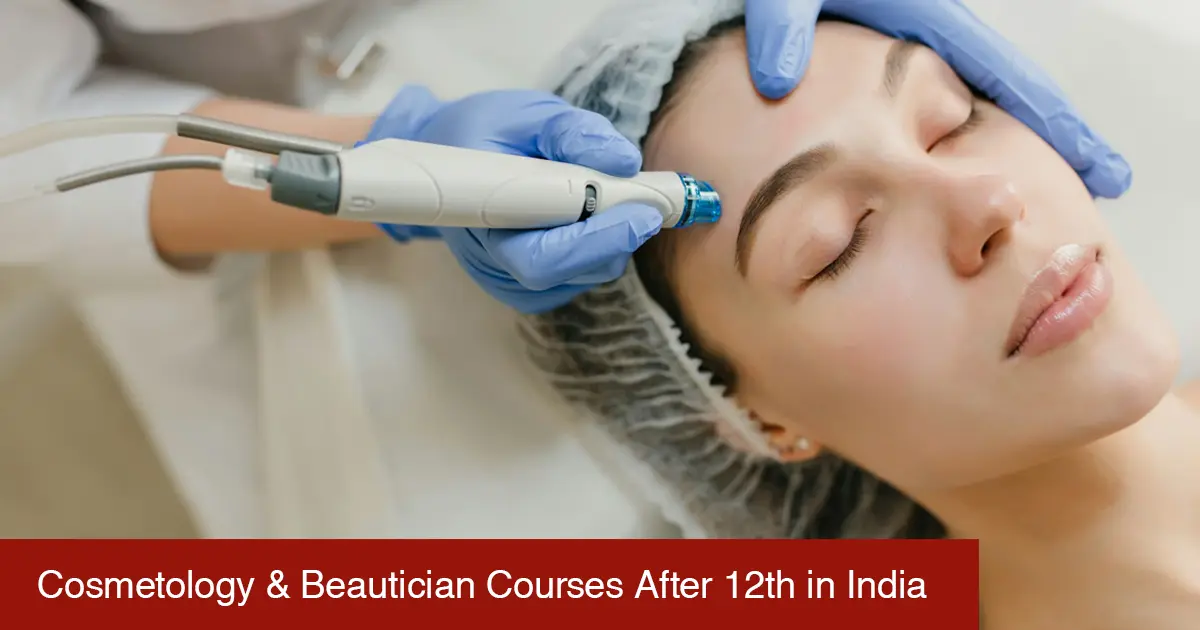
Have you ever wondered how professional makeup artists, skincare experts or beauty therapists build their careers? Are you curious whether you can step into the beauty industry right after Class 12? An after 12th beautician course or a course in cosmetology can offer you the perfect path.
Cosmetology and beautician courses after 12th train you in makeup, skincare, hair design and advanced beauty treatments. These programmes help you turn your passion in beauty into a profession.
Whether you want to enhance people’s appearance, work as a beauty expert, or build a long-term career in wellness, professional cosmetology and beautician courses offer a strong foundation. This guide explains course types, eligibility, duration, syllabus, and career options after Class 12.
Beauty and Cosmetology Course Eligibility
You should know that the eligibility for beauty and cosmetology courses in India after Class 12 varies by course type and institution. The general overview for different courses is mentioned below for your reference.
For Certificate Courses
You generally need to have completed Class 10 from a recognised board. Institutes typically require at least 50% marks.
For Diploma Courses
Most diploma programmes accept students who have completed Class 12 in any stream. While a science background can be an advantage, it is not mandatory. Some institutes may hold entrance or skill-assessment tests.
For Bachelor’s Degrees
To apply for a BSc in Cosmetology or related fields, you typically need 50–60% in Class 12 from a recognised board. Several colleges specify preferred Class 12 backgrounds and conduct their own entrance exams.
Types of Cosmetology Courses After Class 12
There are different types of cosmetology courses in India. You can choose a course based on your preference or how quickly you want to enter the industry. Here’s a simple breakdown to help you choose the right fit:
Certificate Courses
These are short-term programmes (a few weeks to a few months) that teach focused skills like basic makeup, hairstyling, or nail techniques. It is a suitable option if you want a quick entry into the beauty field with a beautician course qualification.
Diploma Courses
The diploma courses are typically one to two years long. They offer a broader training in hair, skin, makeup and salon operations. It is your ideal choice if you want to start your professional career early.
Bachelor’s Degrees
If you are looking for a professional cosmetology course, the relevant bachelor’s degrees serve as the right option. These degrees are three to four years in duration and are best suited for students aiming for advanced career paths, such as beauty educators or product developers.
Top Cosmetology and Beauty Courses with Duration
The table below provides a list of popular cosmetology and professional beauty courses, along with their types and durations.
| Beautician/Cosmetology Course |
Beauty/Cosmetology Course Duration & Type |
| Advanced Diploma in Cosmetology |
Course Type: Diploma Course
Duration: 8 months |
| Diploma in Cosmetology |
Course Type: Diploma Course
Duration: 6 months to 1 year |
| Diploma in Cosmetology and Beauty Care |
Course Type: Diploma Course
Duration: 1 year |
| BSc in Cosmetology Technology |
Course Type: Undergraduate Course
Duration: 4 years |
| BSc in Cosmetology and Dermatology |
Course Type: Undergraduate Course
Duration: 3 years |
| BSc in Beauty and Spa Management |
Course Type: Undergraduate Course
Duration: 3 years |
| BSc in Beauty & Cosmetology |
Course Type: Undergraduate Course
Duration: 3 years |
| BSc in Cosmetology and Wellness |
Course Type: Undergraduate Course
Duration: 3 years |
| Certificate in Beauty Culture and Health Care |
Course Type: Certificate Course
Duration: 3 months |
| Certificate in Beauty Culture (Skin Care or Hair Care) |
Course Type: Certificate Course
Duration: 3 months |
| Certificate in Beauty Culture (Advanced) |
Course Type: Certificate Course
Duration: 3 months |
The following sections discuss the syllabus of cosmetology and beauty courses.
Cosmetology Course Syllabus
While there are various types of cosmetology courses, the section below discusses the BSc Beauty Cosmetology syllabus, which spans three years (six semesters). You can check the semester-wise details of the syllabus below.
SEMESTER I
|
SEMESTER II
|
| Introduction to the Beauty and Wellness Industry |
Introduction to diet management |
| Introduction to Human Nutrition |
Physiology of the Human Body |
| Fundamentals of Makeup |
A Comprehensive Study of Skincare |
| Fundamentals of Professional Hairdressing |
A Comprehensive Study of Hair Treatment |
| Communication Skills |
Basics of Hair Designing |
| - |
Basics of Professional Makeup |
| - |
Writing Skills |
SEMESTER III
|
SEMESTER IV
|
| Nutrition Through the Life Cycle |
Introduction to Body Therapy |
| A Comprehensive Study of Face Aesthetics |
Nutritional Biochemistry |
| Disaster Management |
A Comprehensive Study of Body Aesthetics |
| Classic Hairdressing Methodology |
Salon Essentials to Hairdressing |
| Introduction to Trends of Cosmetology and Professional Makeup |
Salon Professional Makeup Artistry |
| Fundamentals of Food Science and Nutrition |
Nutrition for Weight Management |
| Introduction to Food Safety |
Geriatric Nutrition |
SEMESTER V
|
SEMESTER VI
|
| Entrepreneurship Developments |
Introduction to Public Nutrition |
| Maternal and Child Nutrition |
Introduction to Fitness with Yoga Aerobics |
| Electives 1 |
Elective 2 |
| Sports Nutrition |
Health and Wellness Coaching-Internship & Project Work |
| Therapeutic Nutrition Part 1 |
Makeup techniques 2 |
| Fundamentals of Spa Therapies 1 |
Advanced Hair Creatives Internship and Project Work |
| Salon Hair Creatives |
Spa Therapies II |
Beautician Course Syllabus
The beautician course details may vary depending on the specific course that you choose. The basic syllabus details of the beautician course are mentioned below for your reference. These are the essential topics covered in various beauty courses.
| Module |
Key Topics Covered |
| 1. Introduction to Beauty |
History & evolution of the beauty industry; personal hygiene & sanitation; workplace health & safety; client consultation & communication. |
| 2. Skin Care |
Skin anatomy & physiology; skin types & conditions; cleansing–toning–moisturising; facial massage; basic facials; basic makeup for different skin tones. |
| 3. Hair Care |
Hair anatomy & physiology; hair types & conditions; shampooing & conditioning; basic hairstyling (blow-drying, braids, buns); heat styling (optional); introduction to chemical services like colouring/perms. |
| 4. Nail Care |
Nail anatomy; manicure & pedicure; basic nail art; introduction to artificial nail applications (optional). |
| 5. Professionalism & Salon Management |
Professional conduct; customer service; salon etiquette & effective communication. |
How to Become a Beautician
If you want to build a career in beauty and wellness after Class 12, here are the key steps to get started.
- Pick the Right Course - Sign up for a certificate, diploma, or undergraduate professional beautician course like BSc in Beauty Therapy, Cosmetic Technology, or Cosmetology.
- Get the Training You Need - Learn how to use beauty tools and techniques in hands-on classes.
- Gain Experience - Internships and workshops let you work with real clients.
- Make Your Resume - Make sure to list your certifications, real-world projects and portfolio of looks you've created.
- Apply to Well-known Salons and Organisations - To get experience, start your career at well-known salons, beauty clinics or cosmetic brands.
Scope of Cosmetology in India
Cosmetology offers a broad career scope in India, with fast-growing opportunities across salons, spas, skincare clinics, beauty studios, and wellness centres. You can work as a makeup artist, hairstylist, skincare therapist, or nail technician—and even build your own salon as an entrepreneur.
Also read “Entrepreneurship Courses After 12th: How to Start a Business and Become an Entrepreneur in India”.
With experience, many professionals also collaborate with dermatologists and cosmetic surgeons, opening doors to advanced and high-paying roles.
Conclusion
Cosmetology and beauty are fast-growing fields in India. The courses in this field combine creativity, science and practical skills. With the proper training, you can build a fulfilling, high-earning career across salons, skincare clinics, fashion studios, or even by starting your own beauty venture.
To begin your journey, explore the cosmetology and beauty certificate courses offered at JAIN (Deemed-to-be University). The university has also signed an MoU with VLCC School of Beauty (formerly VLCC Institute) to build a strong talent pool in the beauty and wellness sector.
FAQs
Q1: What is a cosmetology course?
A1: A cosmetology course trains you in beauty and wellness skills such as skincare, hair care, makeup, nail art, and salon management. These courses help you learn professional techniques to work in salons, beauty clinics, spas, or with cosmetic brands.
Q2: Is beautician a good career?
A2: Yes, being a beautician is a good career option as beauticians remain in significant demand in salons, wellness centres and cosmetic companies. They can also practice independently. With the right training and skills, one can build a stable and creative career.
Q3: How to become a cosmetologist?
A3: You can become a cosmetologist by enrolling in a relevant certificate, diploma or undergraduate programme after Class 12. A BSc in Cosmetology or Cosmetic Technology is a promising choice in this regard.
Q4: What is the qualification for cosmetology?
A4: Most cosmetology diploma and degree courses require you to complete Class 12 from a recognised board. Certificate courses may allow Class 10 students as well. Some colleges may require a minimum percentage or conduct entrance tests.
Q5: What is cosmetology course salary?
A5: The average monthly salary after doing a cosmetology course is ₹33,000 in India. Salary varies widely by role, city, and experience.
Q6: Can I do cosmetology after 10th?
A6: Yes, you can do a diploma or a certificate course in cosmetology after passing Class 10.