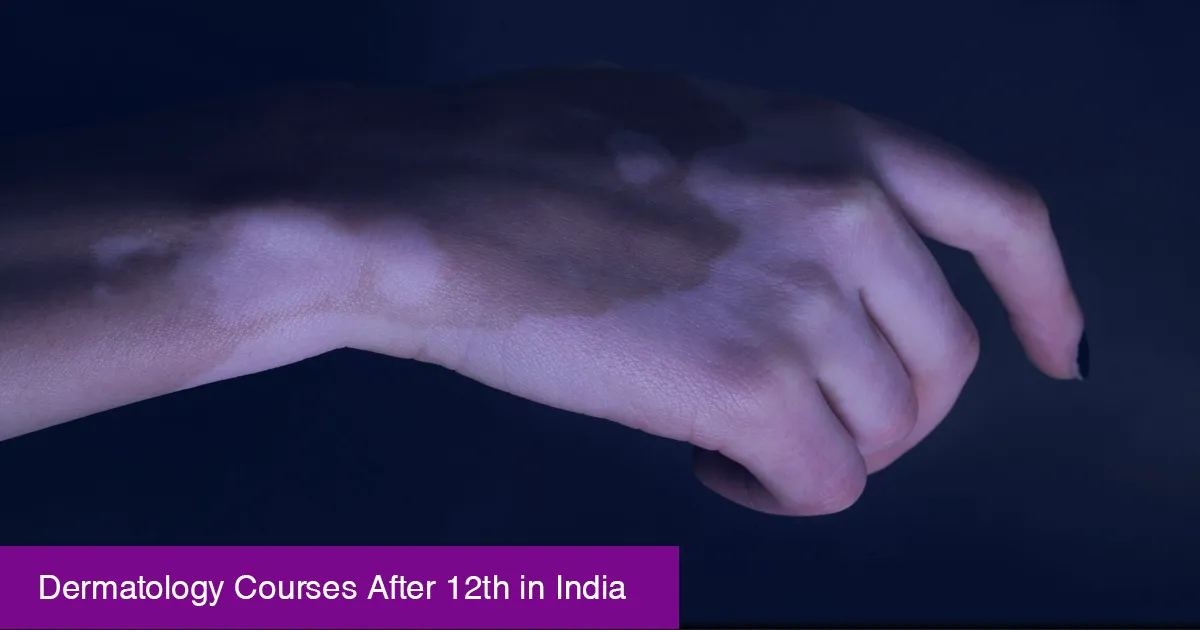
The field of dermatology is not just a sought-after medical specialisation in India, but also one with a rapidly growing demand. The increasing awareness of skincare, aesthetics, and overall wellness drives this trend. As a result, the demand for qualified dermatologists has increased significantly. For students aspiring to make a difference in people’s lives through clinical treatment, cosmetic procedures, and dermatopathology, dermatology presents a highly specialised and respected domain.
This blog provides comprehensive information on dermatology courses after 12th, including eligibility criteria, duration, degree options, and clear steps on how to become a skin specialist in India.
Understanding dermatology
Dermatology is a medical speciality that deals with the diagnosis and treatment of disorders affecting the skin, hair, nails, and mucous membranes. It encompasses both medical and surgical aspects and often overlaps with the fields of cosmetic and aesthetic treatment. Dermatologists are trained to handle a wide range of conditions, from acne and eczema to skin cancers and cosmetic procedures, including Botox, fillers, and laser therapies.
Dermatology course eligibility after 12th
For students interested in pursuing dermatology after their higher secondary education, understanding the dermatology course eligibility criteria is crucial. This understanding forms the foundation for the academic path they need to plan. Typically, the pathway starts with enrolling in a Bachelor of Medicine and Bachelor of Surgery (MBBS) programme. The minimum eligibility includes:
- Completion of 10+2 or equivalent examination with Physics, Chemistry, and Biology.
- A minimum aggregate score (usually 50% or more) as prescribed by the institution.
- Qualifying the NEET (National Eligibility cum Entrance Test), which is a mandatory entrance examination for medical courses in India.
After MBBS, aspiring dermatologists can specialise in dermatology by pursuing postgraduate education.
Degrees and qualifications to become a dermatologist
If you aspire to work as a certified dermatologist in India, it is essential to follow a clear academic path. Understanding the sequence of qualifications is crucial in determining how to become a dermatologist in India.
Step 1: MBBS (Bachelor of Medicine and Bachelor of Surgery)
The first and most crucial step is completing an MBBS degree. This is a five-and-a-half-year course (including one year of internship), which forms the foundation for further specialisation.
Step 2: MD in Dermatology, Venereology and Leprosy
After completing their MBBS, students must appear for the NEET-PG exam to secure a seat in an MD (Doctor of Medicine) course in Dermatology. This is a three-year postgraduate programme that provides in-depth knowledge and clinical training in skin diseases, sexually transmitted diseases, and leprosy.
This postgraduate qualification is considered the most recognised dermatologist degree in India.
Step 3: Fellowship or Super-speciality (Optional)
While an MD qualifies you as a dermatologist, those wishing to specialise further may opt for fellowships in areas like dermatopathology, cosmetic dermatology, paediatric dermatology, or dermatosurgery. These are optional but highly valuable in private practice or hospital careers.
Diploma in dermatology after 12th
For students who may not follow the traditional MBBS-to-MD route, a diploma in dermatology after 12th might seem like an alternative option. However, most recognised diploma programmes in dermatology are designed for those who have already completed an MBBS. While some institutions offer short-term courses in skin aesthetics or cosmetology for candidates from non-medical backgrounds, these do not qualify someone to practise as a medical dermatologist.
Therefore, although pursuing a diploma in dermatology after 12th grade appears possible, it is essential to understand the distinction between medically accredited diplomas and non-clinical certifications. A medical diploma such as the DDVL (Diploma in Dermatology, Venereology, and Leprosy) still requires an MBBS qualification.
Dermatologist course duration in India
Many students inquire about the dermatologist course duration. Here is a breakdown:
- MBBS: 5.5 years (including internship)
- MD in Dermatology: 3 years
- Optional Fellowship or Super-specialisation: 1–2 years
In total, it typically takes 8–10 years to become a qualified and practising dermatologist in India.
How to become dermatologist after 12th: A step-by-step guide
If you are a Class 12 student wondering how to become dermatologist after 12th, here is a simplified roadmap:
- Complete 10+2 in Science with Biology, Physics, and Chemistry.
- Prepare and qualify for NEET-UG, the national-level medical entrance exam.
- Enrol in an MBBS programme at a recognised medical institution.
- Complete the MBBS degree with an internship.
- Clear NEET-PG and secure admission in MD Dermatology.
- Complete MD and gain clinical experience.
- Optionally, pursue fellowships or certifications in super-speciality areas.
This structured approach answers the question many students ask: how to become a dermatologist after 12th.
Career opportunities in dermatology
Once you have earned your dermatologist degree, a wide range of career opportunities awaits:
- Clinical Dermatologist: Works in hospitals, clinics, or private practice
- Cosmetic Dermatologist: Specialises in procedures like laser treatments, botox, chemical peels, and dermal fillers
- Dermatopathologist: Focus on the pathology of skin diseases
- Academic and Research Roles: Contribute to dermatology research or teach in medical colleges
- Pharmaceutical and Skincare Industry: Serve as consultants or advisors for product development
Skills required to become a successful dermatologist
Along with formal education, a dermatologist must possess specific key skills to succeed:
- Excellent diagnostic abilities
- Empathy and patience
- Commitment to ongoing learning, as dermatological treatments evolve rapidly
- Strong communication and interpersonal skills
- Steady hands for surgical or cosmetic procedures
How to become a skin specialist in India
Although people often use the terms “dermatologist” and “skin specialist” interchangeably, there’s an important distinction. To be recognised as a skin specialist in the medical sense, you need to complete an MBBS degree followed by specialised postgraduate training in dermatology. This distinction helps students understand the different career paths available in the field of dermatology.
So, how to become a skin specialist? The steps remain the same as becoming a dermatologist. However, skin specialists can also include those with diplomas or certifications in non-medical skincare and cosmetology, but they are not licensed to treat severe medical skin conditions. In contrast, a dermatologist with an MD can treat complex skin, hair, and nail diseases and perform medical surgeries.
The journey to becoming a dermatologist is long, but it is immensely fulfilling. With the rising focus on skincare, aesthetics, and health, dermatology stands as a dynamic and promising career. By pursuing the right dermatology courses after 12th, understanding the dermatologist course duration, meeting the dermatology course eligibility, and earning a recognised dermatologist degree, you can position yourself as a certified and respected professional in this field.
Whether you envision yourself treating patients in a hospital, establishing your skincare clinic, or exploring new developments in research, dermatology offers a wide range of meaningful career paths. If you genuinely care about skin health and want to make a difference, this is the perfect time to begin your journey toward becoming a trusted expert in the field.
Conclusion
In conclusion, becoming a skin specialist in India requires a clear understanding of the academic and professional pathways that define the discipline. While various certifications exist in the broader skincare industry, only those who undertake formal medical training—completing an MBBS followed by an MD or diploma in dermatology—are qualified to diagnose and treat complex dermatological conditions. As awareness around skin health continues to grow, so does the demand for knowledgeable and qualified professionals in this field. For aspiring dermatologists, the path is rigorous but rewarding, offering opportunities across clinical practice, research, and cosmetic dermatology. With the right qualifications and a genuine commitment to patient care, one can build a meaningful and respected career as a skin specialist in India.
FAQs
Q1. How to become a dermatologist after 12th?
A1. To become a dermatologist, you must complete 10+2 with Biology, qualify for NEET-UG, complete an MBBS degree, and then pursue an MD in Dermatology.
Q2. How many years to become a dermatologist?
A2. It takes approximately 8–10 years, including 5.5 years for MBBS and 3 years for MD, plus optional fellowships.
Q3. Is dermatologist a good career?
A3. Absolutely. Dermatology is a fulfilling branch of medicine that blends hands-on clinical work with cosmetic treatments and opportunities in research. It also offers strong earning potential and is widely respected as a profession.
Q4. What is the salary of a dermatologist in India?
A4. A dermatologist’s salary varies depending on factors such as experience, specialisation, and the location where they practise. Beginners in the field often start with a salary between ₹6 lakhs and ₹10 lakhs per annum, while those with more experience—especially in private setups—can make ₹20 lakhs to ₹30 lakhs or even higher.
Q5. Is NEET required for Dermatology?
A5. Yes. NEET is mandatory for both MBBS and MD in Dermatology. Without NEET, you cannot pursue a career as a medical dermatologist in India.