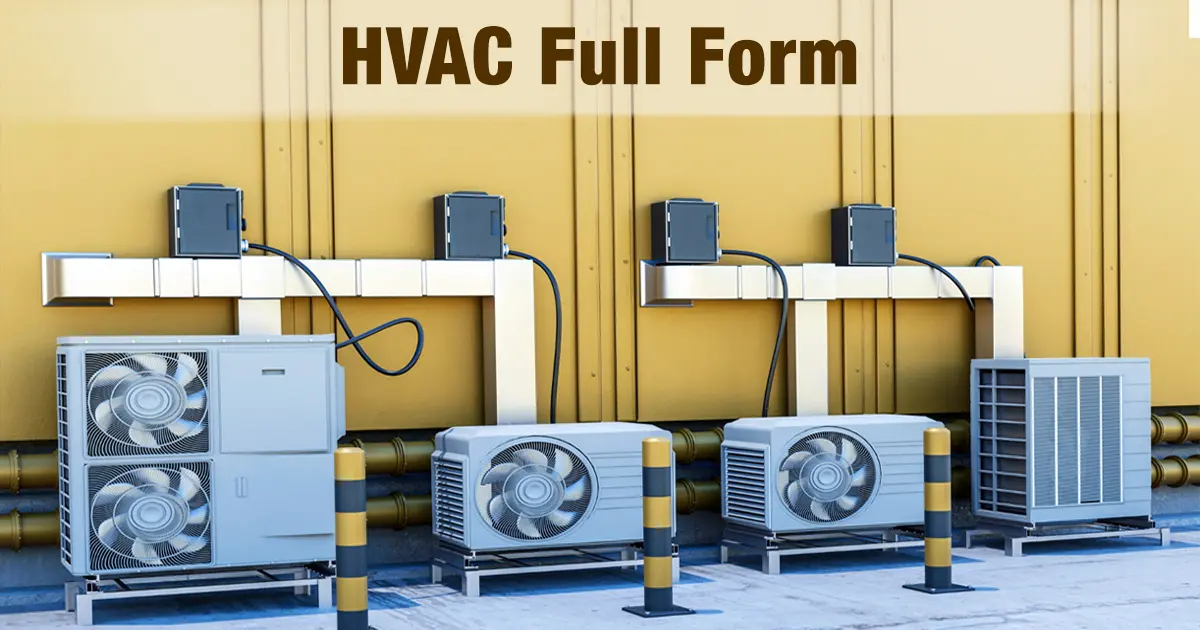
Maintaining a comfortable indoor climate is a fundamental aspect of modern building design. It relied on the precise management of temperature, humidity, and airflow to ensure a healthy environment for both people and equipment. Whether in a home or a large commercial complex, this essential function is managed through systems known as HVAC.
To understand how these systems are maintained, one must look at the roles involved in the industry. For those exploring the field, the HVAC technician full form essentially refers to a Heating, Ventilation, and Air Conditioning technician—a professional responsible for the installation and repair of these units. This blog outlines the core principles, system components, and key areas of application.
What is the Full Form of HVAC?
The HVAC full form is Heating, Ventilation, and Air Conditioning. This integrated system regulates indoor temperature, airflow, and humidity levels in enclosed spaces.
Each part of the system serves a distinct purpose:
- Heating: Maintains indoor warmth when external temperatures drop.
- Ventilation: Exchanges indoor and outdoor air to improve air quality.
- Air Conditioning: Removes indoor heat and manages humidity levels.
Key Components of HVAC
A standard system consists of several integrated parts that work together to maintain comfortable indoor conditions.
| Component |
Function Description |
| Heating Unit |
Produces heat using a furnace or heater powered by gas, electricity, or other fuels |
| Ventilation System |
Enables air exchange through natural or mechanical methods to refresh air |
| Air Conditioning Unit |
Uses a refrigeration cycle to transfer heat from indoors to outdoors |
| Ductwork and Filters |
Ducts distribute conditioned air; filters remove dust and airborne matter |
Different Types of HVAC Setups
HVAC configurations vary with building size, usage, and environmental control requirements.
- Residential HVAC: Designed for homes, these setups usually include split or central units with straightforward layouts and limited coverage areas.
- Commercial HVAC: Used in spaces such as offices and malls, these systems operate across larger areas and often allow separate temperature control for different sections.
- Industrial HVAC: Applied in production environments where controlled conditions are mandatory. For instance, HVAC systems in the pharmaceutical industry must strictly manage air purity and thermal stability based on environmental science principles. The HVAC full form in pharma is Heating, Ventilation, and Air Conditioning. It refers to systems engineered to maintain cleanroom standards and prevent product contamination during manufacturing.
Also read: What is Environmental Science
Operational Flow in HVAC Systems
HVAC systems operate through a controlled movement of air within a space. Individual components manage airflow, filtration, temperature adjustment, and system operation.
| Stage / Element |
Role in System |
| Air Return |
Draws indoor air into the system for processing |
| Filtration |
Captures dust, debris, and stagnant particles before circulation |
| Heat Exchange |
Adjusts air temperature through heating or cooling processes |
| Duct Circulation |
Transports conditioned air across different areas |
| Exhaust Handling |
Expels heat and byproducts through designated outlets |
| Electrical Support |
Powers system components; issues may arise from electrical or circuit faults |
| Outdoor Unit |
Contains a fan and a compressor that enable refrigerant-based cooling |
Features of HVAC
The features of an HVAC system reflect how it maintains consistency in operation under varying indoor and outdoor conditions.
- Heating is supplied through central units, commonly based on boilers or heat pumps placed in service zones
- Inside the system, heat moves through convection, conduction, and radiation processes
- Fresh air enters through ventilation pathways, helping reduce stale indoor air buildup
- Energy use is controlled through thermostats, sensors, and automated controls to maintain set conditions
- Installation follows standard guidelines for system sizing, duct layout, and electrical connections to ensure proper operation
Conclusion
The HVAC full form is Heating, Ventilation, and Air Conditioning. The role of HVAC systems is central to modern architecture, ensuring that indoor environments remain safe, comfortable, and energy-efficient. By integrating heating, cooling, and air filtration, these systems provide a comprehensive approach to climate control.
As building designs become more advanced, the technology behind these systems continues to evolve. To gain a thorough understanding of these complex designs, students can pursue specialized engineering programs, such as those offered at JAIN (Deemed-to-be University), to build the technical expertise required for the field. Explore these engineering courses today to start your career in advanced system design.
FAQs
Q1: What is an HVAC system?
A1: The HVAC full form is Heating, Ventilation, and Air Conditioning. An HVAC system is a technology used for environmental comfort, specifically focusing on heating, ventilation, and air conditioning to control indoor temperature and air quality.
Q2: What is CFM in HVAC?
A2: CFM stands for Cubic Feet per Minute. It measures the volume of airflow an HVAC system moves per minute, which is critical for sizing the system correctly.
Q3: What is an HVAC condenser?
A3: An HVAC condenser is an outdoor component that releases heat absorbed from the indoor air by condensing the refrigerant from a gas back into a liquid.
Q4: What is air handling unit in HVAC?
A4: An Air Handling Unit (AHU) is a large metal box containing a blower, heating/cooling elements, and filters that regulate and circulate air throughout a building.