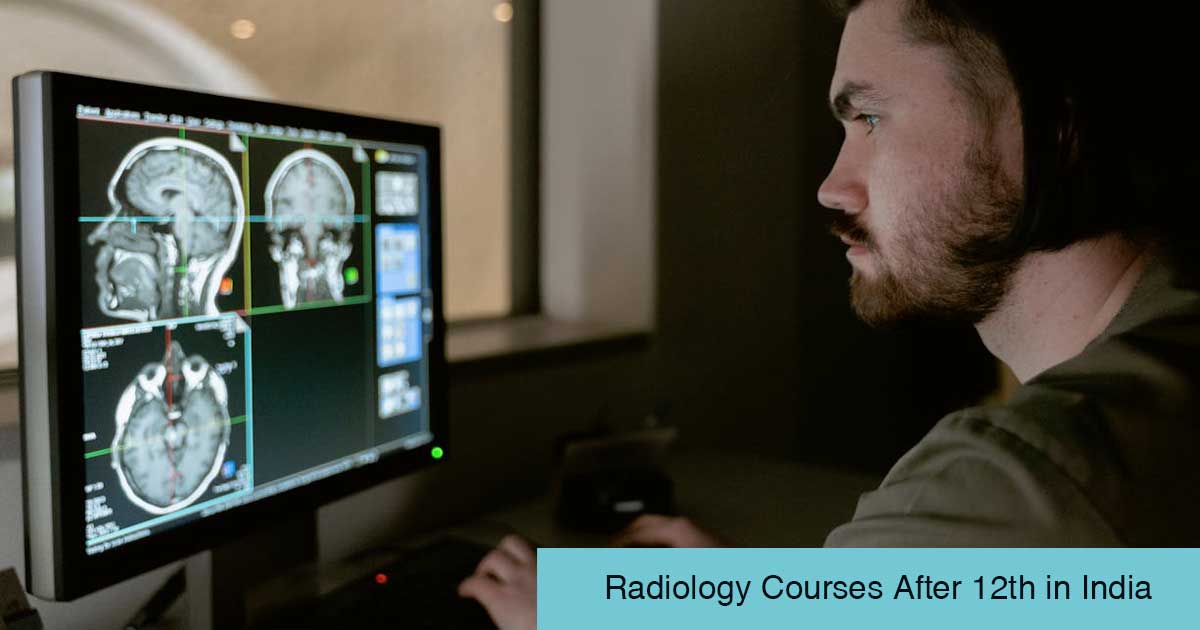
Radiology stands at the intersection of medical science and advanced technology, playing a vital role in diagnosing and treating diseases. With the increasing reliance on imaging techniques like X-rays, MRIs, CT scans and ultrasounds, radiology professionals are becoming indispensable in hospitals, diagnostic centres and research facilities. If you are passionate about healthcare and technology, pursuing radiology courses after 12th could lead you to a rewarding and high-impact career.
In India, the demand for skilled radiologists and imaging technicians continues to increase, providing diverse educational and professional opportunities for students. This blog covers everything you need to know about pursuing radiology after 12th, including eligibility, course duration, fees and the steps involved in becoming a qualified radiologist.
Understanding radiology as a career
Radiology is a branch of medicine that uses imaging technologies to detect, diagnose and monitor diseases. A radiologist interprets medical images to assist other doctors in treatment planning. Apart from radiologists, there are allied healthcare professionals trained in operating imaging equipment and performing scans, often known as radiologic technologists or radiographers.
Pursuing radiology after 12th means stepping into a field that blends precision, technology and clinical knowledge. It is a suitable choice for students with a science background who are detail-oriented, technically inclined and interested in healthcare.
Types of radiology courses after 12th in India
Students can choose from multiple academic routes to enter the field, ranging from undergraduate degrees to diploma programmes. Here are the most common options available:
BSc in Medical Radiology and Imaging Technology (BSc MRIT)
One of the most popular radiology courses after 12th, this is a 3-year undergraduate programme followed by a 6-month internship. It covers diagnostic imaging techniques, radiation physics, anatomy, physiology and pathology.
BSc Radiography
This programme focuses specifically on radiographic imaging and patient positioning techniques. It includes practical training in diagnostic centres and hospitals.
Diploma in radiology after 12th
For those seeking a quicker entry into the profession, a diploma in radiology after 12th can be a viable choice. Typically spanning 1 to 2 years, these courses focus more on the operational aspects of radiology, including handling imaging equipment, patient safety and basic diagnostics.
Certificate Courses
These are short-term courses lasting a few months to a year and are often pursued for skill enhancement or entry-level job roles in diagnostic centres.
Radiologist course eligibility and qualifications
To pursue any formal radiology training, you must meet certain educational requirements. The radiologist course eligibility criteria across most institutions in India are generally uniform:
- You must have passed 10+2 or equivalent in the Science stream.
- Core subjects should include Physics, Chemistry and Biology/Mathematics.
- A minimum aggregate score(typically around 50%) may be required depending on the institution.
Your radiology course qualification will determine the scope of practice in your career. While a diploma and undergraduate degrees qualify you to work as a radiologic technologist or imaging assistant, a postgraduate degree or an MBBS is essential to become a certified radiologist.
Duration of radiology programmes
The length of a radiology course depends on the academic route you choose:
- BSc in Radiology or MRIT – 3 years + 6 months internship
- Diploma Courses – 1 to 2 years
- Certificate Courses – 6 to 12 months
- MBBS + MD in Radiology – 5.5 years (MBBS) + 3 years (MD)
Understanding these timelines is crucial when planning your academic journey in radiology.
Radiology course fees
The radiology course fees vary widely depending on the type of programme and the institution offering it. For undergraduate degree programmes, the fees typically range from ₹50,000 to ₹3,00,000 per annum in private institutions. Government colleges may offer lower fees. Additional expenses may include internship costs, examination fees and lab material.
Radiography course details
A radiography course equips students with both theoretical knowledge and practical skills required to handle diagnostic equipment safely and effectively. Radiography course details include modules on radiation safety, diagnostic imaging, patient care, anatomy and physiology, pathology and image interpretation. Students also receive extensive hands-on training under the supervision of qualified professionals.
How to become radiologist after 12th
If your goal is to become a certified radiologist, here is how to become radiologist after 12th in India:
- Complete 10+2 in Science: Ensure you study Physics, Chemistry and Biology/Mathematics.
- Clear NEET (National Eligibility cum Entrance Test): To pursue MBBS, which is the foundational step.
- Earn an MBBS Degree: A 5.5-year undergraduate medical degree.
- Pursue an MD in Radiology: After MBBS, you must clear postgraduate entrance exams and complete a 3-year MD programme in Radiology.
Alternatively, if you wish to work in allied roles in radiography or imaging technology, you can pursue a BSc or diploma programme after 12th.
How to become radiologist in India
Still wondering how to become radiologist in India? Here is a quick recap:
- The path to becoming a radiologist(doctor) requires an MBBS followed by specialisation in radiology through MD or DNB.
- For those aiming to become technologists, BSc or diploma programmes in radiology or imaging suffice.
- Both pathways offer good employment opportunities in hospitals, diagnostic labs, research centres and the public health sector.
Career prospects in radiology
Radiology is a critical part of the healthcare system and offers various career opportunities, such as:
- Radiologist
- MRI Technician
- CT Scan Technician
- Ultrasound Technician
- Radiation Therapist
- Diagnostic Medical Sonographer
- Interventional Radiology Technologist
Graduates can also explore roles in equipment companies, research and academic institutions. The increasing demand for medical imaging in preventive and diagnostic medicine ensures job stability and growth.
Conclusion
Choosing radiology courses after 12th opens up diverse pathways in both clinical and technical roles within the medical imaging field. Whether you aspire to become a radiologist or a skilled imaging technologist, India offers multiple options suited to your academic goals. Understanding the right qualifications, course durations and eligibility requirements is key to planning a successful career in radiology.
By investing in the right education and gaining hands-on experience, you can carve out a dynamic, respected and impactful career in the world of medical imaging.
FAQs
Q1. Is NEET required for Radiology?
A1. NEET is mandatory if you wish to pursue MBBS and subsequently specialise in radiology as a doctor. However, it is not required for BSc or diploma-level radiology courses.
Q2. Can we do Radiology without MBBS?
A2. Yes. You can pursue radiology-related courses like a BSc in radiology or a diploma programme and work as a radiologic technologist without doing an MBBS. However, to become a radiologist(medical doctor), an MBBS followed by an MD in radiology is compulsory.
Q3. What is the salary of a Radiologist in India?
A3. A qualified radiologist in India can earn anywhere between ₹10 LPA to ₹25 LPA, depending on experience, location and the healthcare facility. Radiologic technologists may start with salaries ranging from ₹3 LPA to ₹6 LPA.
Q4. What is Radiology qualification?
A4. To become a radiologist, you need to hold an MBBS followed by an MD in radiology. For radiology technologist roles, a BSc or diploma in radiology serves as a primary qualification.
Q5. Is radiology a good career?
A5. Yes. Radiology offers high earning potential, job stability and the chance to work in advanced healthcare settings. With growing demand and technological evolution, it is a future-proof career path.
Q6. Is radiology a doctor?
A6. A radiologist is a medical doctor who has completed MBBS and specialisation in radiology. However, radiographers or technicians are not doctors but are essential healthcare professionals trained in diagnostic imaging.