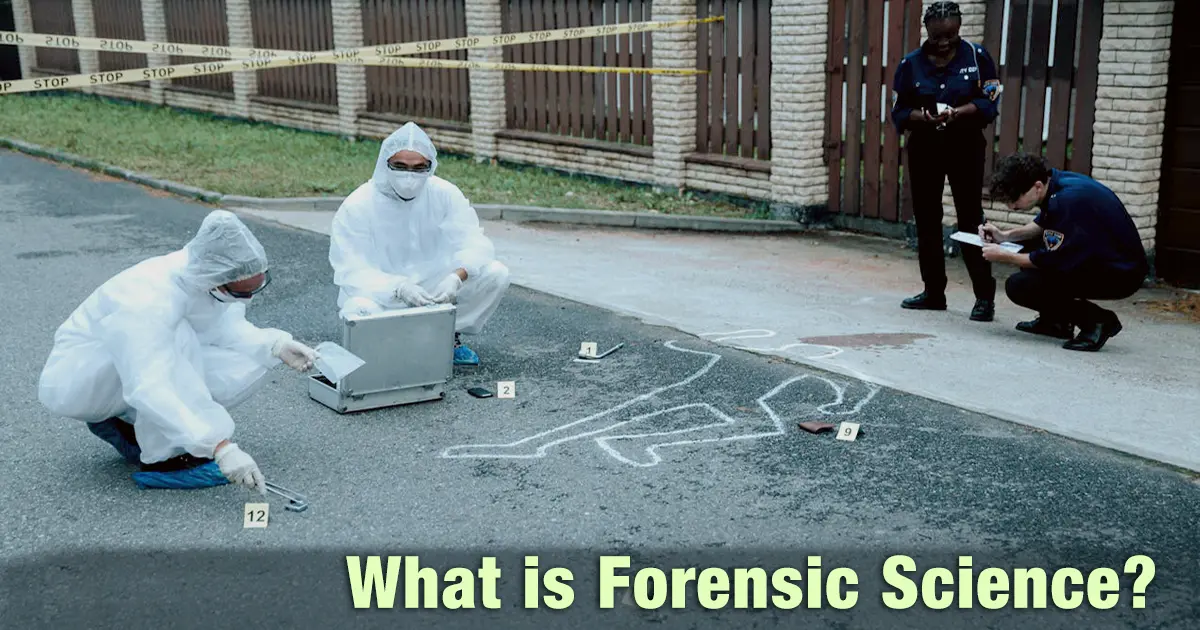
The word ‘forensic’ comes from the Latin word "forensis," which means "of the forum" or ‘of public discussion. Today, Forensic Science has evolved to resolve civil disputes, enforce criminal laws, provide legal evidence, and protect public health. This blog discusses Forensic Science, history, principles, scope, and career opportunities.
What is Forensic Science?
Forensic Science is the application of scientific methods and techniques to investigate crimes. It bridges science and the law, providing impartial evidence such as DNA, fingerprints, or digital data. Forensic Science helps analyse physical evidence and settle legal disputes through courts and proceedings. The scope of Forensic Science extends beyond crime investigations to include civil cases, forgery, accident reconstruction, and cybersecurity.
History of Forensic Science
In the past, Forensic Science relied on basic observations. In ancient China, investigators examined physical signs such as frothy liquid from the mouth or water in the lungs to determine if drowning was the cause of death. Fingerprints emerged in 19th-century India through Sir William James Herschel. Inventions such as Blood typing and DNA profiling have allowed pinpointing suspects with remarkable precision. Forensic Science in India today uses advanced methodologies and technologies such as computer systems, artificial intelligence, and digital forensics. This helps analyse hair samples, mobile devices, and the trails with impressive speed and accuracy.
Principles of Forensic Science
The foundation of Forensic Science rests upon core principles, which are essential for ensuring the dependability of evidence presented in legal contexts. These principles are, therefore, critical for upholding the integrity of forensic investigations.
| Law of Individuality |
Every person, object, or natural item is unique, with no two exactly alike, whether fingerprints or soil samples. |
| Principle of Comparison |
Requires matching questioned evidence against known standards, such as fibres or bullets, for valid analysis. |
| Law of Progressive Change |
The law of progressive change notes that evidence degrades over time, demanding prompt collection. |
| Principle of Analysis |
The accuracy and reliability of forensic test results are directly limited by the quality of the sample collected. |
| Law of Circumstantial Facts |
Unlike human testimony, physical evidence is considered more objective than testimonial evidence. |
| Locard’s Exchange Principle |
The principle states that whenever two objects come into contact, a mutual transfer of matter occurs |
| Principle of Divisible Matter |
Any physical substance can theoretically be divided into smaller and smaller parts without changing its fundamental nature. |
| Law of Probability |
All identifications, definite or indefinite, are based on probability, whether conscious or unconscious. |
Branches and Types of Forensic Science
Forensic Science is a broad field, drawing on many different areas of expertise. These include Forensic Pathology, Biology, Toxicology, Anthropology, and Digital Forensics, among others. Here is a list of the various branches of Forensic Science, along with their descriptions.
| Branch of Forensic Science |
Description |
| Forensic Pathology |
Focuses on determining the cause and manner of death through autopsies of evidence such as tissues, organs, hair, and fluids. |
| Forensic Biology |
Analyses biological evidence such as DNA, blood, hair, and bodily fluids to identify individuals and link them to crime scenes. |
| Forensic Chemistry |
Examines chemical substances, drugs, toxins, and trace materials through techniques such as spectroscopy to support criminal investigations. |
| Forensic Toxicology |
Detects drugs, alcohol, and poisons in the body to determine their role in incidents. |
| Forensic Anthropology |
Analyses skeletal remains to identify victims and determine age, sex, and ancestry. |
| Forensic Odontology |
Uses dental records for identification and analysis of bite marks when conventional methods like fingerprinting fail. |
| Forensic Psychology |
Evaluates the mental state of suspects and provides behavioural analysis by applying psychological research, clinical expertise, and scientific methods. |
| Digital Forensics |
Investigates data from computers, phones, and networks to uncover digital evidence. |
| Forensic Engineering |
Investigate materials, products, structures, or components that fail or do not operate as intended. |
| Forensic Entomology |
Studies insects on decomposing bodies to estimate the time of death. |
| Forensic Ballistics |
Analyses firearms, bullets, and gunshot residue to link weapons to crimes. |
| Forensic Geology |
Uses soil, minerals, rocks, fossils, and environmental data to study suspects, victims, or evidence at specific crime scenes or locations. |
Forensic Science Tools and Techniques
Forensic Science employs a variety of tools and techniques to examine evidence. These tools are also crucial for identifying and preserving evidence, which is vital for linking suspects to victims or crime scenes. Key tools in Forensic Science include:
- DNA Analysis
- Automated Fingerprint Identification Systems (AFIS)
- Microscopy Techniques
- Chromatography (GLC and HPLC)
- Electrostatic Detection Apparatus (ESDA)
Importance of Forensic Science
Forensic Science is crucial within the justice system. It employs scientific techniques to review evidence and assist in criminal investigations, thereby upholding equitable legal processes. It furnishes objective, evidence-based conclusions that link suspects to crime scenes. Furthermore, it aids in addressing escalating criminal activities, including cyber fraud and terrorism. Through diverse analyses and methodologies, it offers definitive evidence to judge the cause of death.
What Does a Forensic Scientist Do?
The role of a forensic scientist involves the analysis of physical evidence from crime scenes, delivering objective, scientific findings to law enforcement and legal professionals. The functions of a forensic scientist include laboratory tests on evidence such as DNA, fingerprints, ballistics, and toxicology to reconstruct events and identify suspects. Forensic scientists usually work in police departments, government agencies, laboratories, or hospital laboratories.
Scope and Careers in Forensic Science
Forensic Science includes various activities such as investigating crime scenes, laboratory work, and digital forensics. In India, Forensic Science offers a variety of career paths in both public and private sectors. Key positions in the government sector include forensic scientists, crime scene investigators, and toxicologists. The opportunities in the private sector include digital forensics specialists, forensic accountants, auditors, consultants, investigators, and DNA analysts. The average salary after a Forensic Science degree in India typically ranges between INR 3 to INR 8 lakhs per annum.
Looking ahead, the field will see significant developments in digital forensics, cybercrime, artificial intelligence, blockchain technology, on-site DNA analysis, and mobile laboratories. This will thus increase the need for experts in law enforcement, private consulting, and government agencies.
Conclusion
Forensic Science is an important field that applies Biology, Chemistry, Toxicology, Pathology, Anthropology, and Digital Forensics. It hence helps analyse crime scene evidence and identify victims in legal proceedings. Forensic Science plays a vital role in public safety, offering protection from individuals who pose a threat. Beyond its contribution to safety, the field offers various career opportunities across industries. These include law enforcement, healthcare, finance, and computing, among others.
For those considering a career in Forensic Science, the BSc Forensic Science programme at JAIN (Deemed-to-be University) is worth exploring. The course is designed to equip students with the practical knowledge and skills needed to thrive in this area.
FAQs
Q1. What is meant by Forensic Science?
A1. Forensic Science is the application of scientific methods and techniques to investigate crimes by analysing physical, biological, and digital evidence.
Q2. What do forensic scientists do?
A2. Forensic scientists collect, analyse, and document evidence from crime scenes, prepare reports, and provide expert testimony in court.
Q3. What is Forensic Scientist salary?
A3. In India, forensic scientists earn INR 2 to 5 lakhs per annum.
Q4. How to study Forensic Science?
A4. To start a career in Forensic Science, pursue a BSc programme after 10+2 Science by writing entrances such as CUET. Gaining practical skills in the field can help build a successful career in the field.
Q5. What is the future of Forensic Science?
A5. The future of Forensic Science lies in integrating artificial intelligence (AI), rapid DNA sequencing, and digital forensics to enhance accuracy and speed.
Q6. Is Forensics a good career?
A6. Forensic Science is generally considered a good and rewarding career, particularly for those with a strong passion for science. It is a field that offers exposure to lab work and contributing to criminal investigations.
Q7. How many years to study Forensic Science in India?
A7. BSc Forensic Science is generally a 3-year programme. Those who wish to pursue an MSc in Forensic Science must undergo 2 years of study.