Imagine you are living in a place unaware of the world beyond your family circle, where public discourse is limited to face-to-face conversations.
Now, think about the present-day scenario. A single tweet can spark a global movement, a breaking news broadcast can shift public opinion, and a viral Instagram reel can inspire change across continents. This transformation is the magic of mass communication.
Mass Communication has the power to reach different groups of people at the same time. The messages transmitted in this vast network serve varied purposes: to inform, entertain, persuade, and mobilise the population.
This blog explores the mass communication definition, along with its types, importance and career opportunities, to help you understand this field better.
What is Mass Communication?
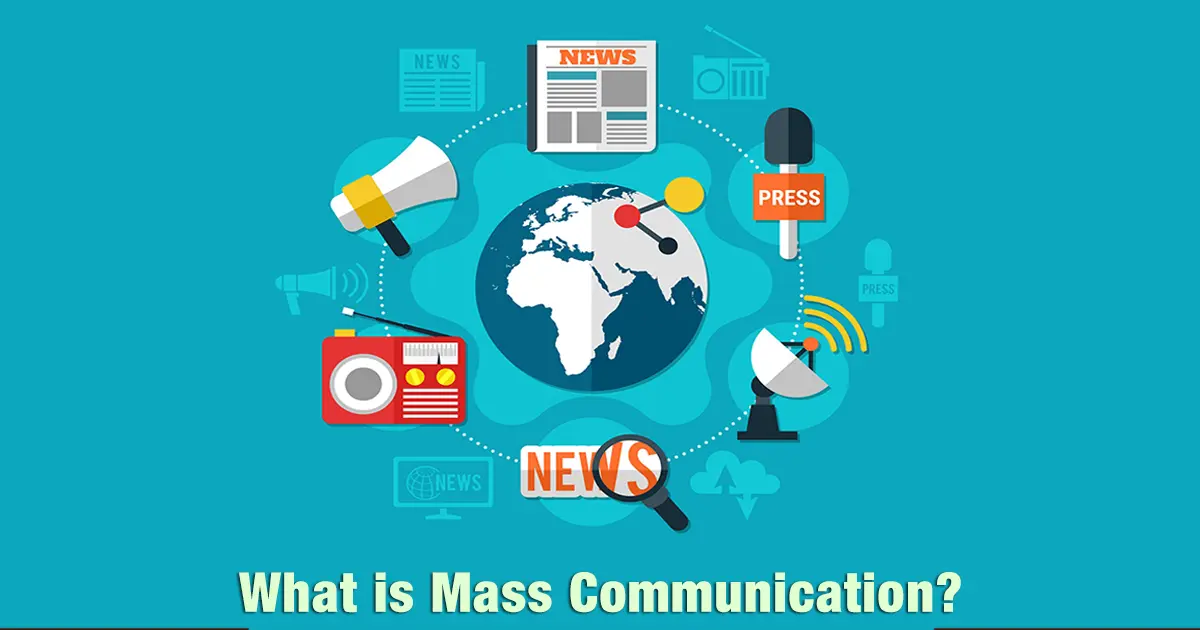
Mass Communication is the process of creating, sharing, and broadcasting information with a vast audience using different media channels. It uses strategy, innovation, and technology to educate, inform, and entertain the people.
Features of Mass Communication
Compared to interpersonal communication, Mass Communication uses media such as print, television, radio, film, and digital media to reach wide audiences at the same time.
The characteristics of Mass Communication are discussed below:
Diverse and Large Audience
The possibility of reaching a large and heterogeneous audience at once is one of the important features of Mass Communication. The audience tends to be geographically distributed and comprises people with diverse interests, demographics, and backgrounds. This heterogeneous audience is mostly anonymous and unfamiliar to the communicator.
Use of Mediated Channels
Mass Communication uses mediated channels or mass media to transmit messages. These channels incorporate both traditional media like television, radio, and newspapers, and the new digital media like the internet, social media, and mobile apps.
Rapid Dissemination
Mass communication is characterised by the widespread and rapid dissemination of information. With the help of modern tools and digital platforms, messages can be transmitted within a fraction of a second to a large group of people. This feature is important, particularly in the context of news and current affairs, where timely delivery of information is crucial.
Cultural Influence
Mass Communication assists in shaping the cultural norms, values and beliefs of the population. The content shared through mass media can impact societal perceptions, attitudes, and behaviours. This makes Mass Communication an effective instrument of cultural exchange and representation.
Types of Mass Communication
Mass Communication can be categorised into different areas, based on the medium of content dissemination. The types of Mass Communication are discussed below:
| Type of Media |
Description |
Examples |
| Print Media |
Print media provides detailed information that readers can access at their own pace. |
- Newspapers: Daily and weekly publications providing news and analysis.
- Magazines: Periodicals covering diverse topics such as fashion, business, and technology.
- Pamphlets and Brochures: Informational documents used for advertising and education.
|
| Broadcast Media |
Broadcast media enables real-time transmission of news and entertainment via audio and visual formats. |
- Radio: One of the most accessible forms of mass communication, especially in rural areas.
- Television: Combines visuals and audio for impactful storytelling and news delivery.
- Podcasts: A modern form of audio broadcasting available on demand.
|
| Digital Media |
Digital media uses the internet to facilitate instant global communication, information sharing, and offer entertainment content for mass consumption. |
- Websites and Blogs: Platforms for sharing news, opinions, and educational content.
- Social Media: Networks like Facebook, Twitter, and Instagram for real-time interaction.
- YouTube and Streaming Services: Video-based content for diverse audiences.
|
| Outdoor Media |
Outdoor media communicates messages in public spaces to attract large audiences for advertising and awareness campaigns. |
- Billboards: Large-scale advertisements placed in busy locations.
- Posters and Banners: Used for marketing, political campaigns, and awareness programmes.
- Transit Advertising: Ads displayed on buses, trains, and taxis.
|
Why is Mass Communication Important?
Mass Communication helps contemporary society stay updated and connected with each other. It strengthens democracy by ensuring that people are aware of the current events and issues around them.
The importance of Mass Communication also extends towards shaping cultural identity and enhancing global awareness across regions. It is a very effective business and marketing tool that can determine consumer behaviour and trends.
Role of Mass Communication in India
Mass Communication is significant in the development of India because it informs, educates and connects the people in India. It emphasises the achievements of the country in science, technology, and culture, as well as highlighting the social, economic, and cultural issues.
The media serves as an intermediary between the government and citizens, as it raises concerns and creates awareness. It helps eradicate superstitions and fosters contemporary thinking and social reform. Additionally, it supports farmers and rural communities by sharing information on technology and government schemes.
Career Opportunities in Mass Communication
There are promising career opportunities in Mass Communication in areas like advertising, public relations, digital marketing, content writing, broadcasting, etc.
A degree in Mass Communication will help you develop expertise in researching, writing, editing, and multimedia production through various practical assignments and classes. This exposure will enhance your knowledge and skillset, helping you pursue careers across various industries and markets.
After completing the course, you can pursue the following job opportunities:
| Job Role |
Job Description |
| News Reporter |
Gathers, investigates, and reports news stories for media platforms. |
| Editor |
Reviews, refines, and ensures the accuracy and quality of content before publication. |
| Content Writer |
Creates engaging and informative written content for digital and print media. |
| Public Relations Officer |
Manages the public image of an organisation through strategic communication. |
| Social Media Manager* |
Plans, creates, and manages content across social media platforms to engage audiences. |
| Broadcasting Specialist* |
Produces and presents audio or visual content for television, radio, or online platforms. |
| Digital Marketing Manager* |
Plans and executes online marketing strategies to promote brands and drive engagement. |
| Media Director* |
Oversees media planning and strategy to ensure effective advertising and brand communication across platforms. |
*Some job roles are specialised and may require a Master’s degree and substantial work experience to be eligible for the same.
Important Mass Communication Skills to Master
Some of the important skills in Mass Communication that you must master to get jobs with a higher remuneration are as follows:
| Skill |
Description |
| Critical Thinking and Analysis |
Ability to understand and evaluate how media messages influence audiences. |
| Storytelling and Creativity |
Skill to create compelling and engaging narratives across different media formats. |
| Technical Proficiency |
Knowledge of audio-visual production, editing, and digital design tools. |
| Strategic Communication |
Capability to align messages with organisational objectives or social goals. |
| Ethical Awareness |
Understanding the importance of maintaining integrity and responsibility in media and journalism. |
Key Takeaways
Mass Communication is a dynamic tool to influence public opinions and connect the world in meaningful ways.
From driving social awareness to building powerful brands, this field continues to evolve. Mass Communication offers endless career possibilities for creative and analytical-minded people.
If you are passionate about making an impact in society, now is the perfect time to step into this field.
Explore a Mass Communication course today, and take the first step towards building a rewarding career in the world of media and communication.
FAQs
Q1. What do you mean by Mass Communication?
A1: Mass Communication refers to the process of sharing information, ideas, and messages with a large and diverse audience through various media channels like television, radio, newspapers, and digital platforms.
Q2. What is Mass Communication salary?
A2: The salary in the Mass Communication field in India is highly variable based on specialisation, experience, location, and the specific employer.
Generally, recent graduates can earn between INR 2.5 lakhs per annum (LPA) to INR 4 LPA. Professionals with 3 to 5 years of experience can earn between INR 6 to 10 LPA. Some senior-level roles like Senior Digital Marketing Manager and Senior Broadcasting Specialists can even earn up to INR 12 LPA.
Q3. Who is the father of Mass Communication?
A3: Wilbur Schramm is often regarded as the father of Mass Communication.
Q4. Is Mass Communication easy?
A4: Mass Communication is not necessarily easy, as it requires creativity, critical thinking, and strong communication skills. However, students who are passionate about media and storytelling may find it engaging and rewarding.
Q5. What is the future of Mass Communication?
A5: The future of Mass Communication is highly promising due to the growth of digital media, social platforms, and content creation. Emerging technologies like AI and data analytics are further expanding career opportunities in this field.
Q6. What is the highest paid job in Mass Communication?
A6: Some of the highest-paying jobs in Mass Communication include roles like Digital Marketing Manager, Media Director, and Public Relations Manager.