Why do discussions about development today often focus on sustainability? Balancing progress with environmental protection has become increasingly important as societies grow and industries expand.
The main objective of sustainable development is to meet present needs while ensuring that future generations can also access natural resources and opportunities. The importance of sustainable development lies in encouraging the responsible use of resources along with long-term planning.
When you study sustainable development, you become better able to think critically about various global challenges, such as climate change or resource depletion. If you are curious to know the meaning, goals and principles of sustainable development, read this blog carefully. The blog also helps you understand why sustainable development is quintessential for the betterment of both society and the environment.
What is Sustainable Development?
To understand the concept clearly, it is important that you first understand the sustainable development meaning. It refers to a model of progress where present needs are met without reducing the ability of future generations to meet theirs. Sustainable development helps improve lives today while still protecting resources for tomorrow.
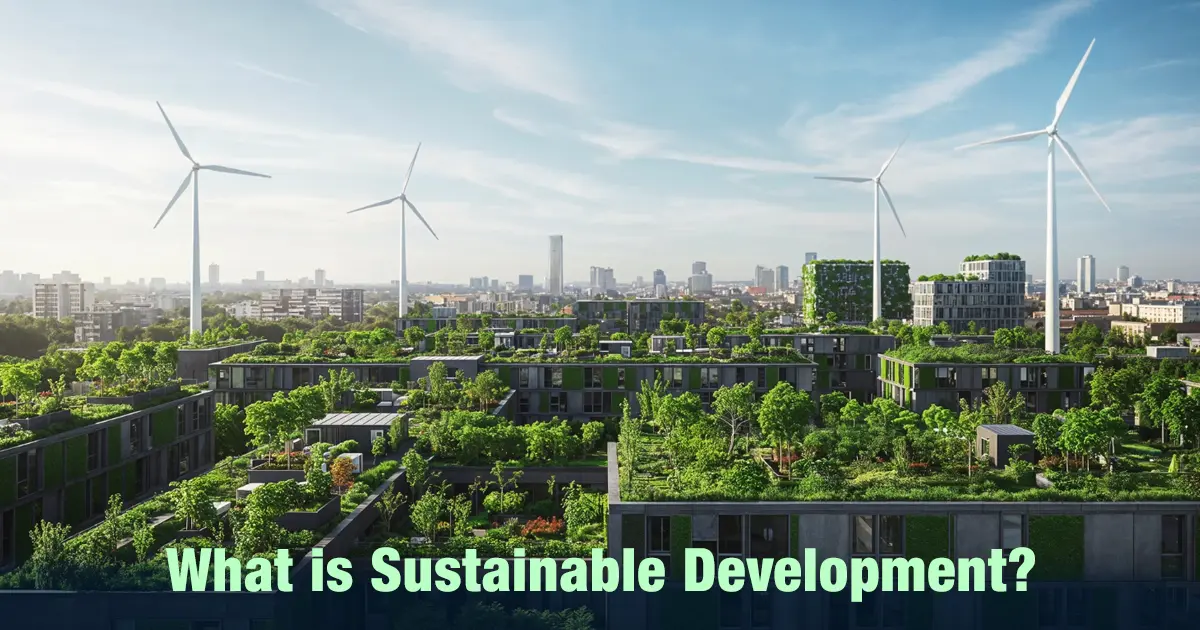
For example, when you support renewable energy sources such as solar or wind power, you help meet today’s energy needs while reducing environmental damage and conserving resources for the future.
Pillars of Sustainable Development
The principles of sustainable development explain how sustainable development is implemented, while the pillars of sustainable development highlight the key areas it focuses on
.
| Pillar |
What It Focuses On |
| Environmental Sustainability |
Protecting ecosystems, natural resources and biodiversity |
| Social Sustainability |
Ensuring equality, community well-being and access to opportunities |
| Economic Sustainability |
Supporting long-term economic growth without exhausting resources |
Principles of Sustainable Development
To better understand sustainable development, you should now look at the key principles that guide it.
1. Meeting Present and Future Economic Needs
Sustainable development encourages you to think beyond short-term gains. It focuses on meeting the needs of today, like food security, healthcare, and education, while making sure that future generations can also use the same resources. When you support long-term solutions like responsible farming or restoring ecosystems, you take a step towards a more stable economy.
2. Protecting the Environment
Sustainable growth cannot be achieved without protecting natural systems. Forests, water resources and biodiversity support climate balance as well as human survival. The connection between the environment and sustainable development highlights why conservation, responsible land use, and ecosystem restoration are essential to ensure that natural resources continue to support life and economic activity.
Also Read: “B.Sc. Environmental Science vs. B.Sc. Ecology: Understanding Ecosystems”.
3. Promoting Social Responsibility
Sustainable development also plays an important role in creating fair and inclusive societies. Responsible resource management supports community livelihoods, protects cultural connections to land and encourages cooperation between governments, industries and communities.
Goals of Sustainable Development
Note that the Sustainable Development Goals (SDGs) were introduced by the United Nations in 2015 as a set of 17 global objectives aimed at creating a more balanced and inclusive world.
When you look at these goals together, they highlight the areas where governments, organisations and individuals can work towards long-term global development.
| Goal No. |
Sustainable Development Goal |
Meaning / Focus |
| 1 |
No Poverty |
Eliminate poverty in all forms and ensure basic living standards for everyone. |
| 2 |
Zero Hunger |
End hunger, improve nutrition and promote sustainable agriculture. |
| 3 |
Good Health and Well-Being |
Ensure healthy lives and improve well-being for people of all ages. |
| 4 |
Quality Education |
Provide inclusive and equitable quality education and promote lifelong learning. |
| 5 |
Gender Equality |
Achieve gender equality and empower women and girls. |
| 6 |
Clean Water and Sanitation |
Ensure access to safe drinking water and proper sanitation for all. |
| 7 |
Affordable and Clean Energy |
Provide reliable, sustainable and modern energy for everyone. |
| 8 |
Decent Work and Economic Growth |
Promote sustainable economic growth and create productive employment opportunities. |
| 9 |
Industry, Innovation and Infrastructure |
Develop resilient infrastructure, promote innovation and support sustainable industries. |
| 10 |
Reduced Inequalities |
Reduce inequality within countries and between nations. |
| 11 |
Sustainable Cities and Communities |
Make cities inclusive, safe, resilient and environmentally sustainable. |
| 12 |
Responsible Consumption and Production |
Encourage efficient use of resources and sustainable production patterns. |
| 13 |
Climate Action |
Take urgent steps to combat climate change and its impacts. |
| 14 |
Life Below Water |
Protect oceans, seas and marine resources for sustainable development. |
| 15 |
Life on Land |
Protect forests, biodiversity and ecosystems on land. |
| 16 |
Peace, Justice and Strong Institutions |
Promote peaceful and inclusive societies, ensure access to justice for all, and build accountable institutions. |
| 17 |
Partnerships for the Goals |
Strengthen global cooperation and partnerships to achieve sustainable development goals. |
Importance of Sustainable Development
Sustainable development plays a key role in ensuring that economic progress does not come at the cost of environmental damage or social inequality. It encourages responsible growth that supports both present and future generations.
| Aspect |
Why It Matters |
| Environmental Protection |
Promotes responsible use of natural resources and helps reduce pollution and ecological damage. |
| Long-Term Economic Growth |
Encourages development models that remain stable and productive without exhausting resources. |
| Social Equity |
Supports fair access to opportunities, resources and quality of life for different communities. |
| Resource Conservation |
Ensures that essential resources such as water, forests and energy are preserved for future generations. |
| Global Development Goals |
Contributes to worldwide efforts aimed at improving living standards while protecting the planet. |
Relation Between Sustainability and Sustainable Development
Understanding the Relation Between Sustainability and Sustainable Development helps you see how long-term environmental balance connects with practical development strategies.
Sustainability focuses on preserving natural resources and ecological stability, while sustainable development refers to the actions and policies used to achieve that balance while supporting economic and social progress.
| Aspect |
Sustainability |
Sustainable Development |
| Focus |
Long-term environmental balance |
Development that uses resources responsibly |
| Approach |
Maintaining natural systems |
Policies and practical actions that support economic, social and environmental balance |
| Goal |
Protect resources for the future |
Meet present needs without harming future generations |
Conclusion
Sustainable development reminds you that progress should not come at the cost of the planet or future generations. By balancing environmental protection, social well-being and economic growth, you can contribute to a more responsible and resilient future.
If you are interested in building a career that focuses on sustainability and environmental solutions, it can be helpful to explore academic pathways in this field. JAIN (Deemed-to-be University) offers specialised programmes in fields such as Environmental Geotechnology and Sustainable Development, which allow you to study environmental challenges and develop practical solutions that support long-term sustainability.
FAQs
Q1: What do you mean by sustainable development?
A1: Sustainable development means meeting current needs without harming future generations’ ability to meet theirs. It balances growth through the pillars of sustainable development: environmental protection, social well-being and economic stability.
Q2: Why is the issue of sustainability important for development?
A2: Sustainability matters because development must protect resources while supporting long-term progress. The components of sustainable development, economic growth, environmental care and social equity, help maintain this balance.
Q3: How can sustainable development be achieved?
A3: You can achieve sustainable development by using resources responsibly, promoting clean energy, supporting inclusive policies and adopting long-term environmental and economic planning.
Q4: What are the advantages of going sustainable?
A4: Sustainable practices help conserve resources, reduce environmental damage and support stable economic and social development over time.
Q5: How does sustainable development benefit the economy?
A5: It supports long-term economic stability by encouraging efficient resource use, innovation and industries that create sustainable jobs and growth.
Q6: Why is sustainable development crucial for the future?
A6: The importance of sustainable development lies in protecting natural resources, supporting social well-being and ensuring that future generations can live and thrive sustainably.